
Level 1 sweep and inspection to the NFPA 211 annual standard - flue, crown, cap, and flashing checked and photographed
Chimney sweep logs do not sweep chimneys. They loosen some creosote - which then falls where a brush and vacuum still have to collect it.
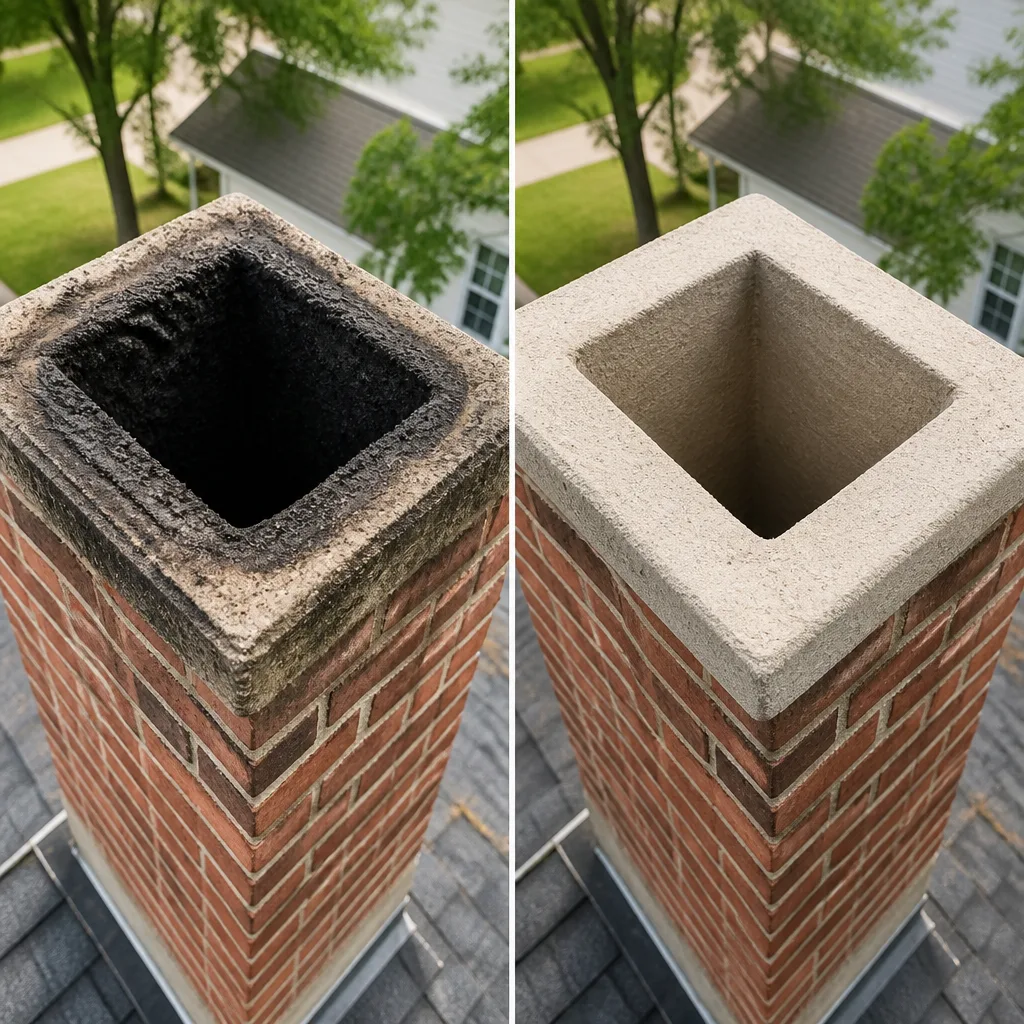
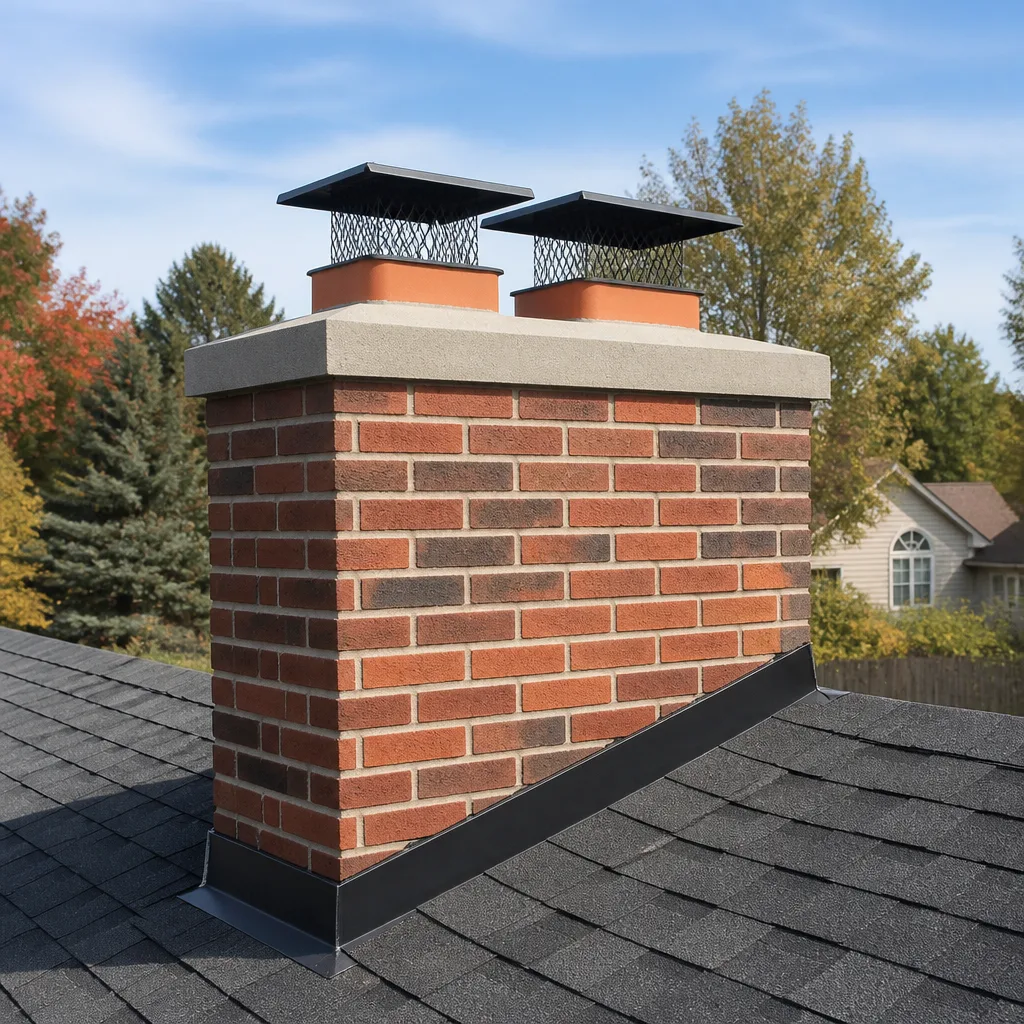
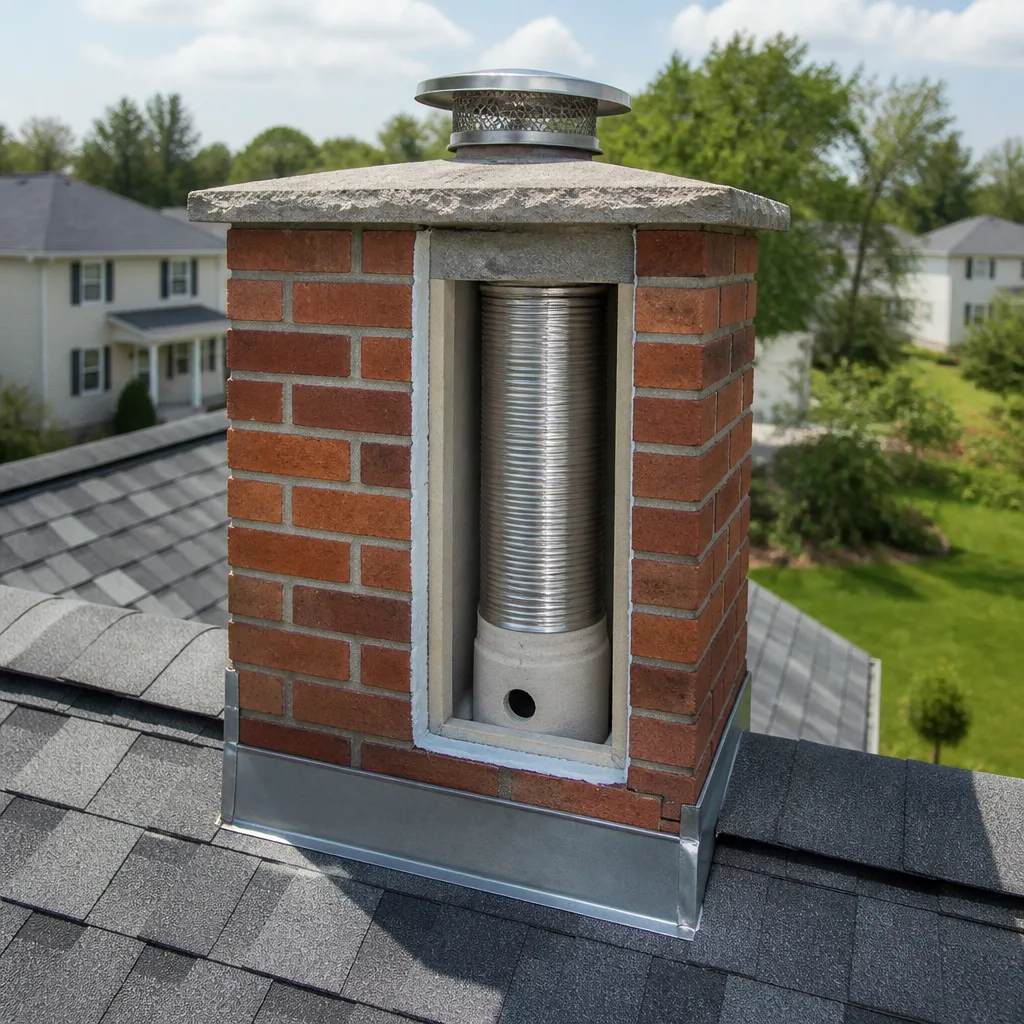
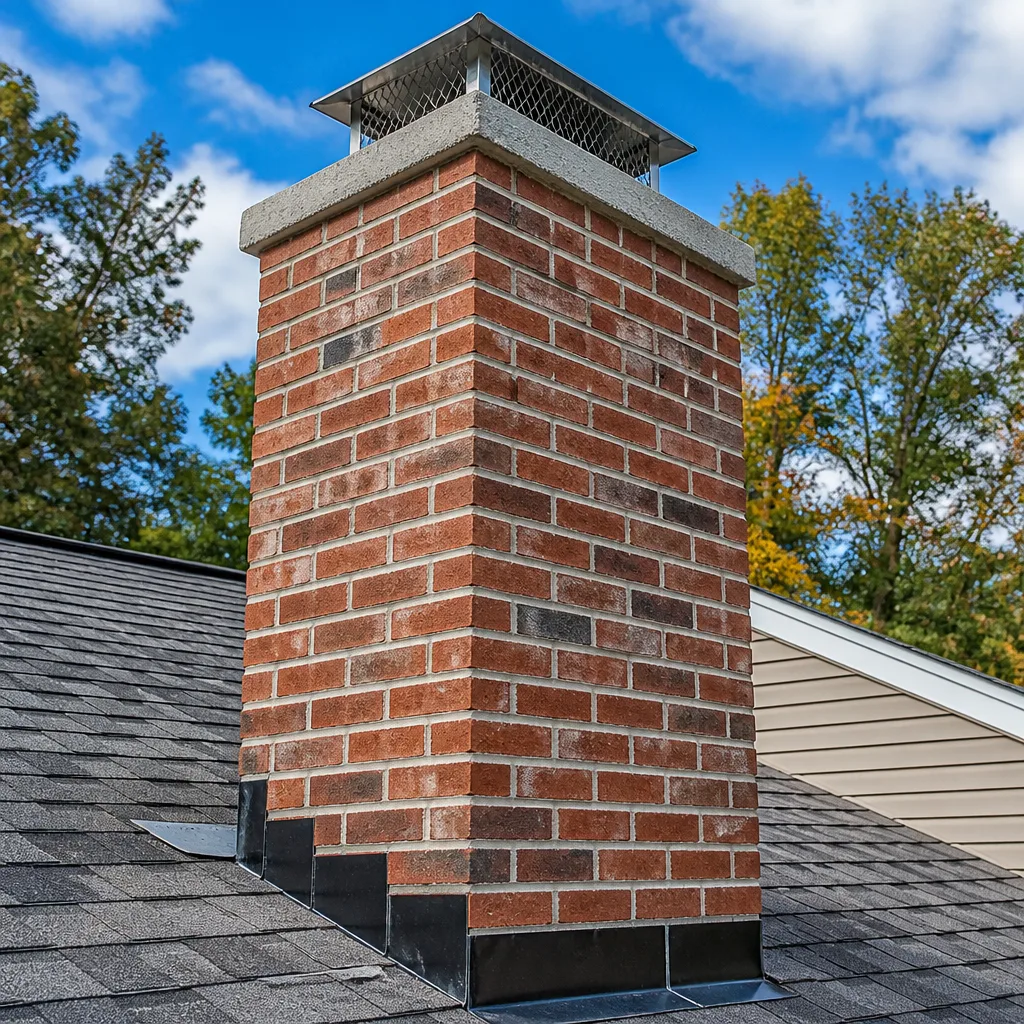
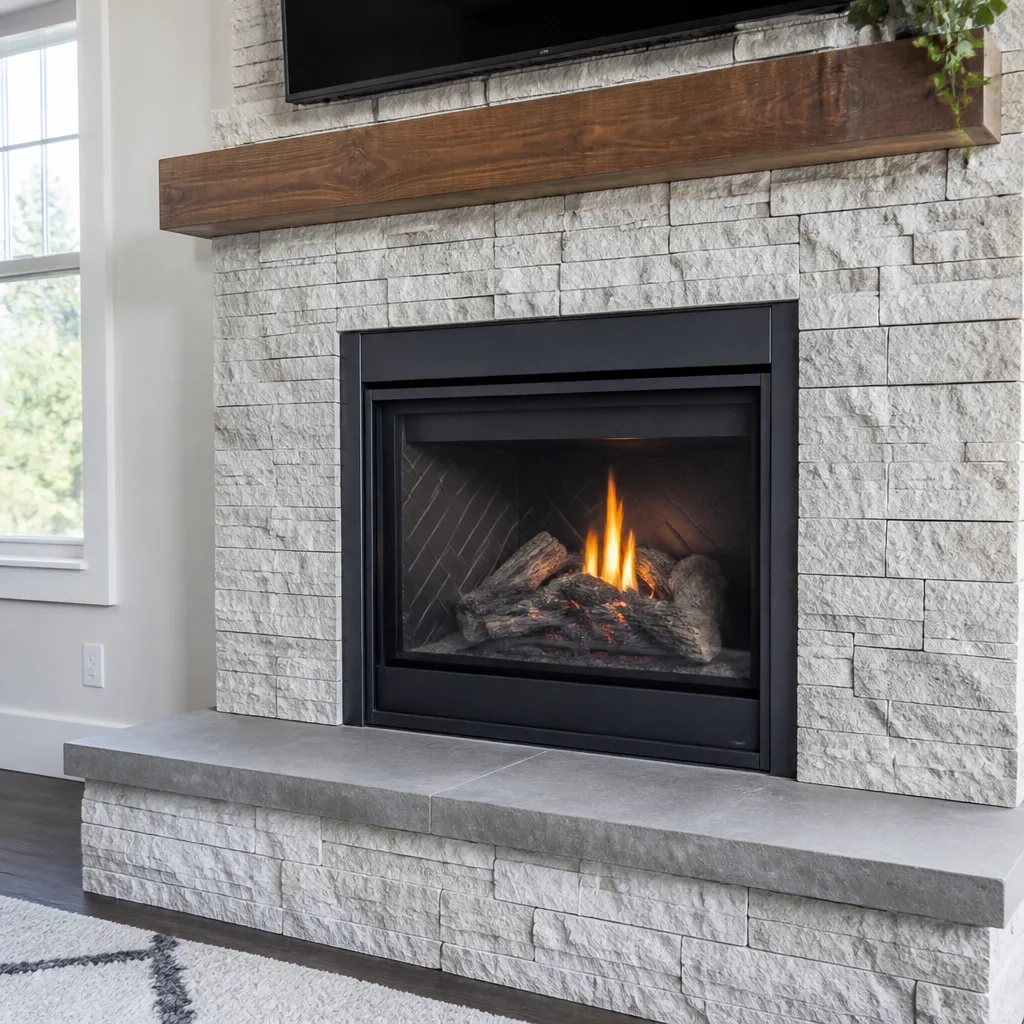
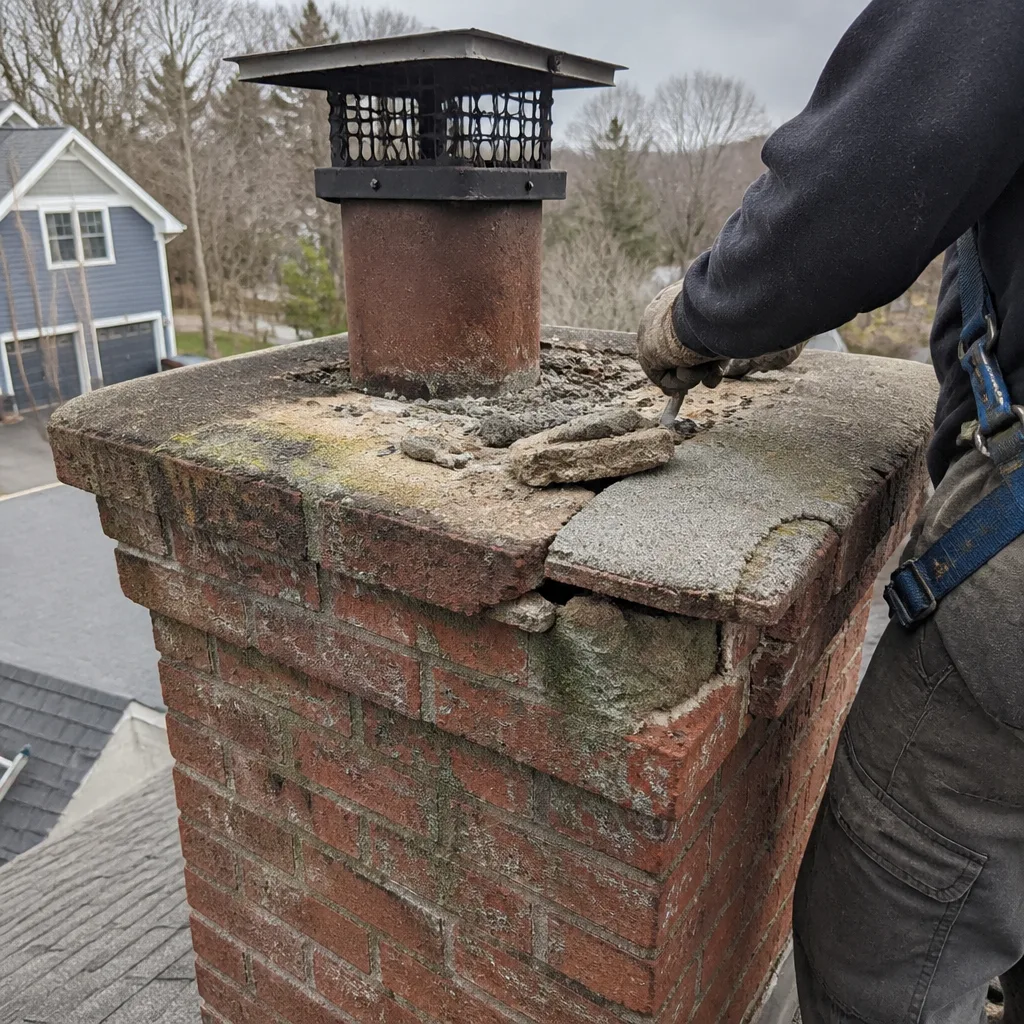 Before
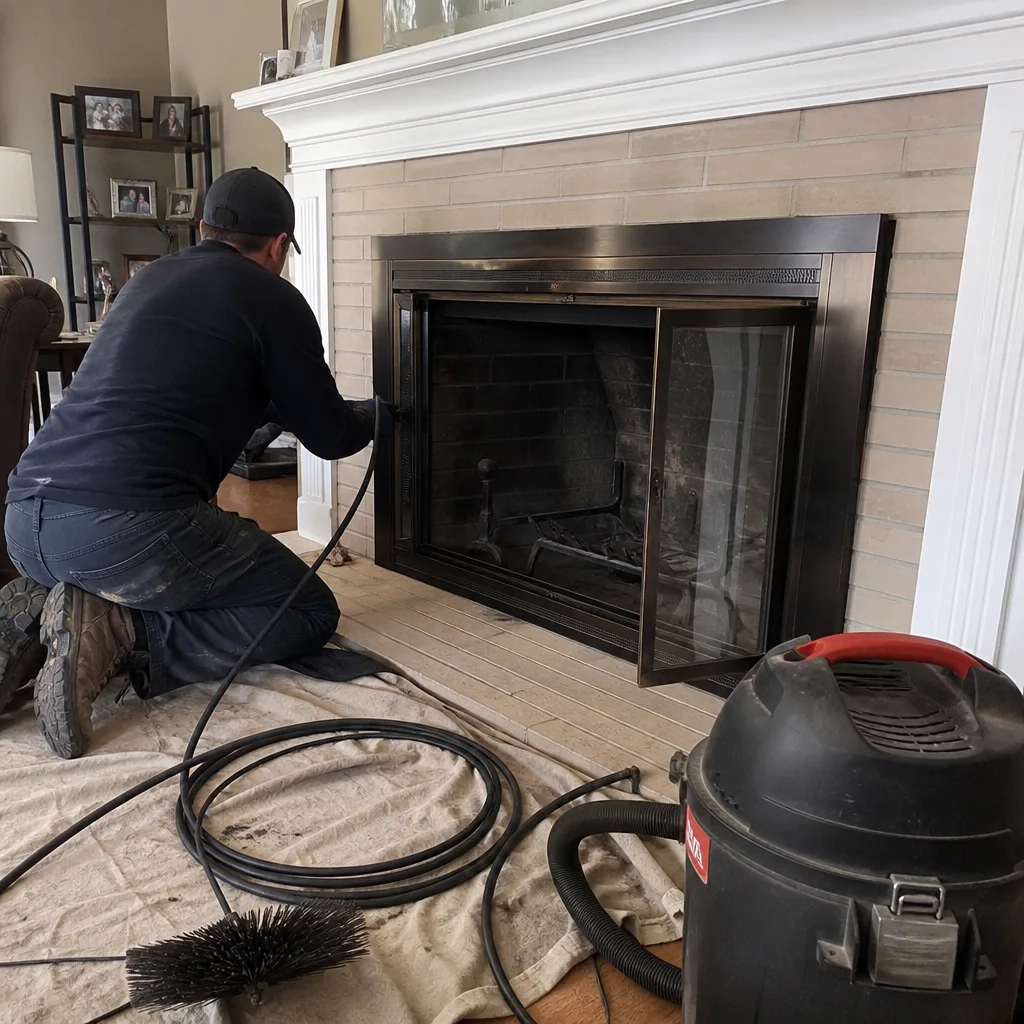 After
After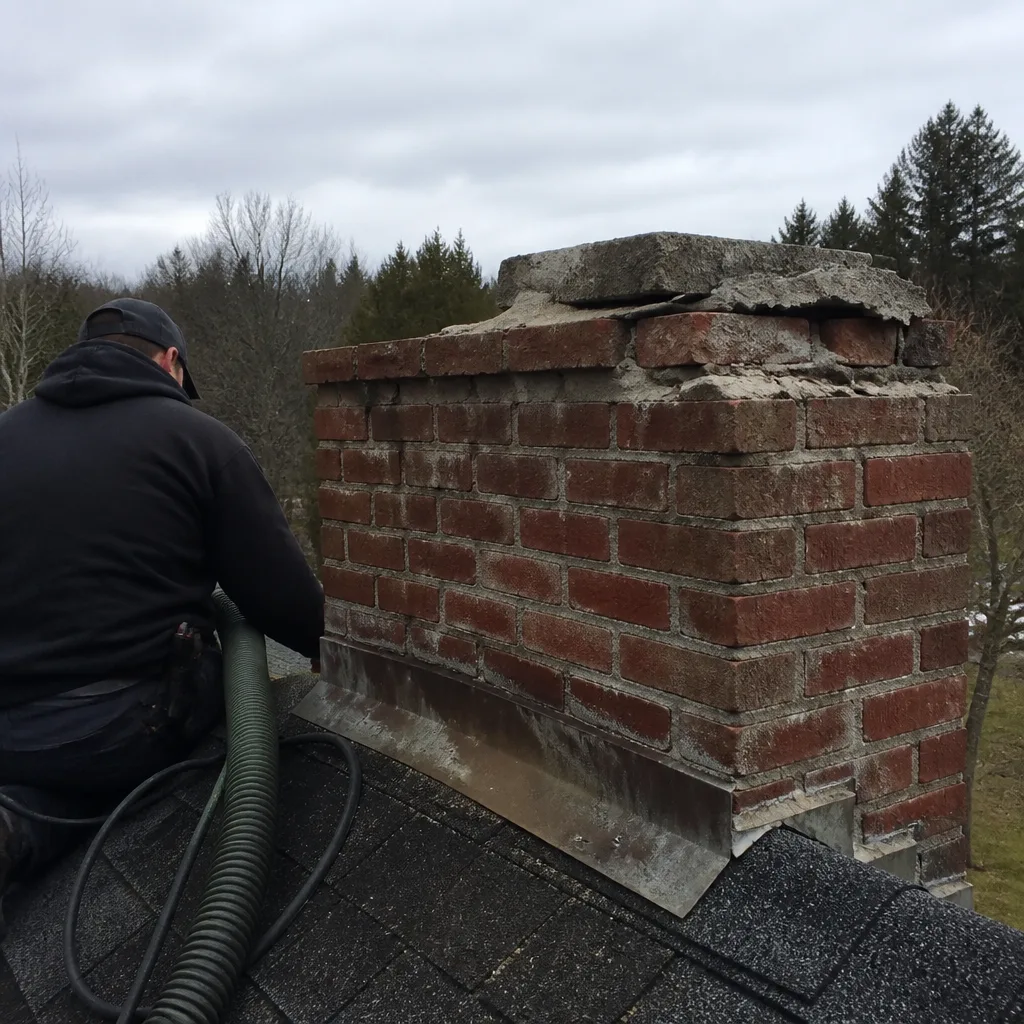 Before
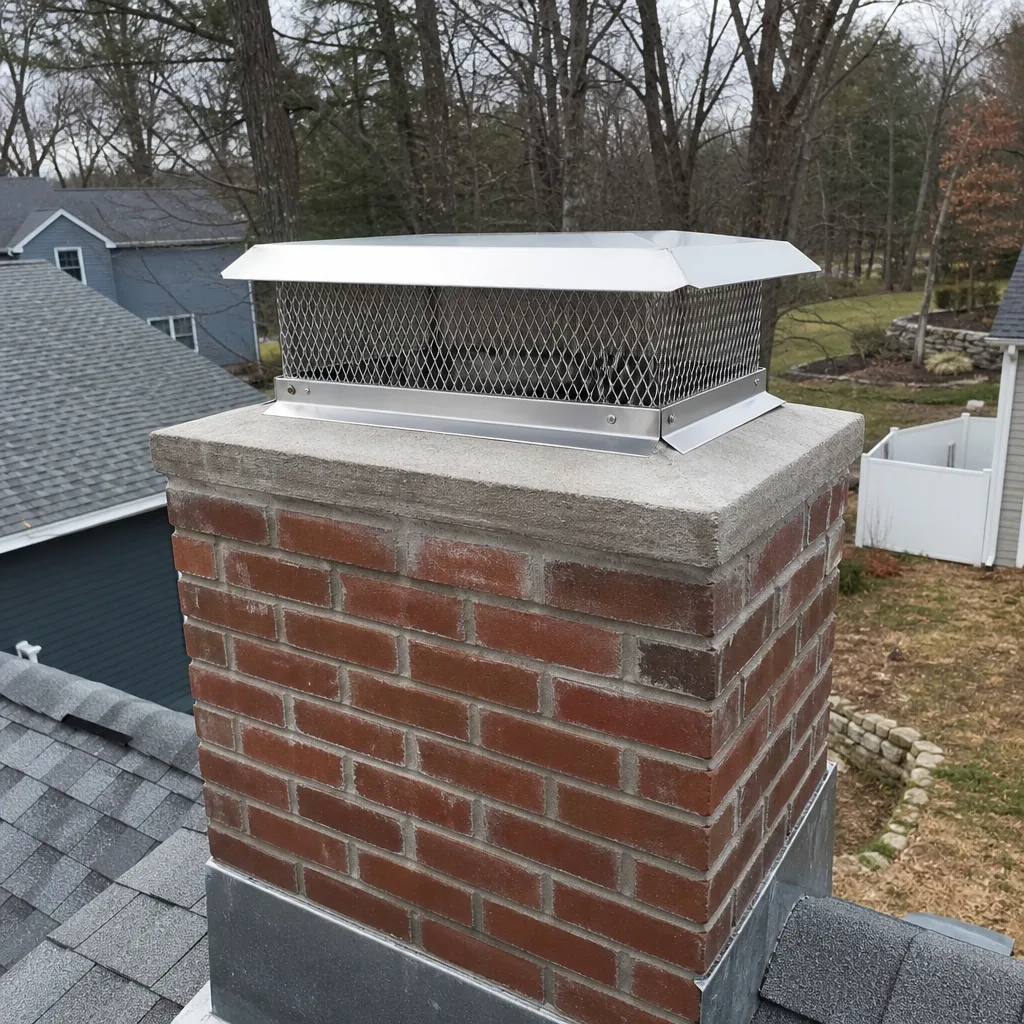 After
After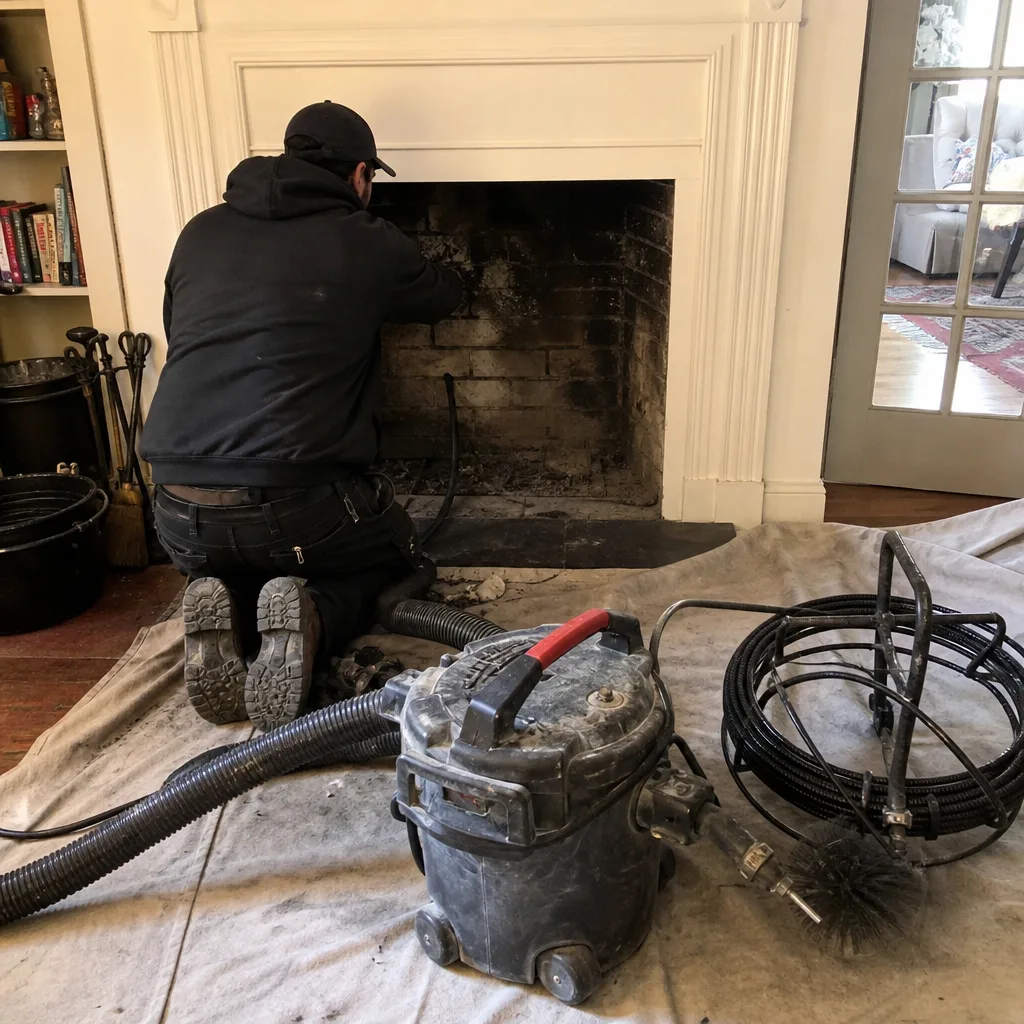 Before
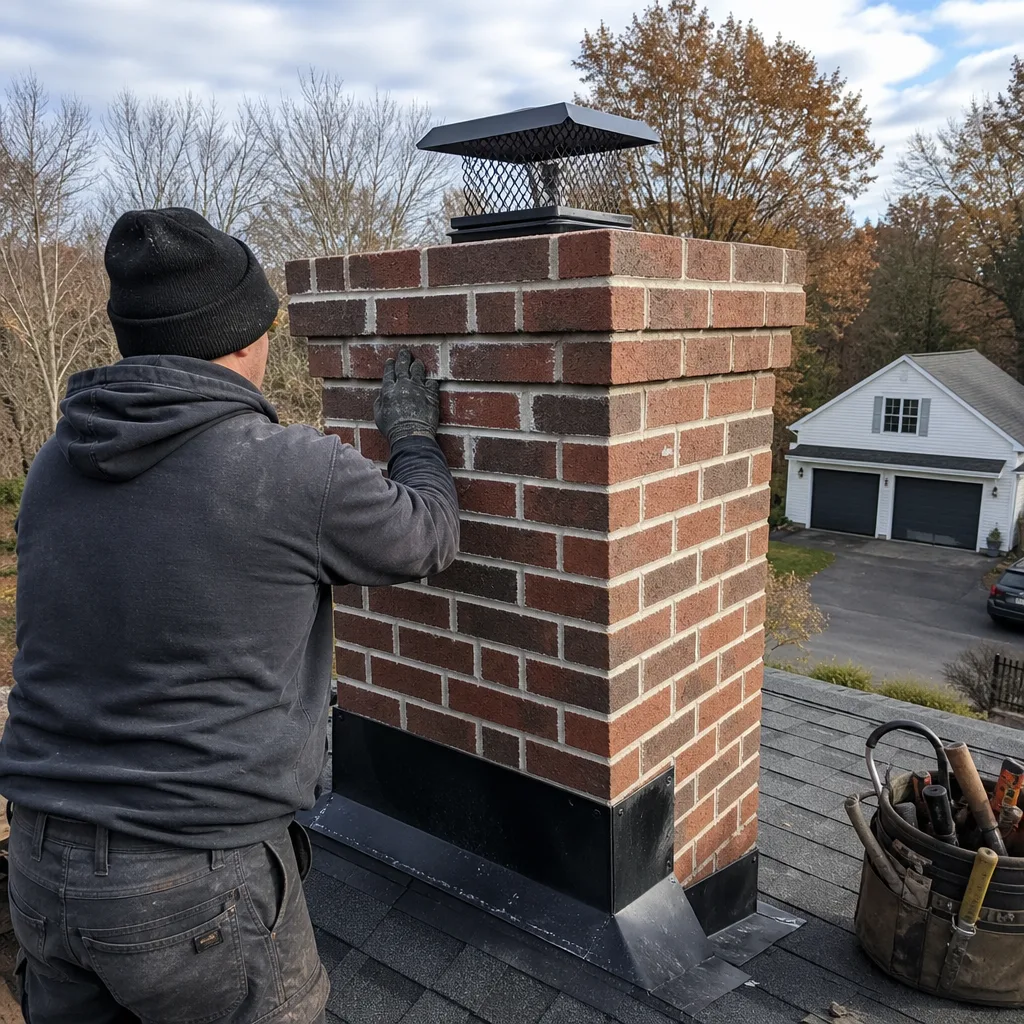 After
AfterSpalling Brick Repair in Wakefield, MA
Spalling brick repair in Wakefield typically runs between $350 and $1,800, depending on how much surface area is affected and how far the damage has progressed into the mortar joints and brick face. For a detailed breakdown, see How Much Does Chimney Repair Cost? (2026 Price Guide) - Wakefield, MA. Most jobs are completed in a single visit, and every one starts with a written price before any work begins.
Spalling is what happens when water gets into the brick itself – either through a cracked crown, a failing cap, or years of freeze-thaw cycles that are especially punishing in eastern Massachusetts – and then freezes. The expanding ice fractures the brick face from the inside out. You’ll see flaking, pitting, and chunks of brick face on the ground below the chimney. In Wakefield, where January temperatures can swing 30 degrees in 48 hours, that freeze-thaw stress is relentless on older brick, and we see it regularly on chimneys in the Greenwood and Montrose neighborhoods where homes date back to the 1920s and 1930s.
At Level Two Chimney Wakefield, every spalling brick repair starts with a camera-scan inspection – not a flashlight look from the roofline. We identify the root cause before we quote a repair, because patching spalled brick without fixing the water source is work that fails. Our Chimney Repair in Wakefield page covers the full scope of structural work we do, but this page focuses specifically on spalling: what causes it, what fixing it looks like, and what it costs. Call us at (978) 861-1012 – a live person answers, any time of day.
When You Need Spalling Brick Repair
- Brick fragments on the ground or in the firebox. Small chips or larger chunks collecting around the chimney base or falling into the firebox are almost always spalling in progress. In Wakefield, homeowners often notice this for the first time after the first hard freeze of the season – usually November.
- Pitted, flaking, or cratered brick faces. If the surface of the brick looks like it’s being eaten from the outside, moisture has already worked its way in. The outer face delaminates as the trapped water expands and contracts.
- White chalky staining (efflorescence) on the chimney exterior. Efflorescence is mineral salt left behind when water moves through brick and evaporates at the surface. It’s a reliable early signal that the masonry is saturated, and it typically shows up before the brick face starts to fracture.
- Mortar joints that are recessed, crumbly, or missing entirely. Spalling and mortar failure often travel together. When mortar erodes, water has a direct path into the brick core. Tuckpointing those joints is usually part of the same repair.
- Staining or moisture on interior walls near the fireplace. If you’re seeing water stains on the drywall or plaster adjacent to the firebox, or a musty smell after rain, spalling brick is one of several likely causes. It needs a proper inspection to sort out the exact source.
- A chimney that has gone uninspected for more than three years. In Wakefield’s climate, three winters without a documented inspection is enough time for early-stage spalling to move from surface cosmetic damage to structural brick loss. Catching it at the cosmetic stage cuts repair costs significantly.
Our Spalling Brick Repair Process
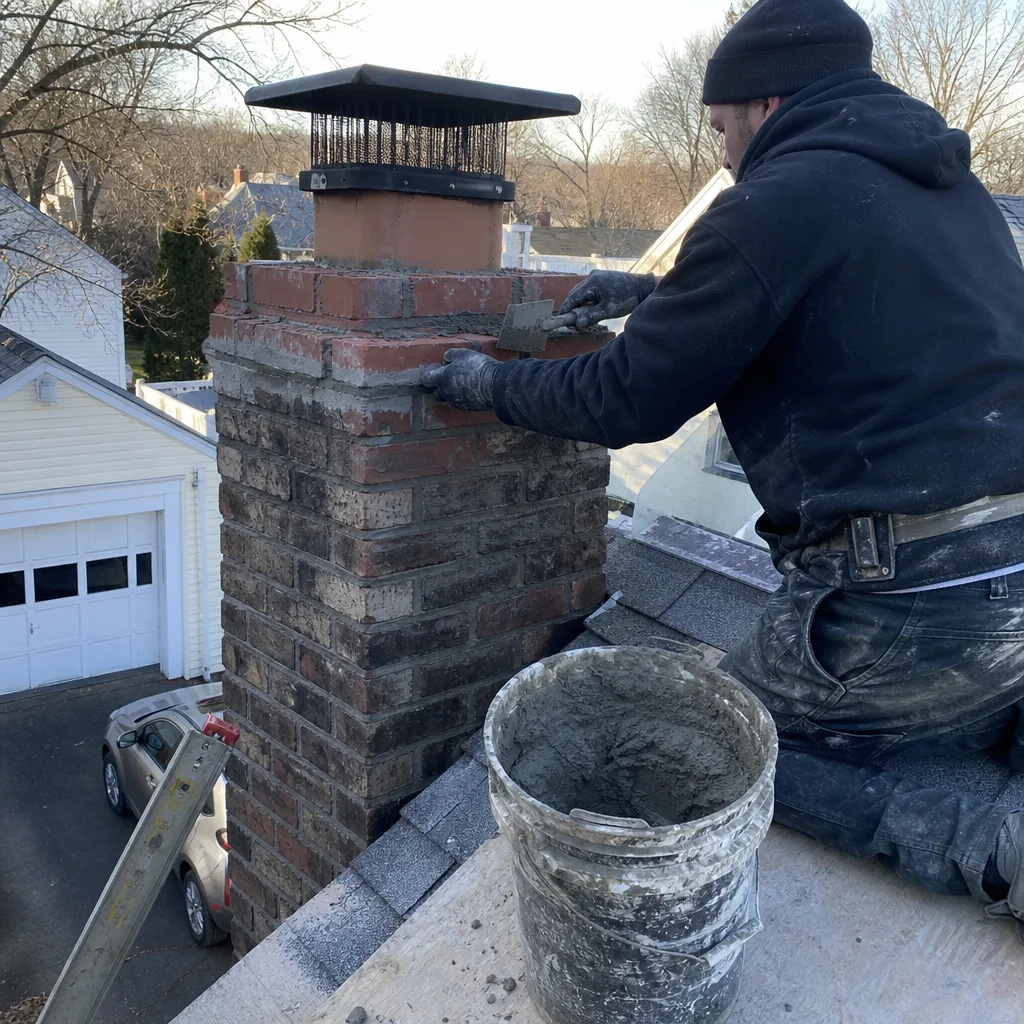
- NFPA 211 Level 2 camera-scan inspection. We run a camera down the flue and photograph the full chimney structure – crown, cap, mortar joints, brick faces, and the smoke chamber below. This is how we’ve documented every inspection since 2009. You get a photo record of what we found before we quote anything. A written scope and a written price follow from the evidence, not from a verbal estimate at the roofline.
- Root-cause identification. Spalling doesn’t happen on its own. We identify what’s letting water in – a cracked crown, a missing or undersized cap, failed caulk around a flashing joint, or missing drip edge – and include fixing that source in the repair plan. Brick work done without addressing the water entry point fails within two to three seasons.
- Written price before any work starts. Under Haven Standard Clause 1, you receive a written price, written scope, and written warranty before a single brick is touched. No tech starts work while you’re still deciding. This is the practice, not the exception.
- Brick repair and tuckpointing. Spalled brick is removed and replaced with new masonry matched as closely as possible to your existing chimney’s color and texture. We source from Gelco and Olympia Chimney through Haven’s supply network, which keeps material costs from getting padded at the point of sale. Recessed or crumbling mortar joints are raked out and repointed with a mortar mix matched to the original joint profile – a critical detail, because using mortar that’s harder than the surrounding brick accelerates future spalling.
- Surface treatment where appropriate. On chimney exteriors where the brick is sound but the surface has become porous, we apply a penetrating water repellent that allows vapor to escape while blocking liquid water infiltration. This is not a substitute for repairing the underlying damage, but on brick that is still structurally intact, it extends the life of the repair.
- Documented photo record on completion. Clause 4 of the Haven Standard requires a photo record on every completed job, not as an optional add-on. You get before-and-after documentation of the repaired sections and a written record of what was done. If you ever need to show a buyer, an insurer, or a home inspector what work was done and when, it’s there.
 Before
 After
AfterSpalling Brick Repair Pricing in Wakefield
Spalling brick repair in Wakefield runs $350 to $1,800 for the majority of residential jobs. Here’s how that range breaks down by scope:
| Scope of Repair | Typical Price Range |
|---|---|
| Minor spalling – surface flaking on 1 to 3 courses of brick, crown and cap intact | $350 – $600 |
| Moderate spalling with tuckpointing – multiple face repairs plus repointing of eroded mortar joints | $600 – $1,100 |
| Extensive spalling – significant brick replacement, crown repair or rebuild, and water-repellent treatment | $1,100 – $1,800 |
| Full chimney rebuild (when spalling has progressed to structural failure) | Quoted separately after inspection – typically $3,500+ |
What moves a job toward the higher end of the range: the number of brick courses affected, whether the crown needs to be repaired or rebuilt at the same time, roof pitch and access difficulty, and the age and bond strength of the original mortar. Older Wakefield homes with soft lime-based mortar require a different mix ratio than homes built after 1960, and getting that match wrong is one of the more common mistakes we see in competitor work.
Every price is written down before work starts. No exceptions. If you have a written estimate from another company, bring it to us – we offer a free second opinion on any written quote, and we’ll tell you plainly if the scope is accurate. Call (978) 861-1012 to schedule.
Why Wakefield Chimneys Spall More Than You’d Expect
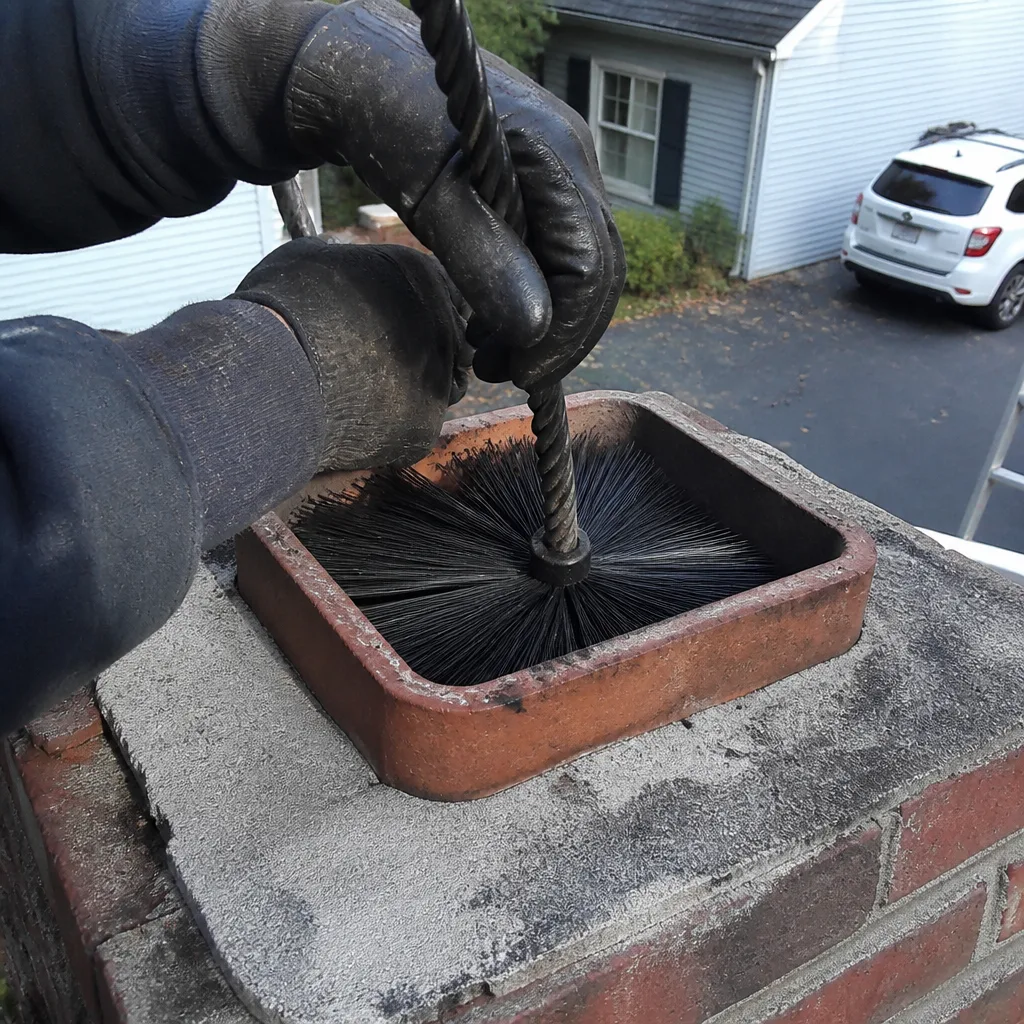
Eastern Massachusetts gets weather that is specifically hard on masonry. Wakefield sits at an elevation where cold air settles early and holds, and the town’s proximity to the Saugus River basin means humidity is high through most of fall and spring. That combination – moisture-saturated brick followed by hard freezes – is the mechanism behind spalling, and it runs faster here than in drier inland climates.
In the Greenwood neighborhood, we regularly see spalling on chimney sections that face north or northeast, where direct sun rarely reaches to dry out absorbed moisture before the next freeze. In the Crystal Lake and Montrose areas, homes built in the 1920s through 1940s often have soft, porous brick that was not manufactured to modern absorption standards. That brick absorbs water faster and fractures earlier than post-war construction.
Chimneys with flat or nearly flat crowns – common on Wakefield homes built before 1960 – pond water instead of shedding it, which accelerates moisture infiltration into the top courses of brick. A crown rebuild is often part of a spalling repair on these structures, and we build that into the written scope and price before any work starts.
None of this means the chimney is beyond repair. It means the repair has to address the actual conditions on that specific chimney, not a generic patch job. That’s why the inspection happens first, and why the camera record matters – it shows exactly what’s there.
How Spalling Brick Affects Your Home’s Safety
Spalling that stays on the exterior face of the chimney is a water damage problem, not immediately a fire safety problem. But spalling that reaches the chimney’s structural courses – or that progresses to the flue liner – changes the risk category. A compromised liner can allow combustion gases, including carbon monoxide, to migrate into living spaces. This is not a scenario that shows up as an obvious symptom until it’s already a serious problem.
The only way to know what you’re dealing with is a documented inspection – not a visual check from the ground, and not a tech climbing up and looking in with a flashlight. Our NFPA 211 Level 2 camera-scan inspection documents the liner condition alongside the exterior brick condition, so the repair scope is based on what is actually happening inside the chimney, not what’s visible from the roofline.
If you’re seeing significant spalling on a chimney that’s been in regular use, get it inspected before the next burning season. We’ve been running camera-scan inspections as the default since 2009 – well before it became a regulatory expectation – and the photo record from that inspection is the documentation you’ll want if a buyer, insurer, or home inspector asks later.
For full context on all the structural work we do on Wakefield chimneys, see our Chimney Repair in Wakefield page.
What You Walk Away With
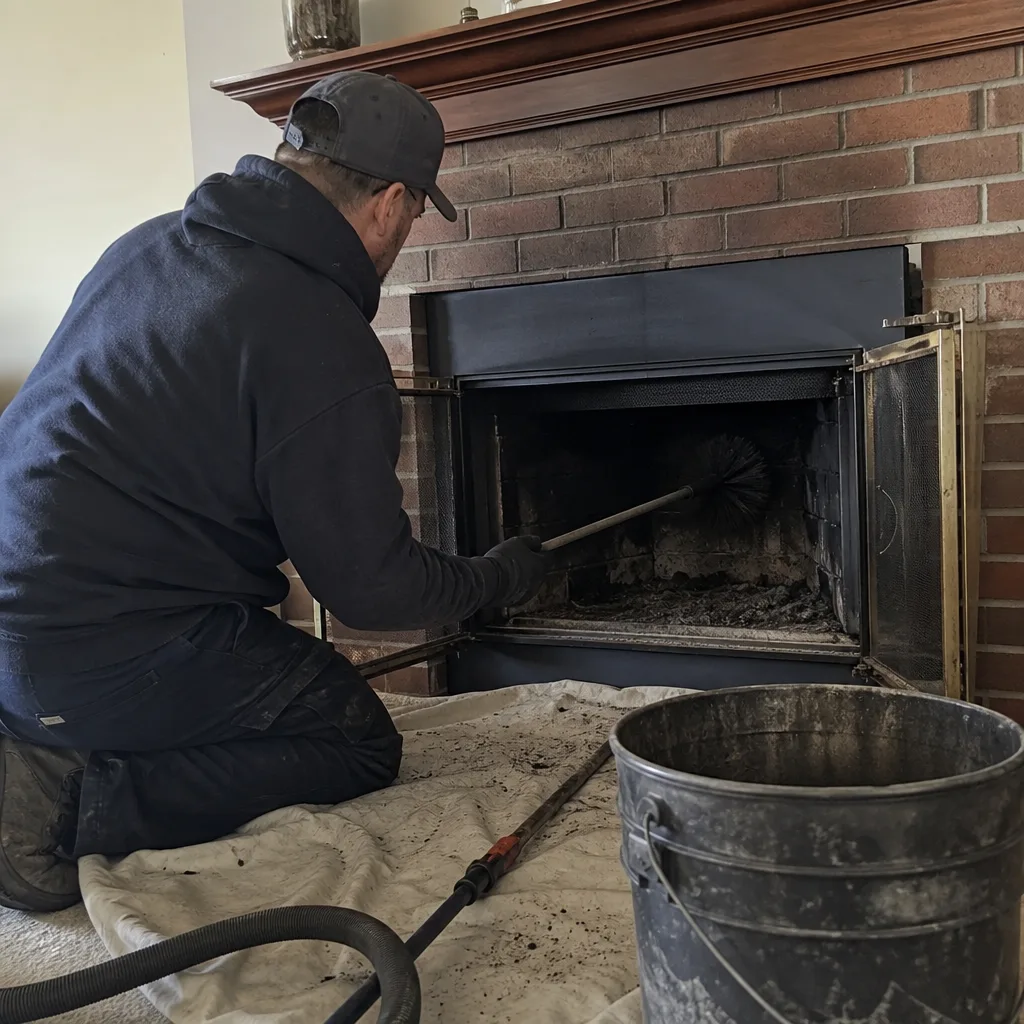
After every spalling brick repair, you receive:
- A before-and-after photo record of the repaired sections (Haven Standard Clause 4)
- A written record of the scope completed – what was replaced, what was repointed, what water-source fix was included
- The written warranty delivered before work started, now on file
- A 365-Day Done Right Promise: if it’s not right, we make it right
The documentation is not a nice-to-have. If you sell the house, refinance, or file an insurance claim, that written record is the difference between “we did work on this chimney” and a date-stamped, photographic account of exactly what was done and what condition the chimney was in when we left.
Key Takeaways
- Spalling brick repair in Wakefield costs $350 to $1,800 for most residential jobs, depending on scope
- The root cause – usually a failed crown, missing cap, or bad flashing – has to be fixed along with the brick or the repair fails
- Every repair starts with a camera-scan inspection, a written price, and a written scope before work begins
- Wakefield’s freeze-thaw climate and the age of housing stock in neighborhoods like Greenwood and Montrose make spalling more common here than in newer, drier markets
- You walk away with a photo record, written warranty, and 365-Day Done Right Promise on every job
FAQs – Spalling Brick Repair
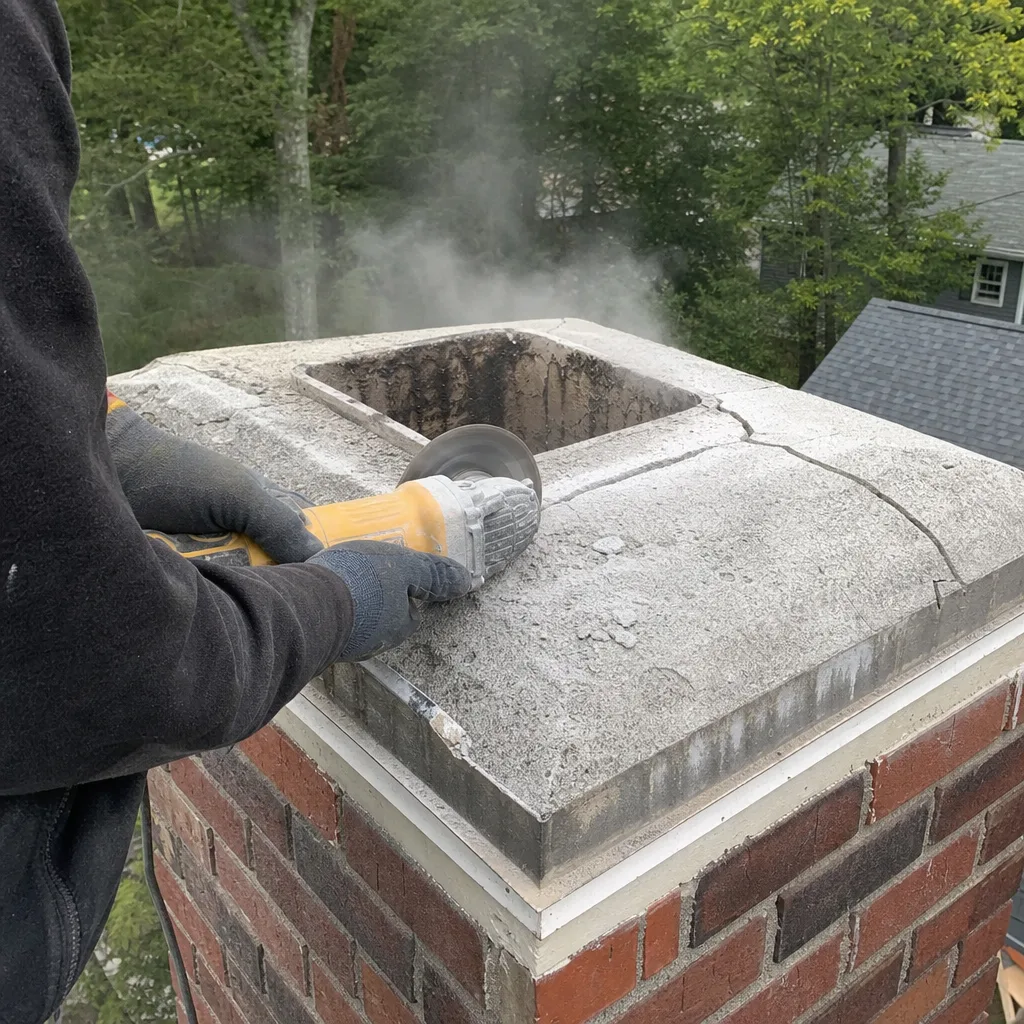
How much does spalling brick repair cost in Wakefield?
Spalling brick repair in Wakefield runs $350 to $1,800 for most residential chimney jobs. Minor surface flaking on a few courses lands toward the lower end; extensive brick replacement combined with a crown repair or rebuild lands toward the upper end. The exact price depends on how much area is affected, roof access difficulty, and whether the water source – usually a cracked crown or failed cap – needs to be fixed at the same time. Every price is written down before any work starts. Call (978) 861-1012 for a free estimate – we’ll document what we find and hand you a written number before we ask for any decision.
Can I leave spalling brick alone if it looks minor?
Minor surface spalling on a chimney that’s otherwise sound can be stable for one season, but it rarely stays minor without intervention. The same water that caused the first surface fractures is still getting in, and each freeze-thaw cycle opens the damage further. In Wakefield’s climate, a chimney with small surface spalling in the fall can have structural brick loss by spring. Catching it at the cosmetic stage costs a fraction of what full brick replacement or a rebuild costs. An inspection tells you which category you’re in.
What’s the difference between spalling and regular mortar joint erosion?
Spalling is damage to the brick face itself – the outer clay or concrete surface fractures and separates. Mortar joint erosion is the loss of the material between bricks. Both are caused by water infiltration and freeze-thaw cycling, and both need to be repaired, but the methods differ. Spalled brick is replaced; eroded mortar is raked out and repointed with a matched mortar mix. On many Wakefield chimneys, both problems exist at the same time, and a camera-scan inspection tells us the full picture before we write the price.
Does spalling brick repair require a permit in Wakefield?
Most spot-repair work on spalling brick – replacing individual bricks and repointing mortar joints – does not require a building permit in Wakefield. However, a full chimney rebuild or significant structural reconstruction may require one, and any work that touches the flue liner or fireplace opening can trigger additional requirements. We verify permit requirements for every job before work starts and include that information in the written scope. You won’t be surprised by a permit fee or a stop-work order after the job begins.
If you’ve noticed brick chips around your chimney base, flaking on the chimney face, or white mineral staining on the exterior, call (978) 861-1012 – a live person picks up, any time. We’ll schedule a camera-scan inspection, give you a written price before any work starts, and document everything from the first photo to the last. That’s the Level Two standard on every job in Wakefield.
Written by Corrine Halstead, Owner at Level Two Chimney Wakefield, serving Wakefield.