
Level 1 sweep and inspection to the NFPA 211 annual standard - flue, crown, cap, and flashing checked and photographed
Chimney sweep logs do not sweep chimneys. They loosen some creosote - which then falls where a brush and vacuum still have to collect it.
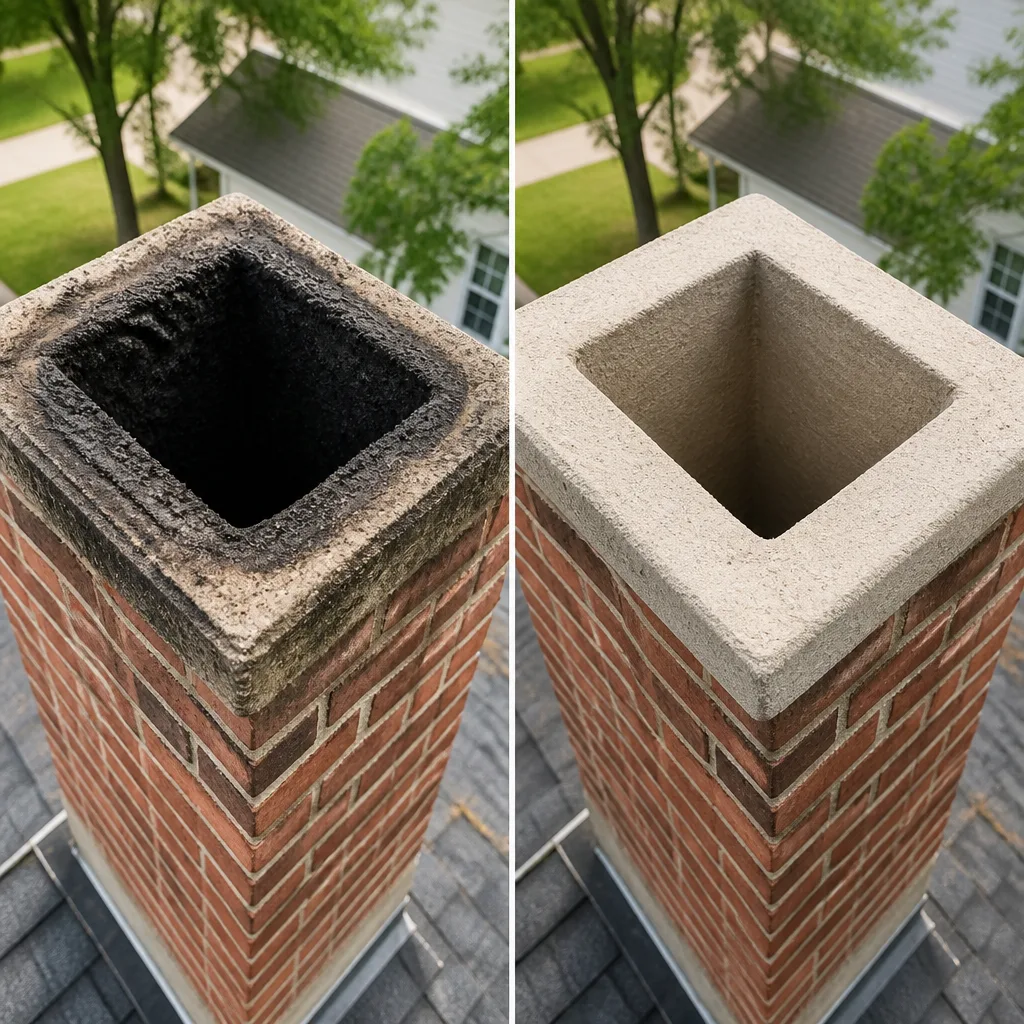
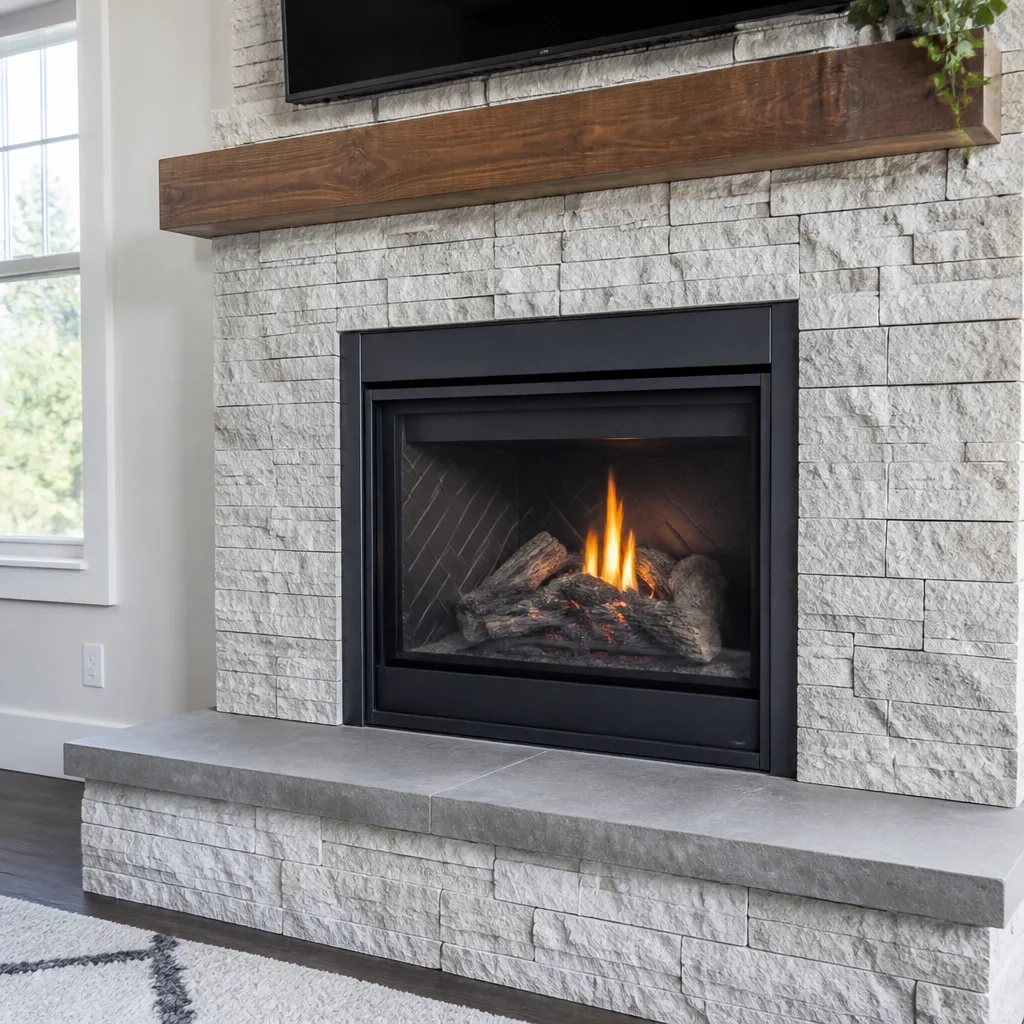
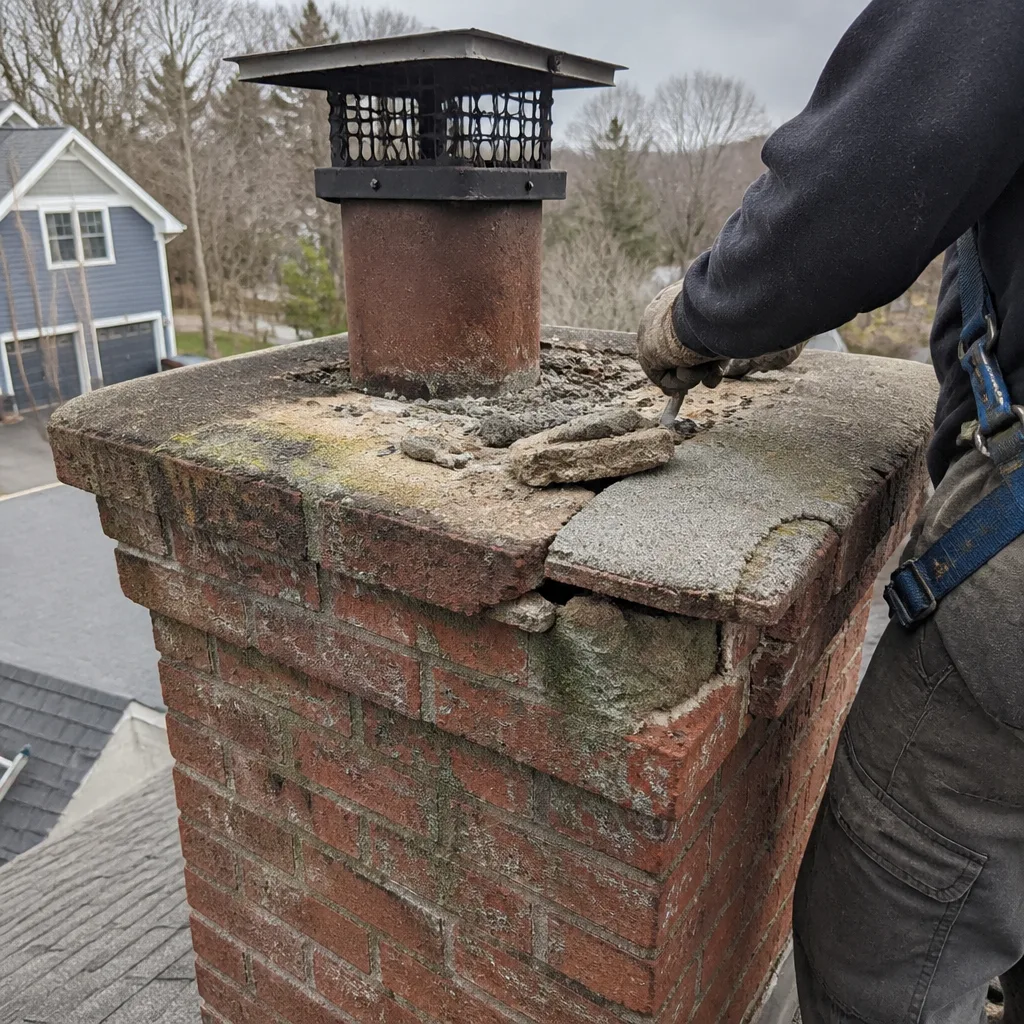 Before
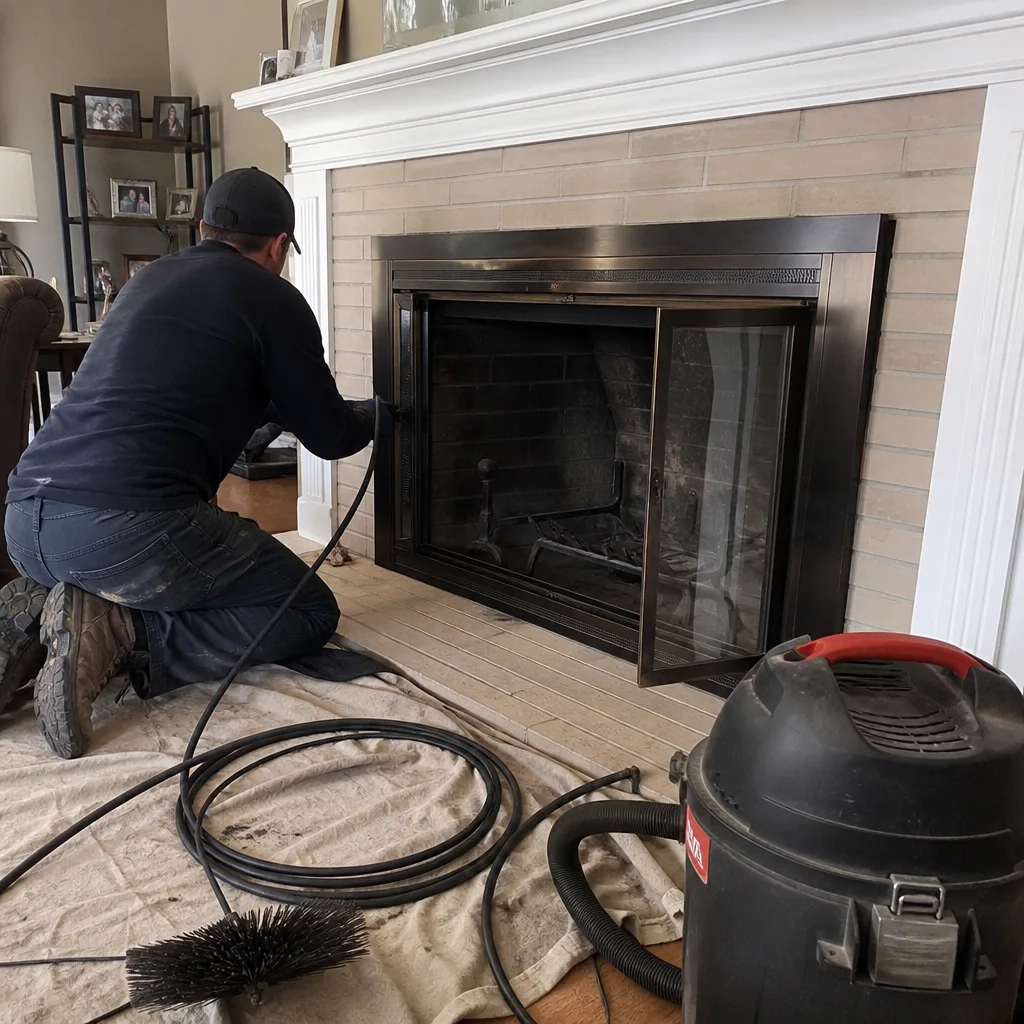 After
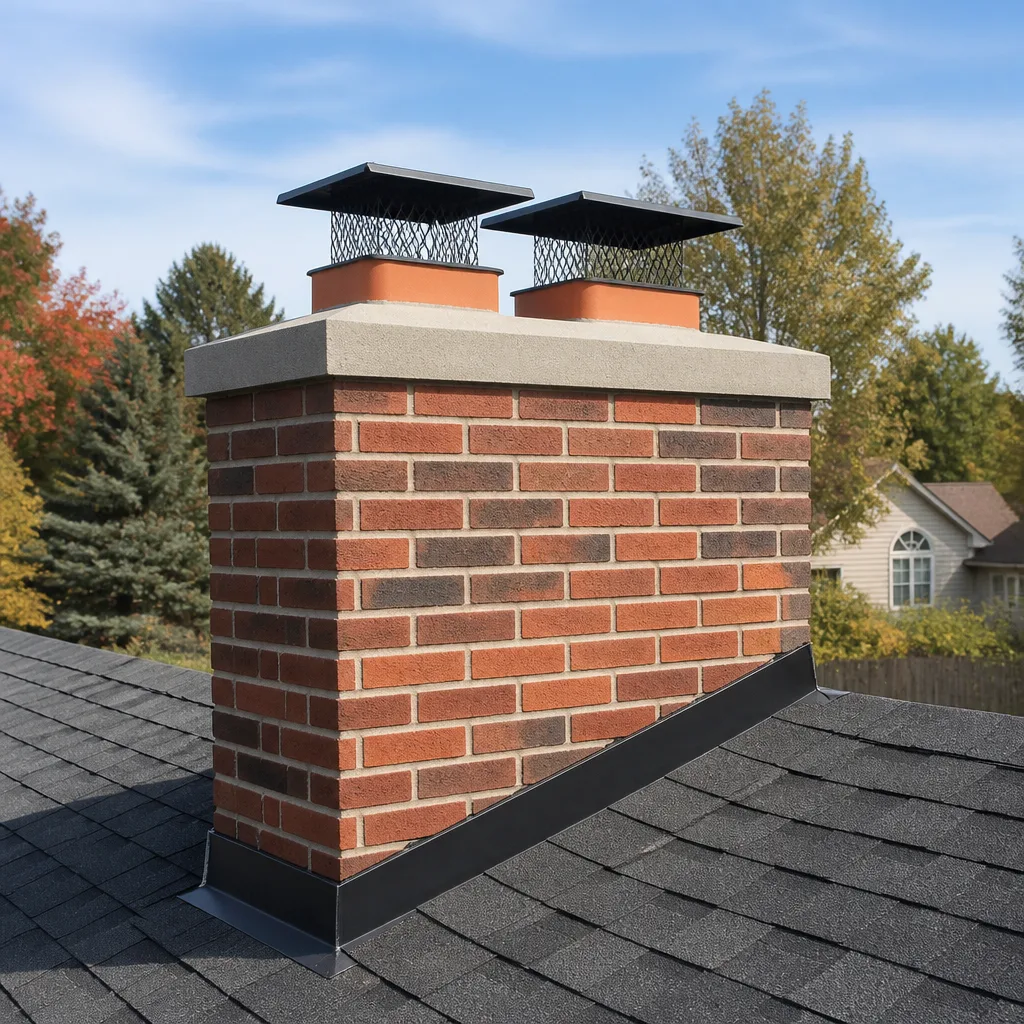
After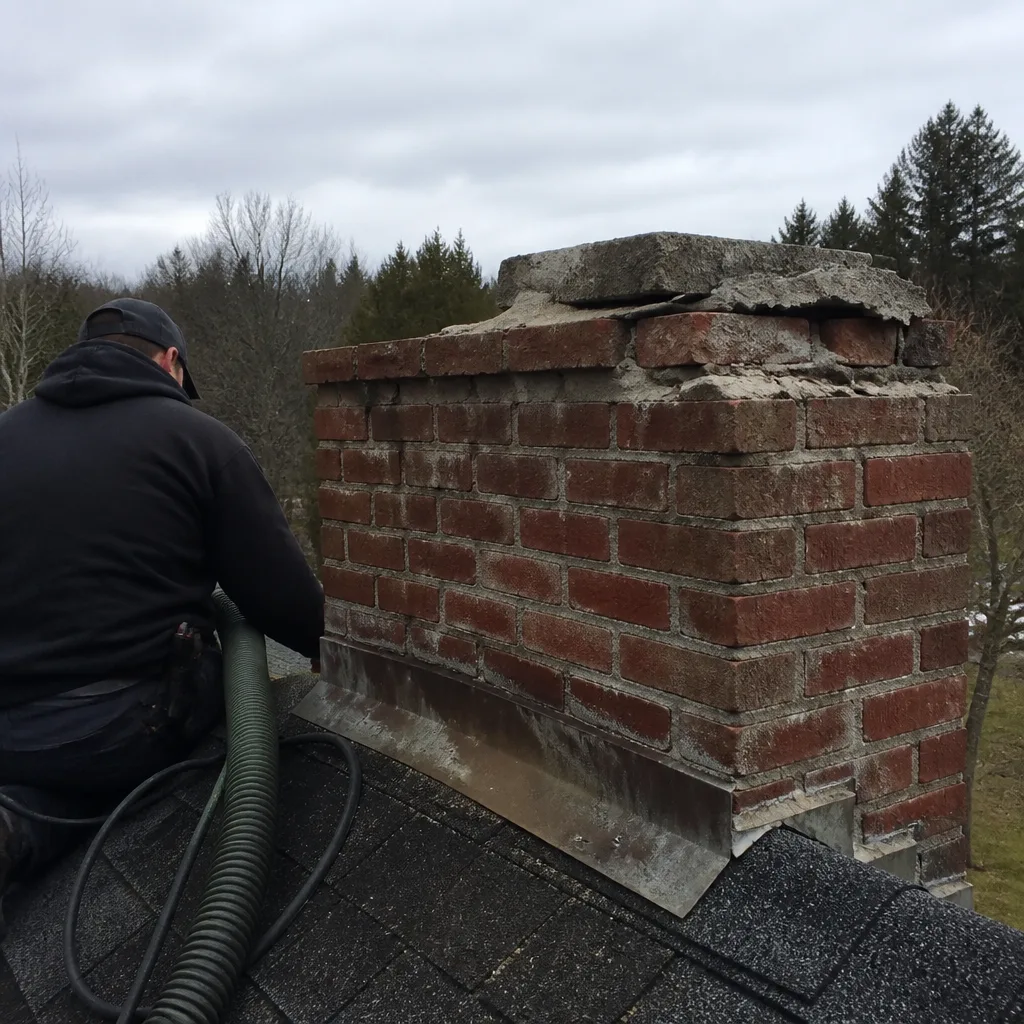 Before
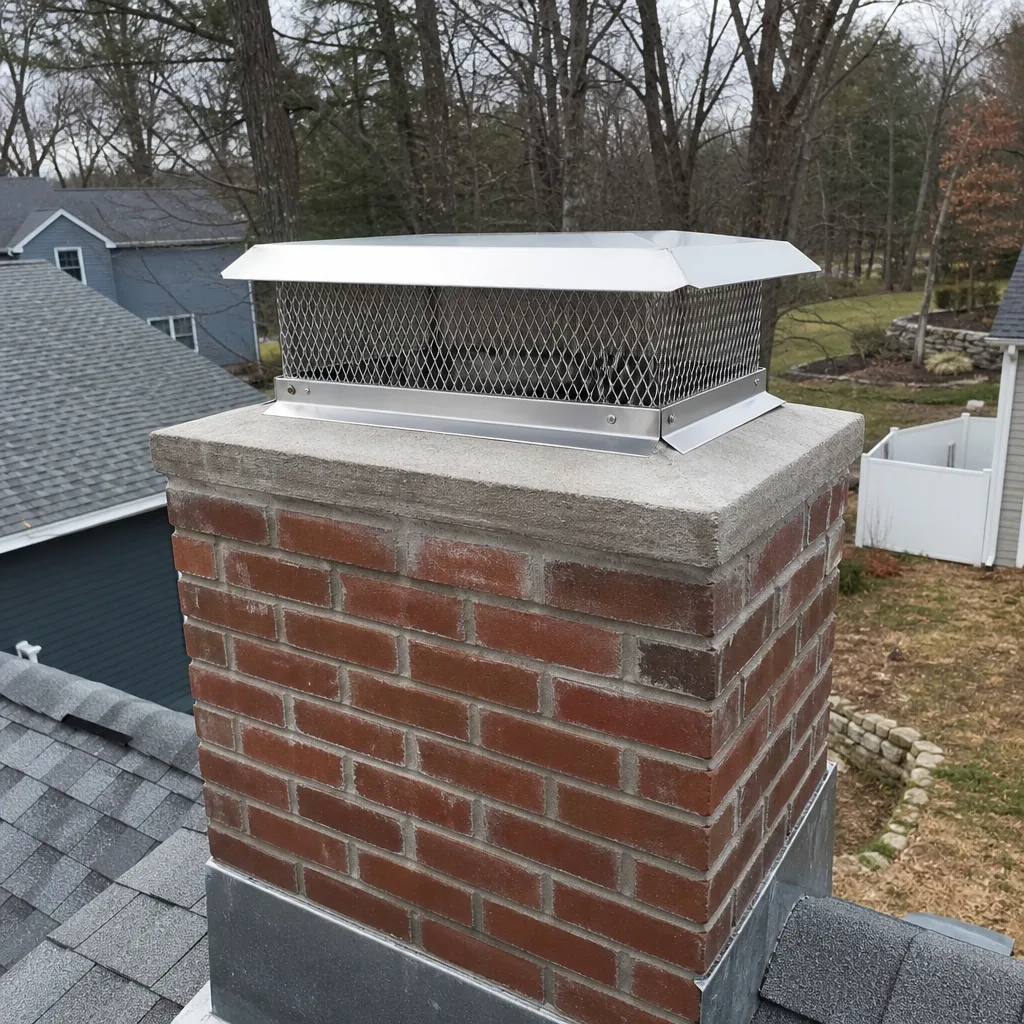 After
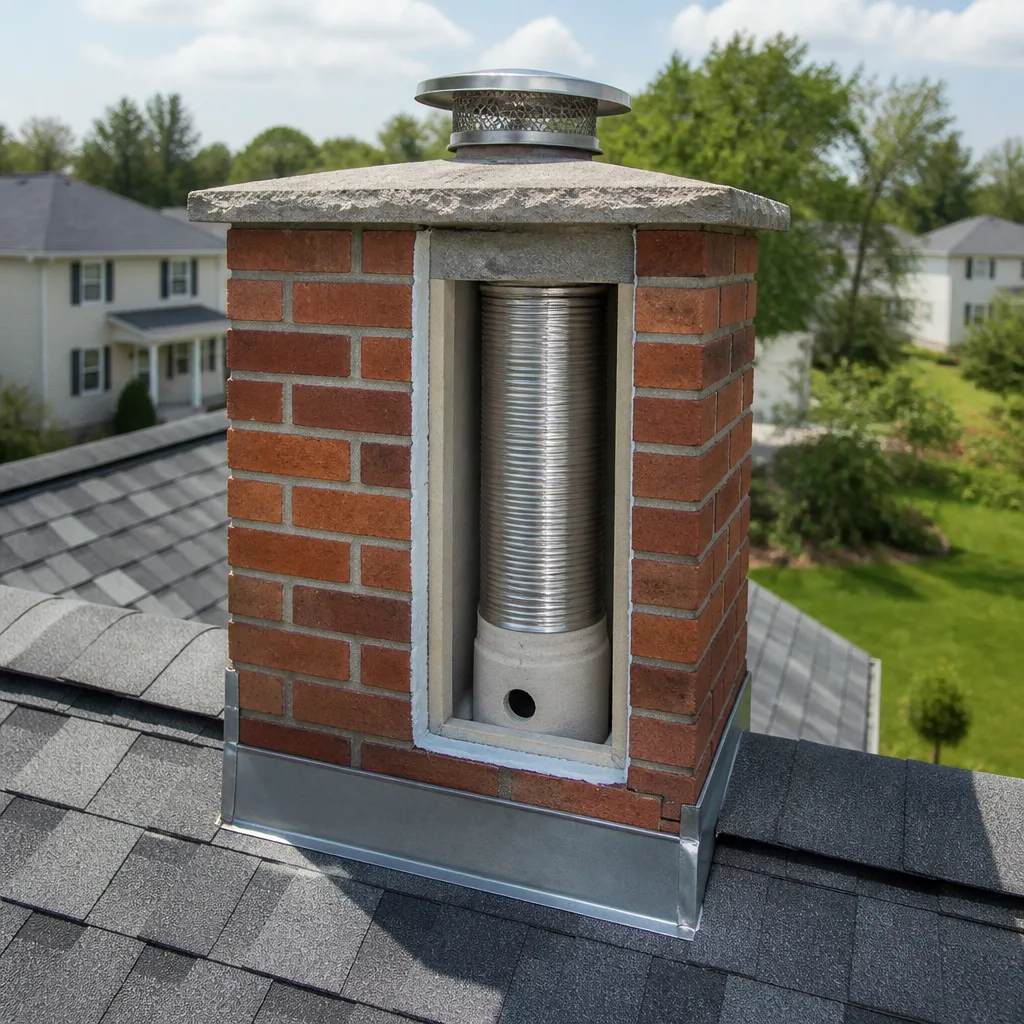
After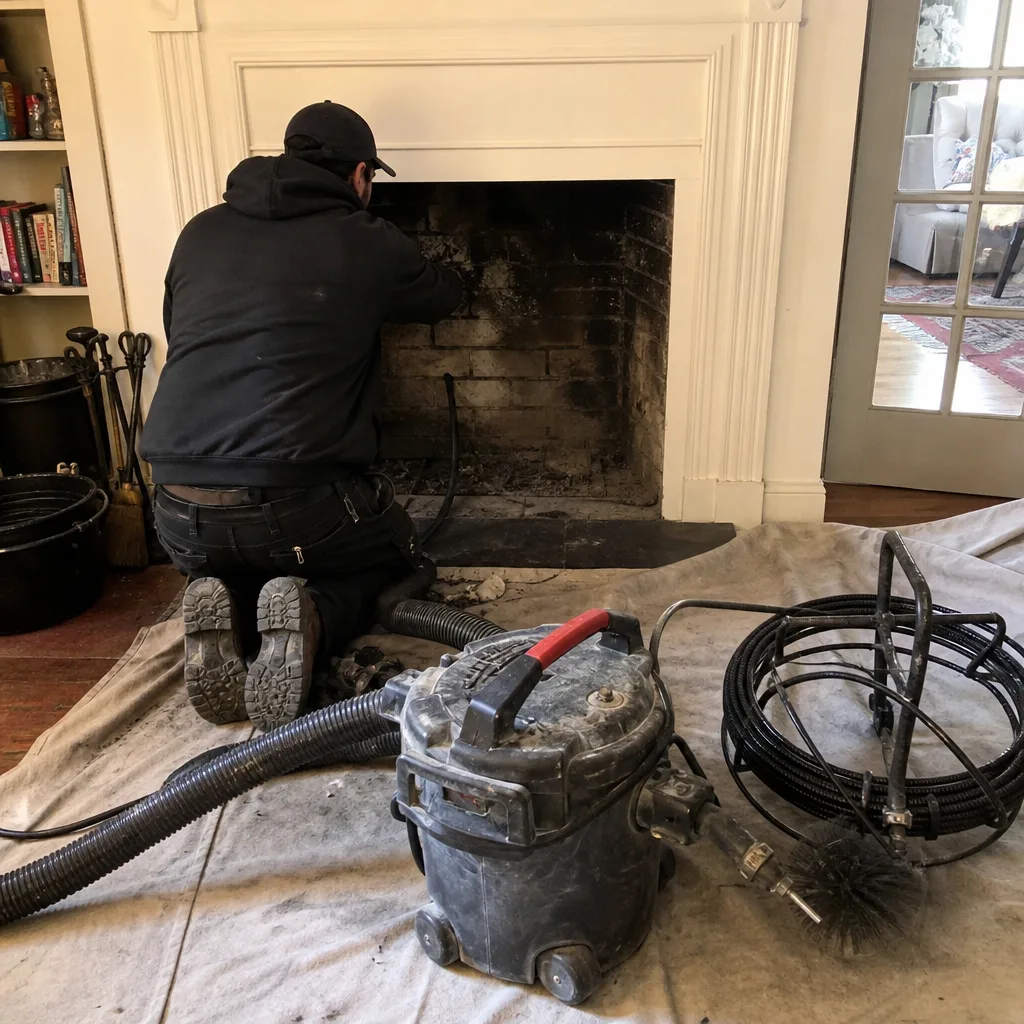 Before
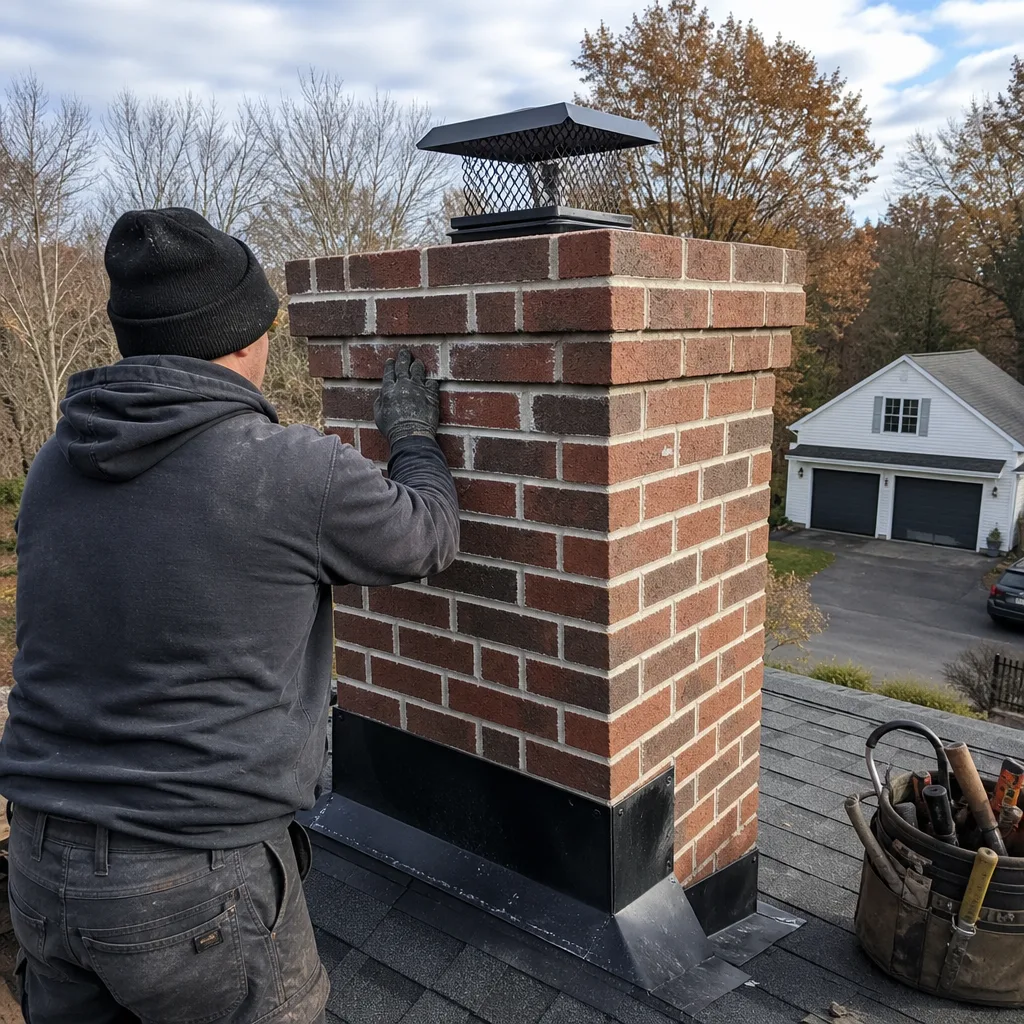 After
AfterLevel 2 Inspection in Wakefield, MA
A Level 2 chimney inspection is a camera-assisted examination of your entire chimney system – flue liner, smoke chamber, firebox, and accessible exterior surfaces – conducted to the NFPA 211 standard. In Wakefield, it’s the inspection required any time a home changes hands, after a chimney fire or structural event, or when a change of fuel type or appliance is involved. At Level Two Chimney Co., a Level 2 is not an upgrade you pay extra for: it’s what we do on every visit, because a flashlight look at the top of the flue doesn’t tell you what’s happening 20 feet down inside a clay tile liner.
We’ve inspected and cleaned more than 38,000 chimneys since 2009, every one with a written price before work started and a documented photo record when it was done. If you want to talk through what a Level 2 covers for your specific system, call us at (978) 861-1012 – a live person answers around the clock, not a voicemail.
Level 2 inspection is part of our full Chimney Cleaning & Sweep in Wakefield service, and most homeowners schedule them together. The camera comes down the flue either way, so combining the two in a single visit saves time and gives you a complete picture of your system’s condition before you light the first fire of the season.
When You Need a Level 2 Inspection
NFPA 211 is specific about the triggering events. So are the conditions we actually see on roofs in Wakefield. Here’s when a Level 2 isn’t optional:
- You’re buying or selling a home. Real estate transactions in Wakefield – and most of eastern Massachusetts – now routinely require a Level 2 as part of due diligence. A home inspector’s visual check of the firebox opening doesn’t satisfy that requirement. We provide a written report and photo documentation that holds up with attorneys, lenders, and insurers.
- You’ve had a chimney fire. Even a small, fast-burning chimney fire can fracture clay flue tile at temperatures the exterior masonry won’t show. After any event where creosote ignited inside the flue, NFPA 211 calls for a Level 2 before the system is used again. We see this regularly in older colonials in the Greenwood and Montrose neighborhoods, where single-wythe clay tile liners have been in service for 50 or more years.
- You changed your heating appliance or fuel type. Switching from a wood-burning fireplace to a gas insert, or replacing an oil furnace with a high-efficiency unit that vents differently, changes the flue’s thermal and moisture load. The liner that was sized correctly for your old appliance may not be right for the new one. A Level 2 documents the current state before you commit to an installation.
- Your home has been through a significant weather event. Wakefield sits in a climate band where freeze-thaw cycles hit hard from December through March. A single winter can crack a mortar crown, separate flue tiles, or push a chimney cap out of alignment. After a notable nor’easter or an ice event, the interior damage is rarely visible from the roof.
- You haven’t had an inspection in more than three years. If you’re burning wood regularly and the last documented look inside the flue was more than a few seasons ago, a Level 2 is the only way to know what class of creosote you’re dealing with – and whether you have a Class III glazed deposit that a standard sweep won’t remove.
- You bought the house and don’t have inspection records. Many homes in Wakefield – particularly the cape-style and garrison colonials built in the postwar decades around Crystal Lake – have chimneys that served oil furnaces, wood stoves, and fireplaces across multiple owners. Without documentation, you have no baseline. A Level 2 creates one.
Our Level 2 Inspection Process
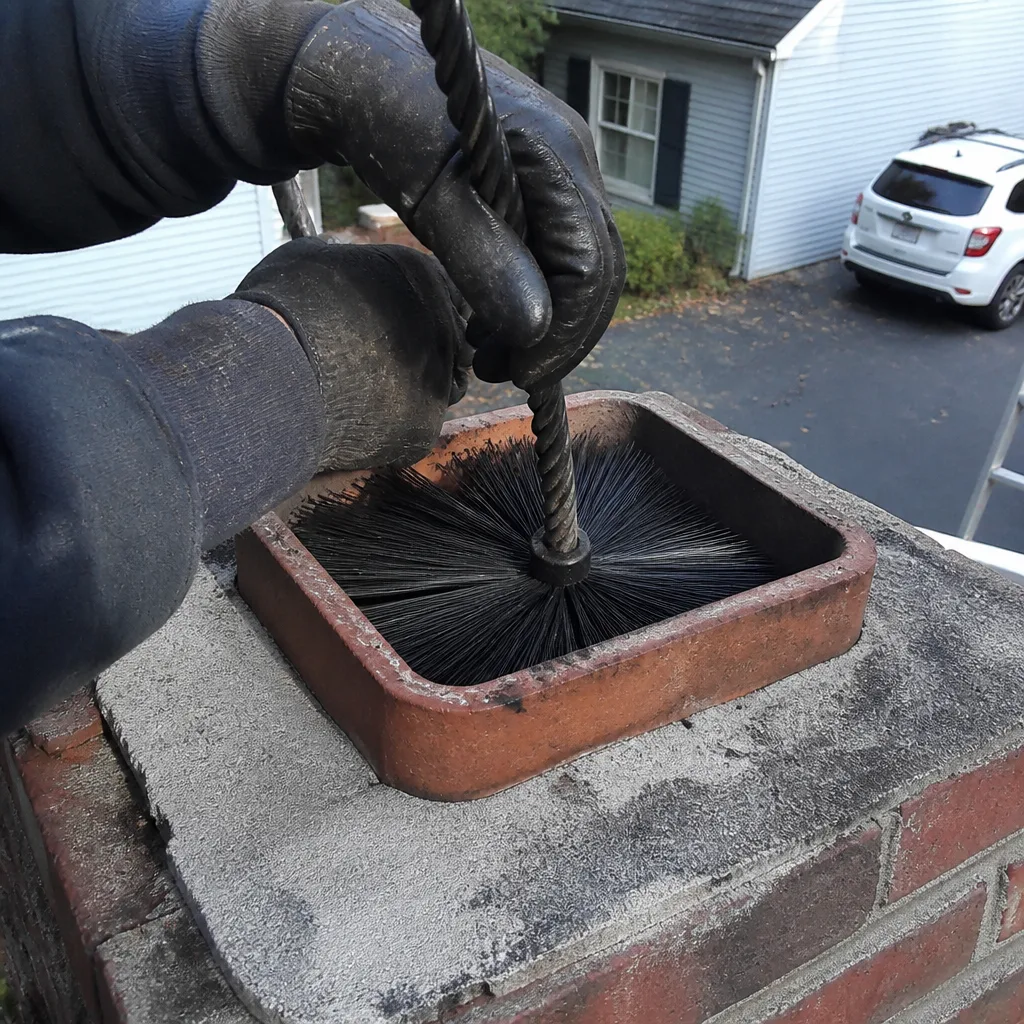
Here’s exactly what happens when we arrive – in order, no surprises.
- Written price and scope before we touch anything. Under Haven Standard Clause 1 – the “Have it in writing” clause – you receive a written price and written scope before any work begins. That’s not a soft promise; it’s the operational rule every technician at Level Two works under. If the written price changes because we find something inside the flue, we stop and show you what we found before quoting additional work.
- Exterior and roof-level assessment. The technician examines the chimney cap, crown, flashing, and visible masonry from the roof. In Wakefield, we specifically look at the cricket (the water-diverting saddle behind wider chimneys) because flat or missing crickets are one of the more common reasons for water infiltration in the two-story homes along Main Street and the streets running west toward Lake Quannapowitt. Spalling brick faces and separated mortar joints get noted and photographed at this stage.
- Firebox and smoke chamber inspection. Inside, we examine the firebox floor, rear wall, and throat damper, then look up into the smoke chamber. Corbeled smoke chamber masonry – the stepped-in brickwork that narrows the flue opening above the damper – is a common site for cracking and creosote accumulation. We describe what we find in plain terms: a hairline fracture in the back wall, a damper blade that doesn’t seat fully, or a smoke chamber with stage-two creosote deposits.
- Camera scan of the flue liner. The camera goes from bottom to top (or top to bottom, depending on flue geometry) and the footage is recorded. We’re looking at liner type – clay tile, stainless steel DuraFlex, poured-in-place – and checking for cracked sections, missing mortar joints, offset tile, or any spot where combustion gases could reach the surrounding structure. This is the part of the inspection that a flashlight look doesn’t replicate. Liner failures that cause house fires are almost always invisible from the firebox opening.
- Creosote classification and written findings. We classify creosote deposits as Class I (light, flaky, standard sweep removes it), Class II (tar-like, requires rotary cleaning), or Class III (glazed, hard, requires chemical treatment followed by mechanical removal). Each class carries different safety implications and different costs to address. You get that classification in writing.
- Documented photo record and written report. Under Haven Standard Clause 4, every visit ends with a documented photo record – camera still images from inside the flue, exterior photographs, and a written summary of findings. That record is yours. It’s what you hand to your insurance company, your real estate attorney, or your next sweep company if you ever want a second opinion. We’ve been building this archive practice since 2009, years before insurers began asking for it routinely.
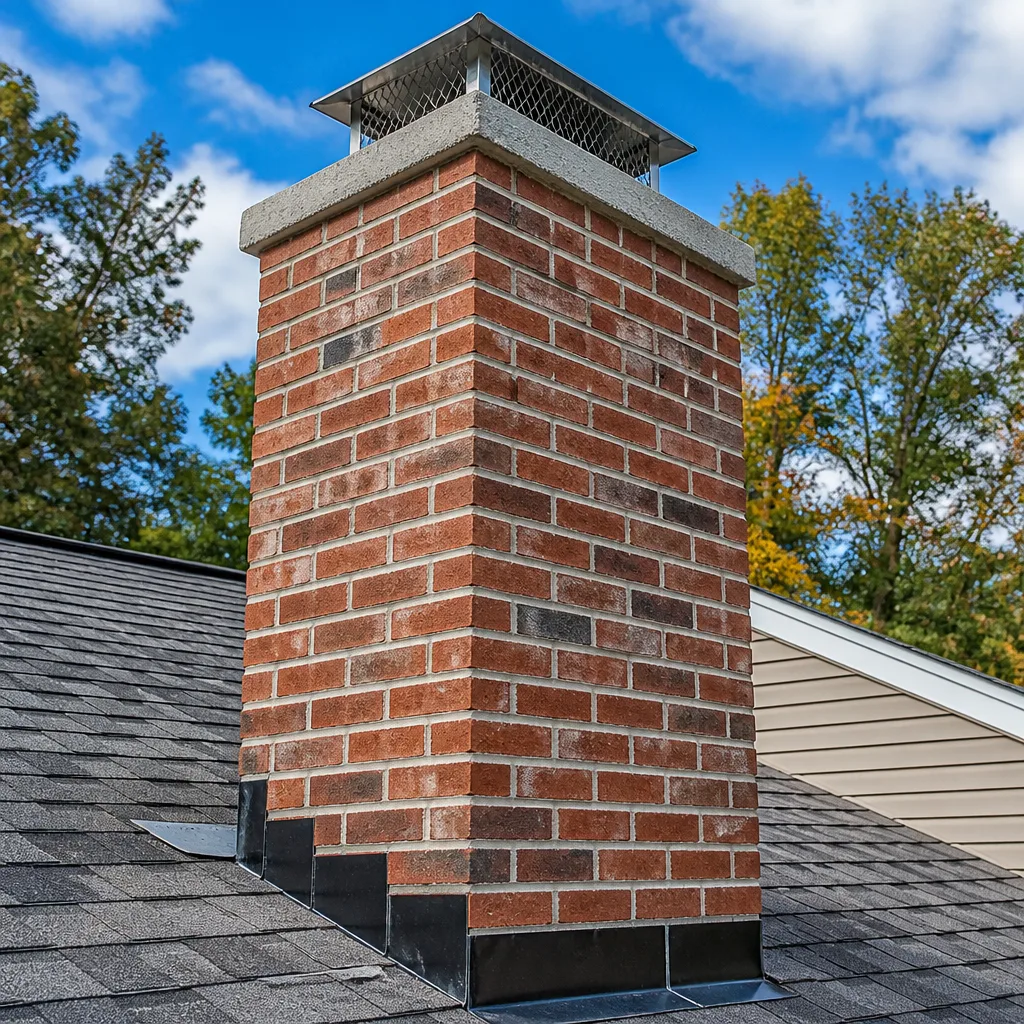
 Before
 After
AfterLevel 2 Inspection Pricing in Wakefield
A Level 2 chimney inspection in Wakefield typically runs $199 to $349 as a standalone service. When scheduled together with Chimney Cleaning & Sweep – which is how most customers book it, since the camera is going down either way – the combined visit generally falls in the $299 to $449 range for a standard single-flue system.
A few factors move the price within those ranges:
- Number of flues. Two-story colonials and capes with a fireplace plus a separate furnace flue in the same chimney stack are common in Wakefield. Each flue gets its own camera pass and its own documentation. A two-flue inspection adds roughly $80 to $120 to the base price.
- Flue height. Taller chimneys – common on the Victorian-era homes near the center of town – take longer to scan and require more footage review. This usually adds $30 to $60.
- Creosote classification. If the camera reveals Class II or Class III deposits, the inspection report will note that additional cleaning is needed. That cleaning is quoted separately, in writing, before we start. You’re never handed a surprise charge at the end of a visit.
- Access complexity. Steeply pitched roofs or difficult chimney cap configurations occasionally require additional safety rigging time. We’ll tell you upfront if your roof geometry falls into that category.
The written price is on the table before the camera comes out of the van. That’s Haven Standard Clause 1 – not a selling point, just how we operate. If you’ve received a written estimate from another company, bring it in. Our Free Second Opinion offer means we’ll review any written competitor quote at no charge.
Call (978) 861-1012 to schedule – estimates are free, and the price you’re quoted before we start is the price you pay.
What the Camera Finds in Wakefield Chimneys
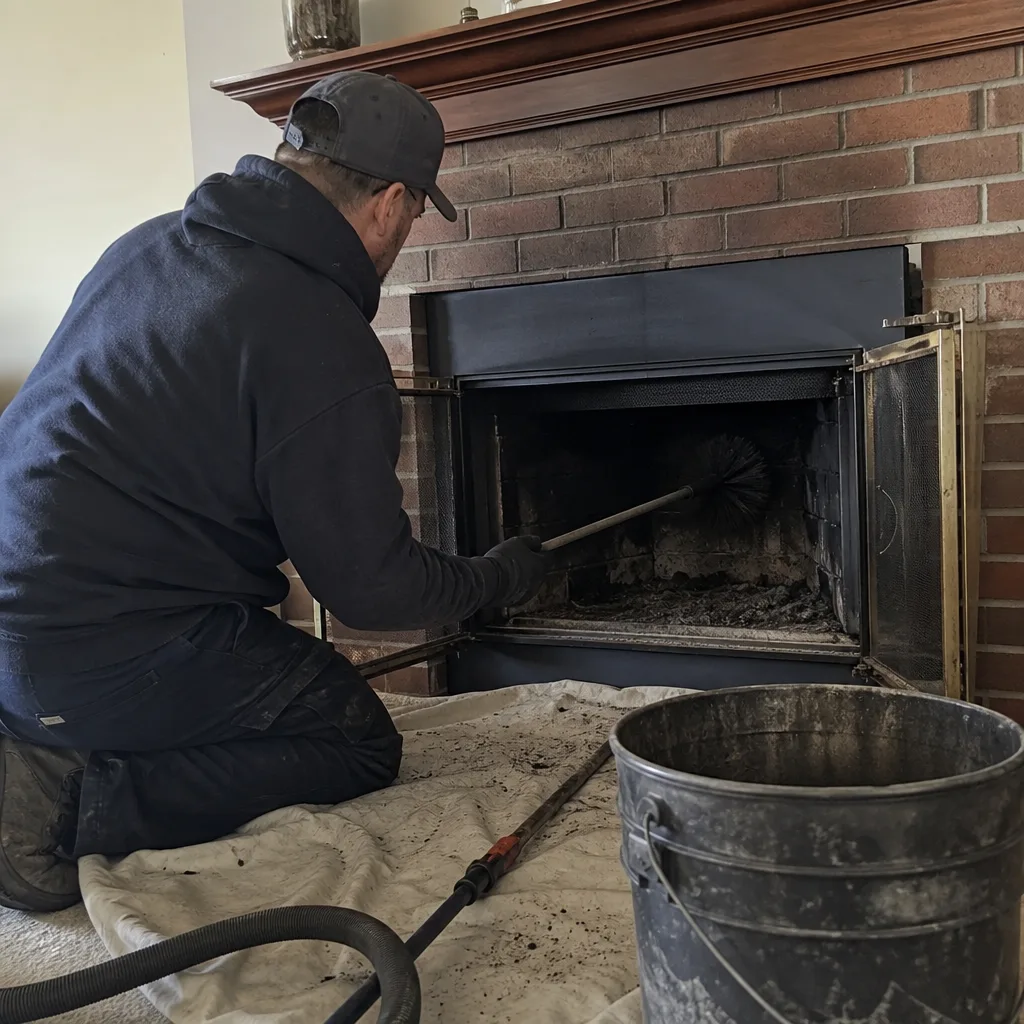
Wakefield’s housing stock skews old. A large share of the chimneys we inspect were built between 1920 and 1975, which means clay tile liners that have been through decades of thermal cycling, multiple fuel-type changes, and at least a few owners who weren’t keeping annual records. Here’s what the camera actually turns up most often:
Cracked or offset clay tile. Clay flue tile expands and contracts with every fire. Over 40 or 50 years, sections crack, shift out of alignment, or develop gaps at the mortar joints. A gap as small as a quarter-inch is enough to let combustion gases – including carbon monoxide – reach the framing inside your wall. We find this in roughly one in four clay-tile systems we scan in Wakefield, and most homeowners had no idea the crack was there.
Class II and Class III creosote. Wood fires produce creosote. How much, and what type, depends on burn temperature, wood moisture content, and whether you keep up with Annual Sweep service. In homes that burn a cord or two per winter but skip inspection years, Class II tar-like deposits are common. Class III glazed creosote is less frequent but significantly more dangerous – it’s highly flammable, it bonds to tile, and a standard sweep brush won’t remove it. We describe exactly what we find; we don’t leave you guessing about severity.
Failed crowns. The mortar crown at the top of the chimney is the first line of defense against water entry. Wakefield winters are hard on crowns – freeze-thaw cycling opens hairline cracks that widen each season until water is running down the exterior face of the flue tile inside the chimney. By the time you see a water stain on your ceiling, the damage is usually well underway. The camera often shows interior staining or efflorescence that correlates with a failing crown we photographed outside.
Liner type mismatches. When oil-heated homes converted to gas in the 1980s and 1990s, many did so without relining. Gas appliances burn cooler and produce more acidic condensate, which attacks clay tile and deteriorates unlined masonry faster than wood smoke does. If your furnace or water heater vents into an unlined or undersized flue, the Level 2 report will say so plainly.
Why “Level Two” Is the Name, Not Just the Service
The company is called Level Two Chimney Co. because NFPA 211 Level 2 is the baseline we work to – not an upgrade tier, not an upsell. When Corrine Halstead built the operating standards that became the Haven Standard in 2009, camera-scan documentation was the starting point, not an add-on. The written-price-before-work rule, the 365-Day Done Right Promise, the photo record – all of it traces back to the same premise: the customer deserves to know what was found, what it costs, and what’s warranted, in writing, before anyone starts.
That’s still the practice, 38,000 inspections later.
For Wakefield homeowners who want the inspection completed to that standard, we’re the service to call. Our technicians are background-checked, arrive in uniform, and text you when they’re on the way. The work is covered by our 365-Day Done Right Promise: if it’s not done right, we make it right.
FAQs – Level 2 Chimney Inspection in Wakefield
What’s the difference between a Level 1 and a Level 2 chimney inspection?
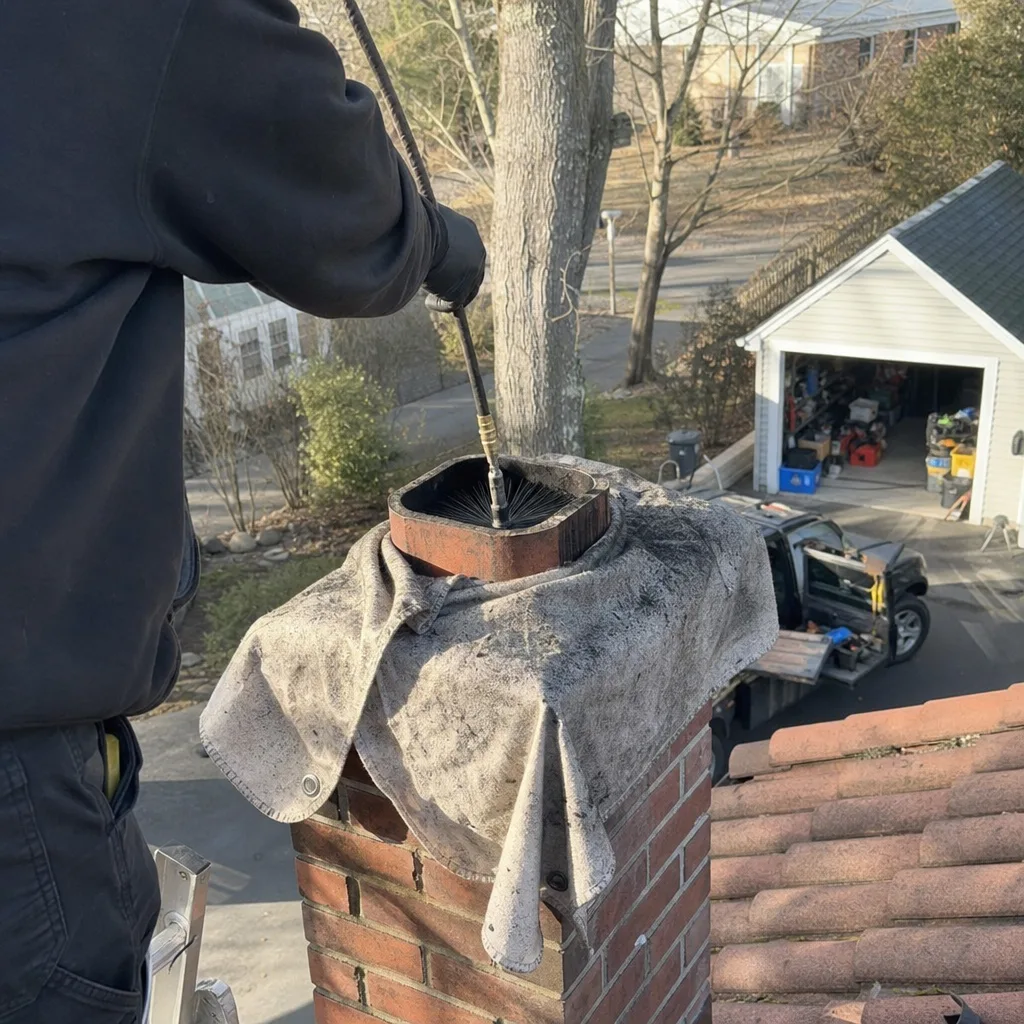
A Level 1 inspection is a visual check of the accessible portions of the chimney – what a technician can see from the firebox and from roof level without specialized equipment. A Level 2 inspection includes everything in a Level 1 plus a camera scan of the entire flue liner, documentation of accessible areas above and below the roofline, and a written report with photographic evidence. NFPA 211 requires a Level 2 any time there’s been a change of property ownership, a change of fuel type or appliance, or an event that may have damaged the chimney system. At Level Two Chimney Co., the camera scan is included on every inspection visit – we don’t offer the flashlight-only version. Call (978) 861-1012 if you want to confirm which level applies to your situation; the answer is free.
How much does a Level 2 inspection cost in Wakefield, MA?
A standalone Level 2 inspection in Wakefield typically runs $199 to $349 for a single-flue system. Combined with a chimney cleaning, the range is generally $299 to $449. Two-flue systems add $80 to $120. The written price is confirmed before any work starts – there’s no “call for a quote” at Level Two. Call (978) 861-1012 and we’ll give you a specific number based on your system, not a range you have to guess from. See How Much Does Chimney Cleaning & Sweep Cost? (2026 Price Guide) - Wakefield, MA for more detail.
Is a Level 2 inspection required when selling a house in Wakefield?
It’s not written into Wakefield municipal code as a mandatory requirement, but it’s become standard practice in real estate transactions throughout Middlesex County. Most buyers’ attorneys request one, and insurers increasingly ask for documented inspection records before binding coverage on a wood-burning system. A Level 2 report with camera footage and a written technician summary is the format that satisfies those requests. A standard home inspection – which typically includes only a visual check of the firebox from below – does not. Call (978) 861-1012 to schedule before your closing date; same-week appointments are usually available.
Can I be in the house during the inspection, and what documentation do I get at the end?
Yes – you can watch the camera feed in real time if you want to, and most homeowners who are around for the inspection do exactly that. At the end of the visit, you receive a documented photo record under Haven Standard Clause 4: camera still images from inside the flue, exterior photographs of the cap, crown, and flashing, and a written summary of findings that includes the creosote classification and any noted deficiencies. That documentation is yours permanently. It’s the record you hand to your insurance company, your real estate attorney, or your next chimney service provider if you ever want a second opinion on what we found.
Schedule Your Level 2 Inspection in Wakefield
If your chimney hasn’t been camera-scanned recently – or ever, as far as you know – a Level 2 inspection is the place to start. You’ll know exactly what’s inside the flue, what it costs to address anything we find, and you’ll have a written record that documents the condition of the system on the day we were there.
Corrine Halstead and the team at Level Two Chimney Co. have been doing this in Wakefield since 2009. The price is on the table before the camera comes out of the van, the photo record is yours when the job is done, and the 365-Day Done Right Promise covers every inspection we complete.
Call (978) 861-1012 to schedule – a live person answers any time of day. Estimates are free, and same-week appointments are generally available for Wakefield addresses.
Written by Corrine Halstead, Owner at Level Two Chimney Wakefield, serving Wakefield.