
Last updated September 22, 2026
Level 1 sweep and inspection to the NFPA 211 annual standard - flue, crown, cap, and flashing checked and photographed
Chimney sweep logs do not sweep chimneys. They loosen some creosote - which then falls where a brush and vacuum still have to collect it.
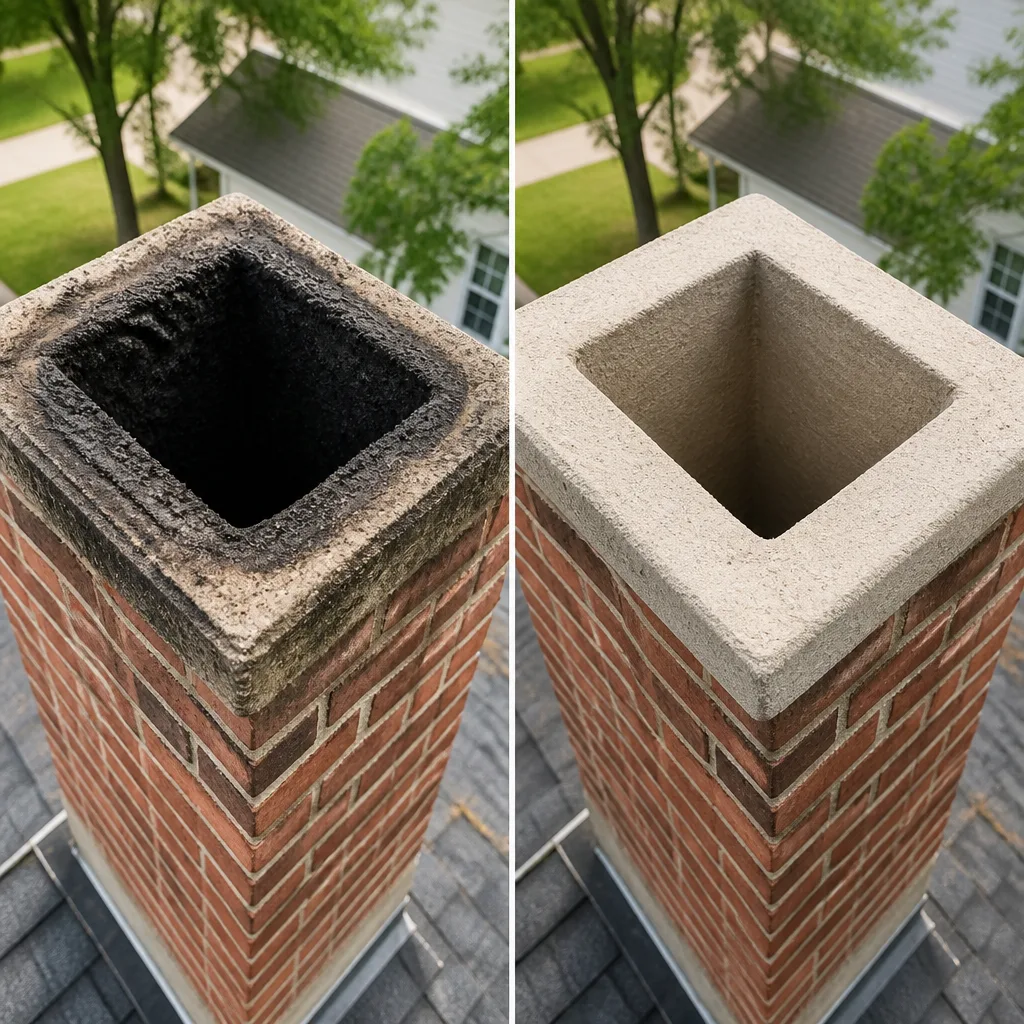
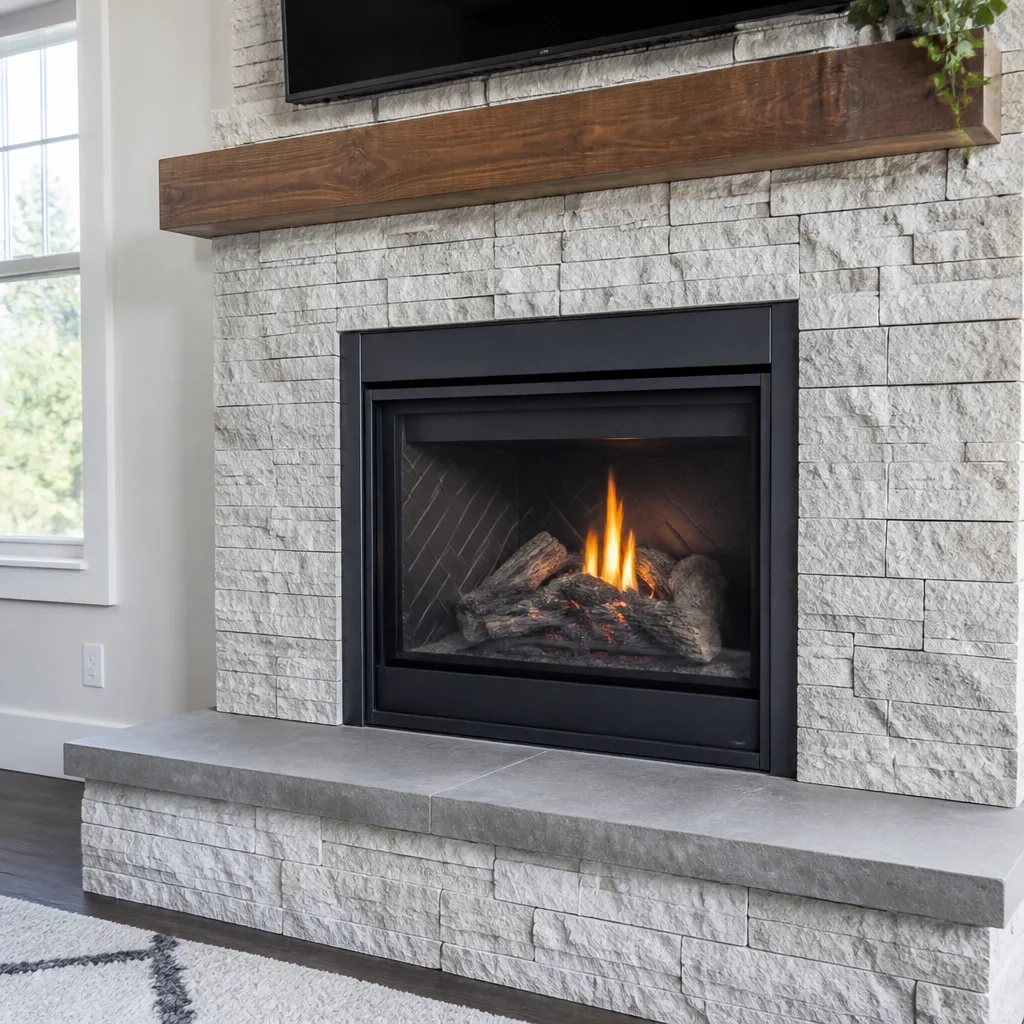
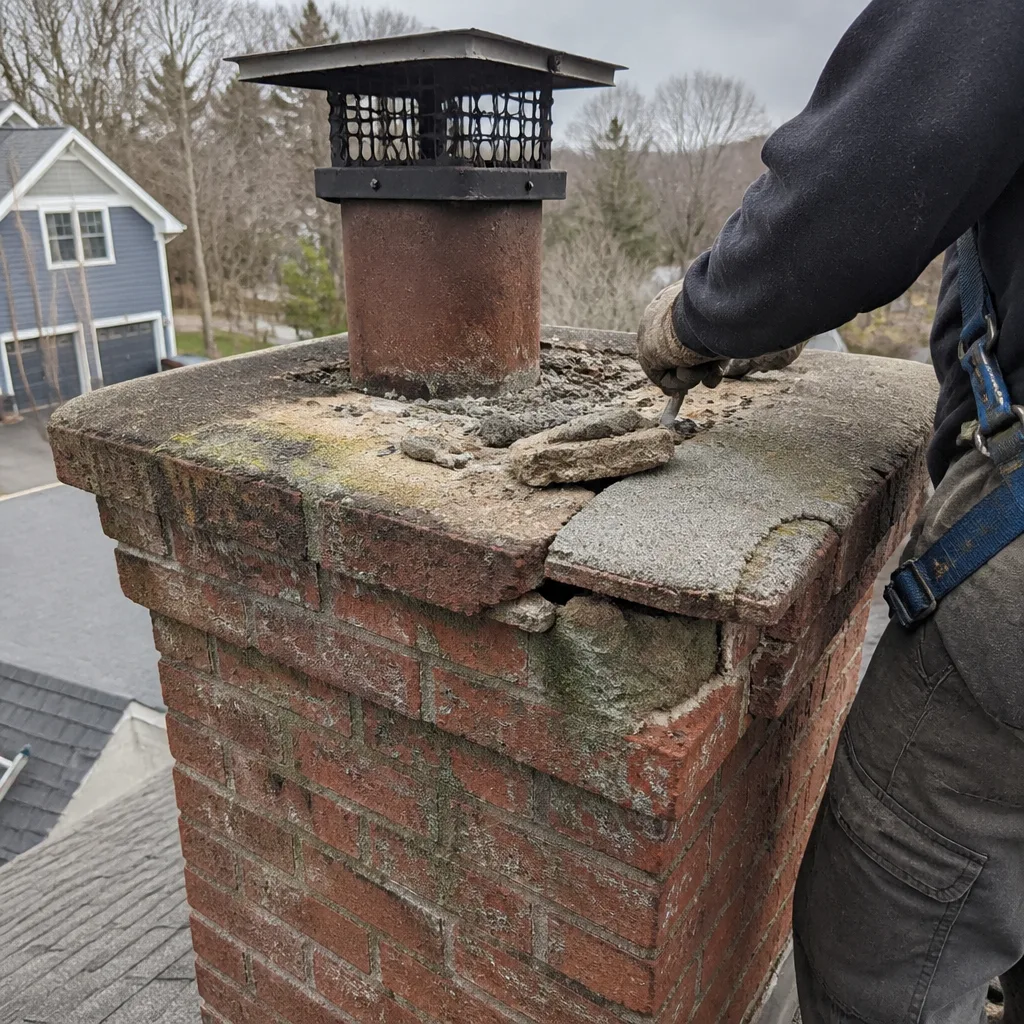 Before
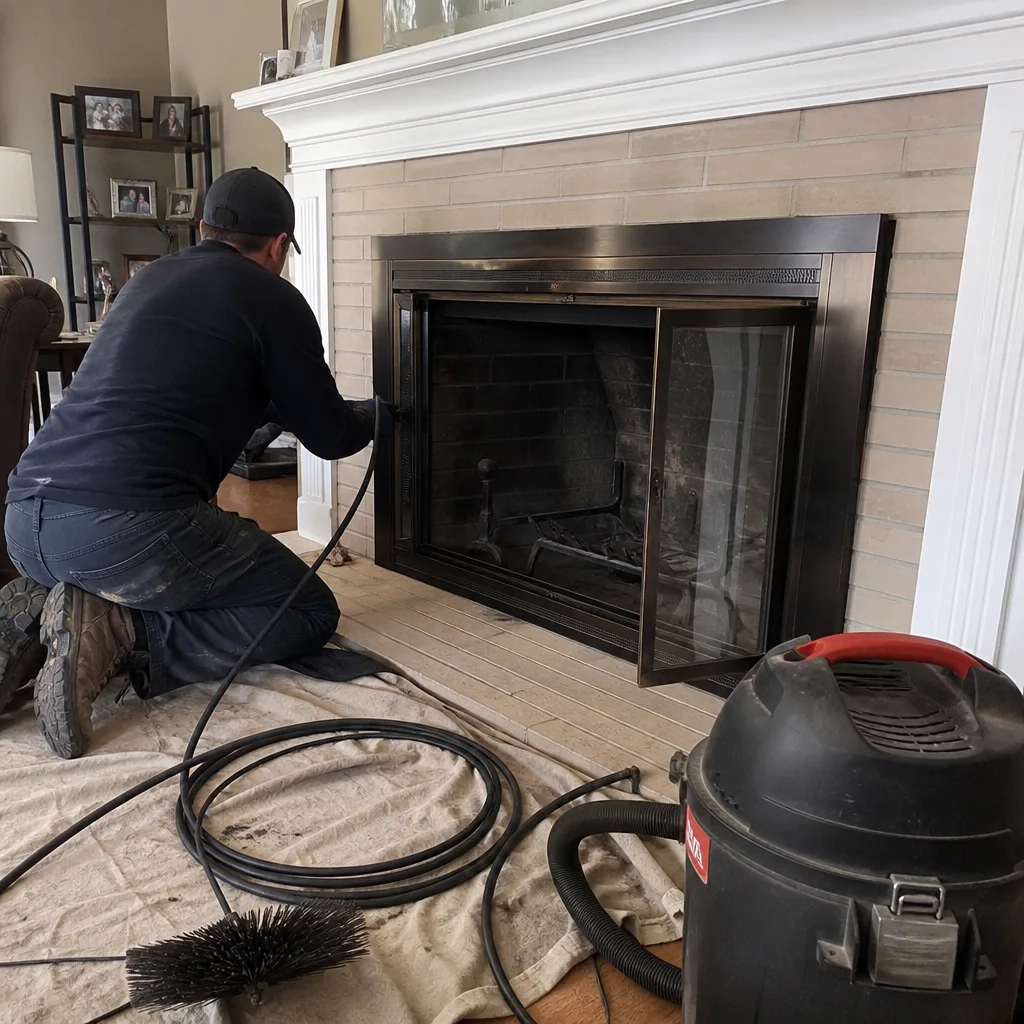 After
After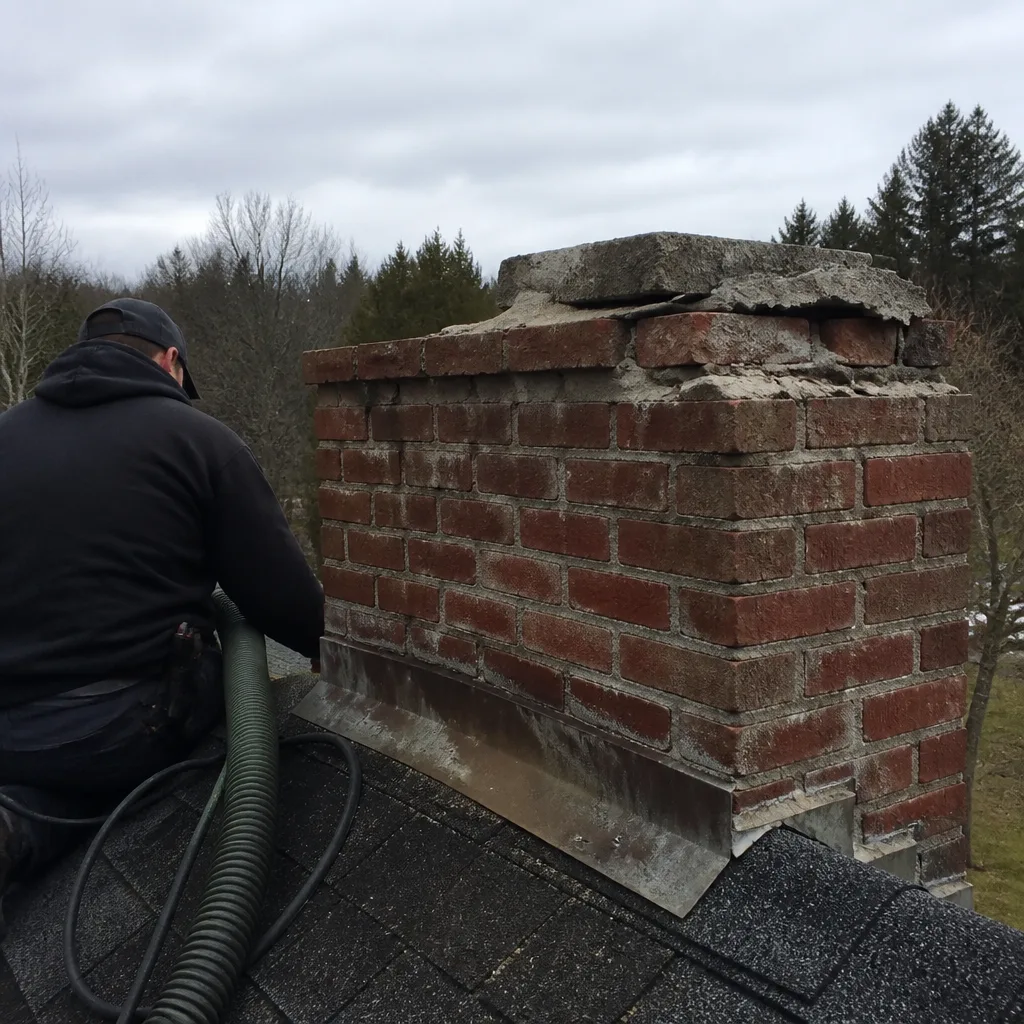 Before
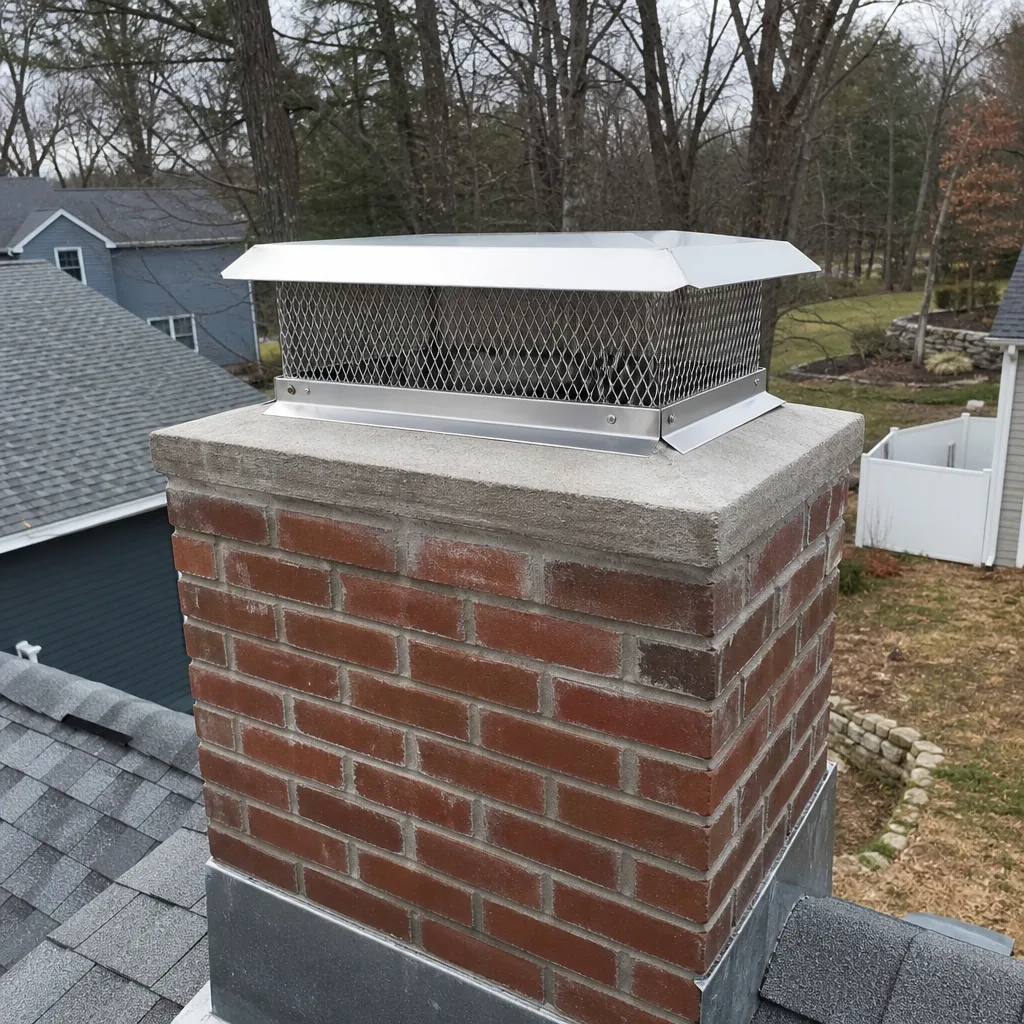 After
After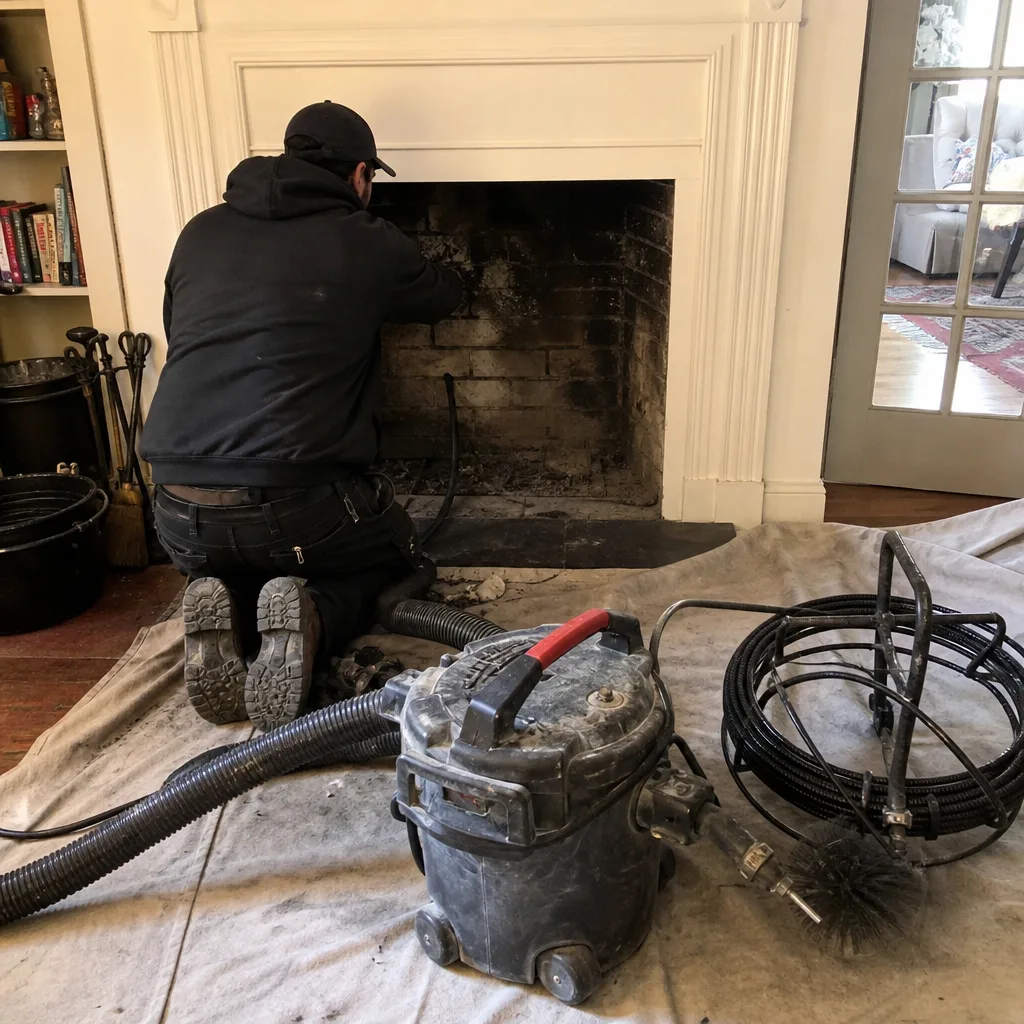 Before
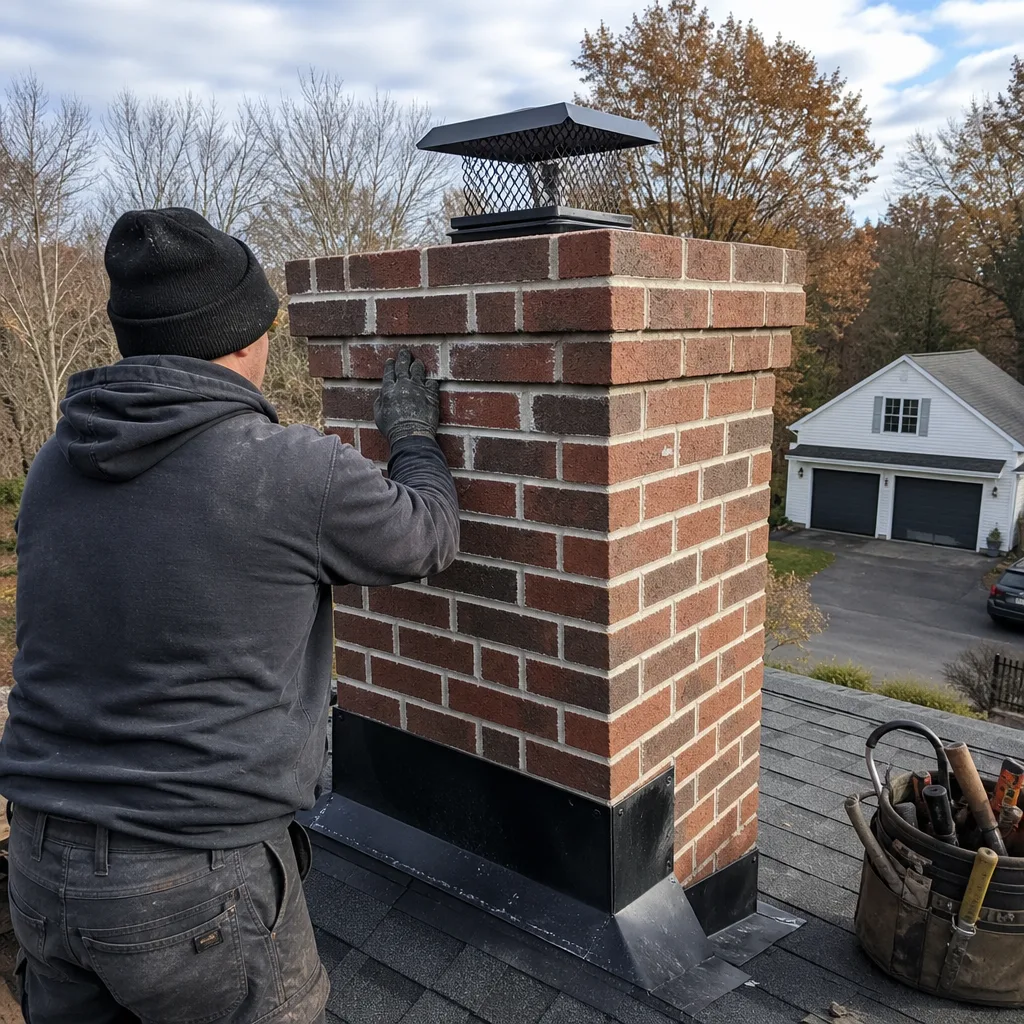 After
AfterDIY vs Professional Chimney Cleaning: The Wakefield Homeowner’s Decision Guide
The $40 chimney brush kit on Amazon will clean creosote you can see - but stage-two glaze and any crack behind the smoke chamber are invisible to a brush, a flashlight, and the homeowner holding both. We’ve inspected more than 38,000 chimneys since 2009, and the ones that scare us aren’t the dirty ones. They’re the clean-looking ones with a separated flue liner or a cracked crown that a brush passed right over. In Wakefield, where most housing stock was built between 1890 and 1980 and many flues have offsets, clay liners, or no liner at all, the question isn’t whether you can brush your own chimney. It’s whether brushing is the right job at all.
This guide defines the exact conditions where DIY chimney cleaning is defensible, the conditions where it creates real liability, and what a professional inspection with camera documentation actually finds that a brush cannot. For more guides & resources, see our blog.
Quick Answer
DIY chimney brushing is adequate for exactly one scenario: a gas fireplace insert with a flexible stainless liner, used fewer than 50 hours last season, with no visible creosote buildup and no documented-inspection clause in your homeowner’s insurance. For every other combination - wood-burning appliance, unlined masonry flue, any visible creosote, or any insurance policy requiring professional inspection - DIY cleaning misses the hazards that matter and may void your coverage.
Table of Contents
- The One Scenario Where DIY Chimney Cleaning Is Defensible
- Four Conditions That Make DIY Inadequate Regardless of Skill
- The Equipment Gap: What a Camera Finds That a Brush Cannot
- The Wakefield Reality: Why Your Flue Isn’t a Straight Shot
- What a Written Professional Record Does That DIY Cannot
- DIY vs Professional: Actual Cost Breakdown in Wakefield
- Safety Realities Every Wakefield Homeowner Should Know
- Common Mistakes to Avoid
- When to Call a Professional
- Frequently Asked Questions
- The Bottom Line
 Before
 After
AfterThe One Scenario Where DIY Chimney Cleaning Is Defensible
We don’t start every conversation by telling people to hire us. Some chimneys genuinely don’t need a professional sweep every year, and pretending otherwise wastes your money and erodes trust.
DIY brushing is defensible when all four of these conditions are met:
- Gas appliance only. Natural gas or propane burns much cleaner than wood. The combustion byproducts are primarily water vapor and carbon dioxide, with minimal particulate matter. There’s no creosote formation, no stage-one buildup, no glaze. What you’re removing is loose dust and occasional spider webs.
- Flexible stainless steel liner in place. The liner is the containment system. If it’s intact, properly sized, and properly connected at the appliance and termination, the flue gas path is controlled and predictable. You’re not dealing with the variable surface of unlined brick or deteriorating clay tile.
- Fewer than 50 hours of use last season. Low use means low thermal cycling, low moisture accumulation, and minimal chance of liner movement or joint separation. Above 50 hours, we recommend a Level 1 inspection at minimum, even for gas.
- No visible creosote or debris, and no insurance requirement. Look up from the firebox with a bright light. If you see shiny black glaze, flaky deposits, or bird nests, you’re past DIY territory. And if your homeowner’s policy has a “documented professional inspection” clause - increasingly common in Massachusetts - DIY cleaning doesn’t satisfy it regardless of what you find.
Even in this limited scenario, we recommend a professional NFPA 211 Level 2 inspection every three to five years. Gas appliances can develop condensation issues, liner corrosion, or draft problems that no brush will reveal. In Wakefield’s climate, where temperature swings from below zero to humid 90-degree days stress metal components, that interval shouldn’t stretch longer.
Four Conditions That Make DIY Inadequate Regardless of Skill
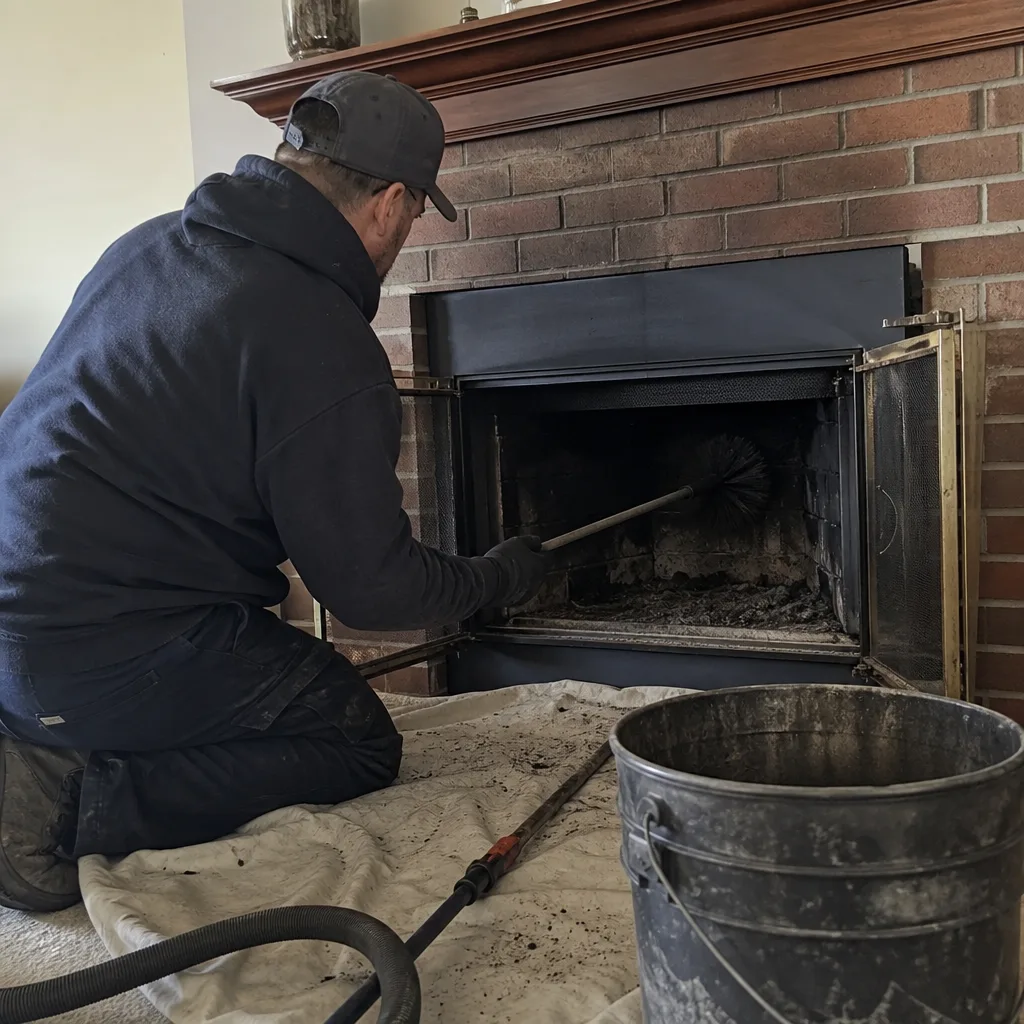
Skill with a brush rod doesn’t change the physics of what you can’t reach or see. These four conditions override any amount of homeowner competence:
1. Wood-Burning Appliances
Wood combustion produces creosote in three stages. Stage one is sooty, flaky, and brushable. Stage two is shiny, hard, and requires a rotary chain system to remove. Stage three is glazed, tar-like, and often requires chemical treatment before mechanical removal. A homeowner with a poly brush can’t distinguish stage one from stage three from the firebox looking up, and can’t remove stage two or three with consumer-grade equipment.
More critically, wood-burning systems generate the highest flue gas temperatures. A crack or separation in a clay liner that would tolerate gas exhaust may fail catastrophically with wood exhaust, transferring heat directly to combustible framing. We’ve found pyrolyzed - chemically altered, lowered-ignition-point - framing members in Wakefield homes on Albion Street and Prospect Street where a liner crack went undetected for multiple seasons.
2. Unlined Masonry Flues
Many Wakefield homes built before 1940 have unlined brick flues. The mortar between bricks deteriorates from acid condensation and thermal cycling. A brush removes some loose material but can’t assess the depth of mortar loss or expose the voids where flue gases leak into wall cavities. Camera inspection is the only method that documents liner condition in an unlined system, and it’s not optional - it’s diagnostic.
3. Any Visible Creosote Buildup
If you can see creosote, you can’t assess how much you can’t see. Creosote accumulates unevenly, often thickest at the smoke chamber - the area above the damper and below the flue - where brush access is limited even for professionals with specialized tools. The smoke chamber is also where many chimney fires start, because it’s the widest area with the most turbulent flow and the lowest gas velocity.
4. Insurance Policies With Documented-Inspection Clauses
Massachusetts homeowner’s insurers have increasingly added clauses requiring “documented professional inspection” for chimney-related claims. DIY cleaning produces no documentation. If a chimney fire occurs and your insurer discovers you maintained the system yourself without professional inspection, coverage denial is common. We’ve provided documented photo records for Wakefield homeowners during claims adjustments - records that only exist because we created them at the time of service, not retroactively.
The Equipment Gap: What a Camera Finds That a Brush Cannot
The consumer brush kit contains poly or wire brushes, extension rods, a plastic drop cloth, and maybe a dust mask. What it never contains is a chimney inspection camera - and the camera is the tool that finds the finding that matters.
Here’s what our camera system, standard on every Chimney Cleaning & Sweep in Wakefield, documents that a brush passes over:
- Flue liner cracks and separations. Clay tile liners crack from thermal shock, often at the joints between sections. A crack can be hairline and still allow flue gases to escape. We document these with video and still frames, measured for width and location.
- Liner displacement or slumping. In older systems, clay liners can shift out of alignment, creating gaps where creosote accumulates and sparks can escape. This is common in Wakefield’s pre-1950 housing stock where original liners were installed without proper support.
- Spalling and mortar loss. Spalling is the flaking or chipping of brick or tile surfaces from freeze-thaw cycling and acid attack. It thins the liner wall and exposes fresh, porous material to further damage. A brush might knock off loose spall but can’t measure remaining wall thickness or document progression.
- Smoke chamber defects. The smoke chamber is the transition area from firebox to flue, often corbeled brick or parged with mortar. It’s inaccessible to standard brushes and invisible from below without a camera. Parging cracks and exposed corbel steps create turbulence that deposits creosote and can allow sparks to contact framing.
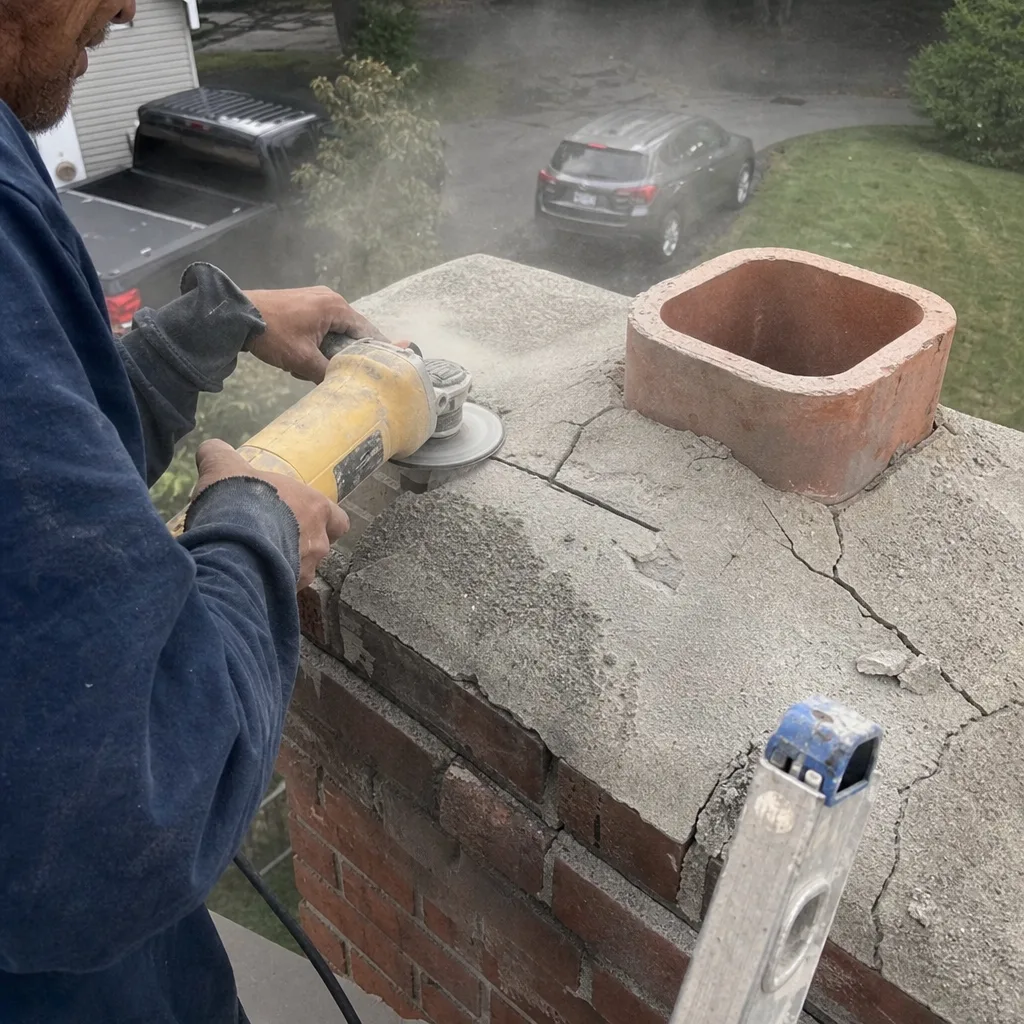
- Crown and cap conditions. From inside the flue, we can assess crown integrity, looking for cracks that allow water infiltration. Water is the accelerant for nearly every chimney deterioration pattern in New England.
Clause 4 of the Haven Standard requires this photo record on every job. We’ve maintained that practice since 2009, before insurers or regulators asked for it. The archive now exceeds 38,000 documented inspections, and it’s the record Wakefield homeowners rely on when selling their home, filing insurance claims, or planning major repairs.
The Wakefield Reality: Why Your Flue Isn’t a Straight Shot
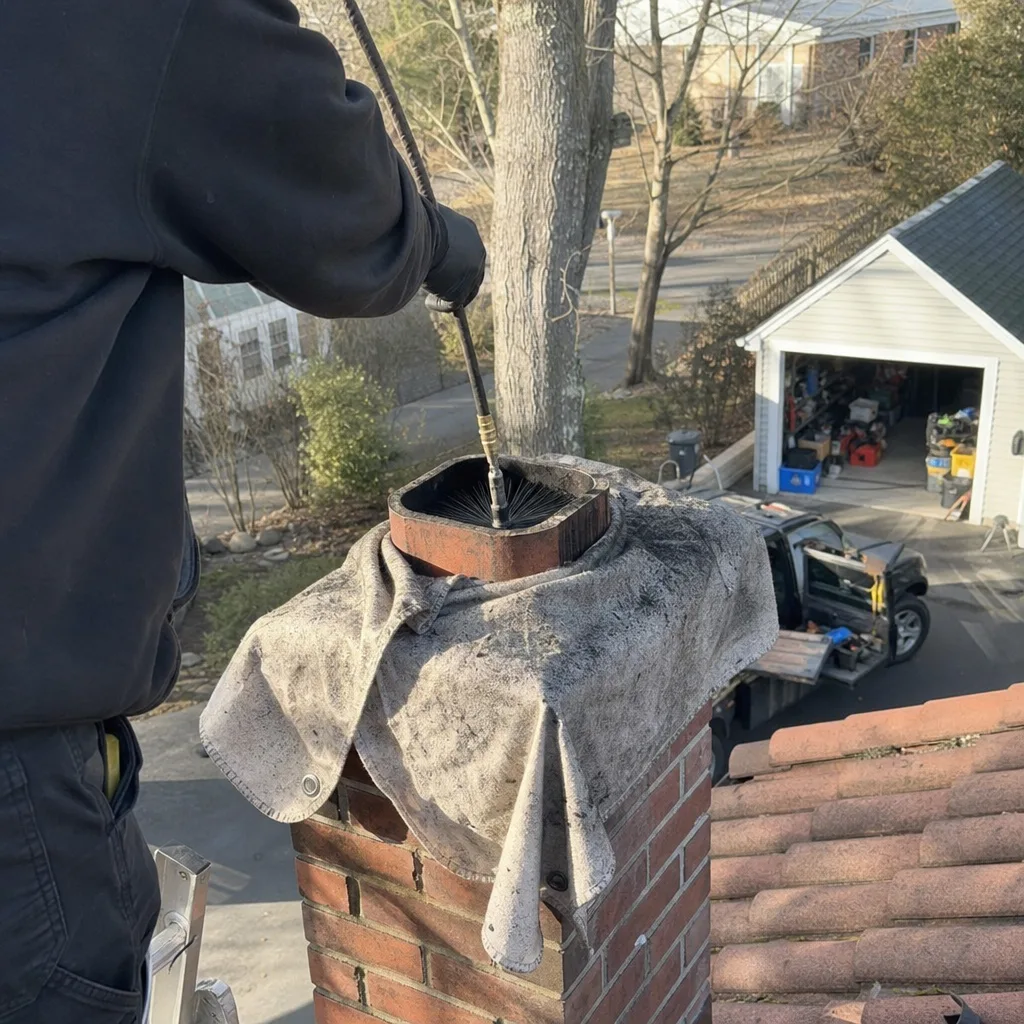
Chimney brush kits assume a straight vertical flue from firebox to cap. That assumption fails in most Wakefield homes.
Wakefield’s housing stock is weighted heavily toward Colonials, Cape Cods, and Victorians built between 1890 and 1980. These homes share a common flue characteristic: offsets. An offset is a bend or jog in the flue path, often required to route around a second-floor beam or to align the fireplace with a chimney stack positioned for multiple appliances. Offsets create dead zones where creosote accumulates and brushes can’t reach. They also create stress points where clay liners crack from thermal expansion against the offset angle.
The typical Wakefield Colonial has a center chimney serving a first-floor fireplace and a basement furnace or boiler. The flue path often includes:
- A smoke chamber with sloped corbeled walls that narrow to the flue throat
- A vertical rise to a second-floor offset, often 15 to 30 degrees
- Another vertical section to the attic
- A final offset to align with the chimney cap and crown
Consumer brush rods are rigid fiberglass or poly. They don’t navigate offsets. Professional sweeps use flexible steel cable rods or rotary systems that bend through offsets while maintaining cleaning contact with all flue surfaces. We also use reverse-sweep techniques - pulling brushes down while rotating - that clean the offset’s upper surface, where creosote deposits heaviest.
Climate compounds the problem. Wakefield’s freeze-thaw cycles, often 50+ per winter, accelerate mortar deterioration in offset areas where condensation collects. A brush won’t find that deterioration. A camera will.
What a Written Professional Record Does That DIY Cannot
The difference between DIY cleaning and professional service isn’t just the cleaning. It’s the documentation you walk away with - or don’t.
After every Chimney Cleaning & Sweep in Wakefield, our customers receive:
- A written scope of work, with the price agreed before work started (Haven Standard Clause 1)
- A written condition assessment, with terminology defined in plain language
- Photo and video documentation of the flue interior, smoke chamber, and accessible exterior components
- A written warranty and the 365-Day Done Right Promise
- A dated record suitable for insurance filing, real estate disclosure, or future comparison
This record serves specific legal and financial purposes that DIY cannot replicate:
Insurance claims. After a chimney fire or related damage, insurers request maintenance records. A dated professional inspection with photo documentation satisfies their requirements. A homeowner’s word that “I cleaned it myself” does not. We’ve seen claims denied on this basis in Middlesex County.
Real estate transactions. Massachusetts sellers must disclose known defects. A professional inspection documents conditions at a specific date, protecting sellers from post-sale liability and giving buyers confidence. Many Wakefield home sales now include chimney inspection reports as standard disclosure.
Condition baselines. Dated documentation allows year-over-year comparison. Is that crack new or old? Is spalling progressing? Without a baseline, every finding is ambiguous. With one, you can plan and budget repairs rationally.
Warranty and guarantee enforcement. Our 365-Day Done Right Promise applies to documented work. If a condition recurs or a repair fails, the original record establishes what was found and what was done. DIY has no warranty, no guarantee, and no recourse.
DIY vs Professional: Actual Cost Breakdown in Wakefield
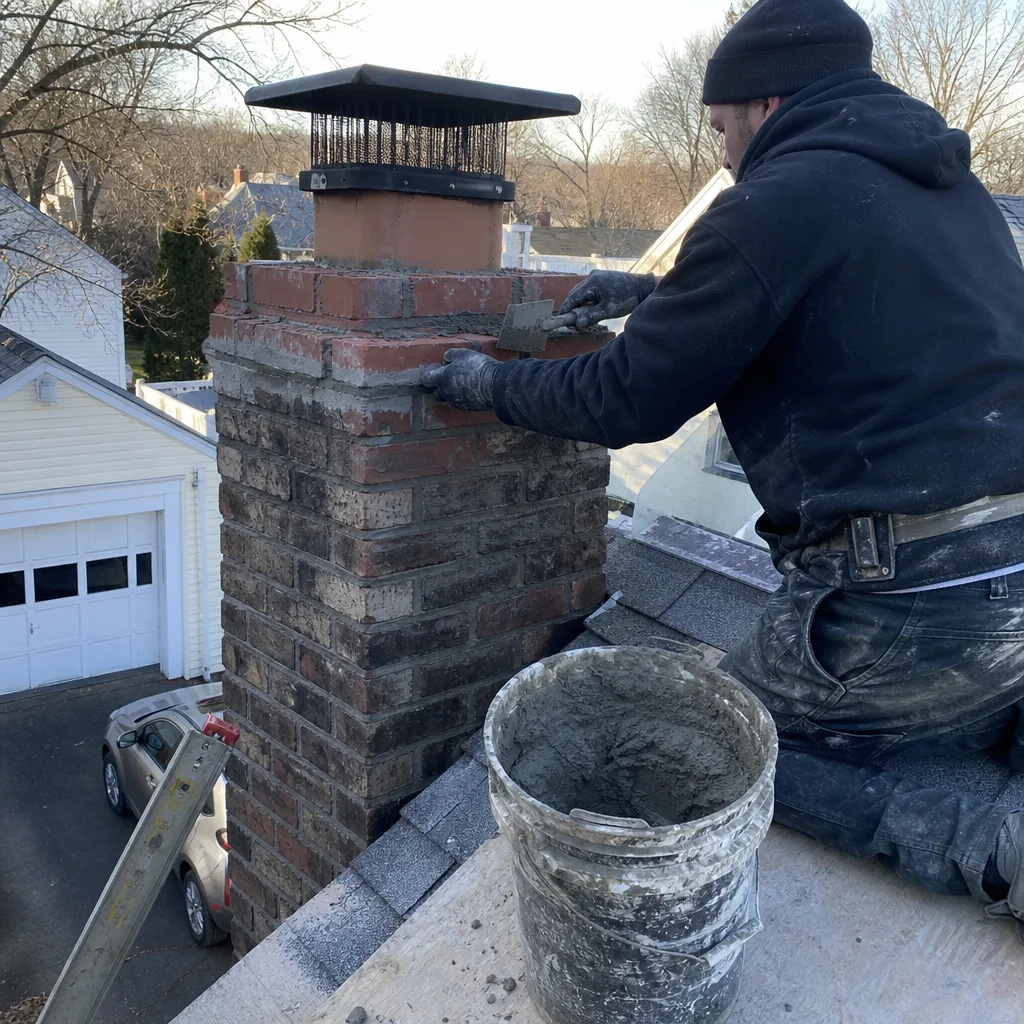
Cost is the primary driver for DIY interest, and it’s a reasonable question. For a full Chimney Cleaning Cost Breakdown: The Wakefield Homeowner’s Reference for 2026, here’s the actual math for Wakefield homeowners in 2024-2025.
DIY Costs
| Item | Cost Range |
|---|---|
| Basic brush kit (poly brush, 6 rods, drop cloth) | $35 - $75 |
| Wire brush kit for masonry flues | $55 - $120 |
| Rotary drill attachment (consumer grade) | $80 - $150 |
| HEPA vacuum or shop vac with fine filter | $100 - $250 |
| Extension ladder (if roof access needed) | $150 - $400 |
| Respirator (N95 minimum, P100 recommended) | $25 - $50 |
| Safety glasses, gloves, drop cloths | $30 - $60 |
| Total first-year investment | $315 - $1,105 |
Annual recurring costs: brush replacement ($15-30), filters, any equipment replacement. And this assumes you already own a drill, extension cords, and basic tools.
Professional Costs in Wakefield
| Service | Cost Range |
|---|---|
| Chimney sweep with NFPA Level 1 inspection | $199 - $289 |
| Chimney sweep with camera-scan Level 2 inspection | $289 - $399 |
| Class II or III creosote removal (rotary chain) | $150 - $350 additional |
| Smoke chamber parge repair | $400 - $800 |
The professional service includes the camera inspection, photo documentation, written report, and warranty. For most Wakefield homeowners, the break-even point for DIY equipment versus professional service is three to four years - and that’s only if the DIY equipment is appropriate for your system, which we’ve established it often isn’t.
We quote every job in writing before work starts, with no variation after arrival. Bring us any competitor’s written estimate and we’ll provide a Level Two Chimney Wakefield home second opinion at no charge.
Safety Realities Every Wakefield Homeowner Should Know
Chimney work involves genuine hazards that deserve direct acknowledgment, not dismissal or fear-mongering.
High-tension springs and cables. Some chimney dampers and top-sealing dampers use tensioned components. If your system includes these, do not attempt adjustment or removal without proper tools and training. Sudden release can cause serious injury.
Roof work. Wakefield’s Colonial and Victorian roofs are steep, often 8:12 pitch or greater, with slate or asphalt shingles that are slick when coated with chimney soot or creosote residue. Falls from second-story height are potentially fatal. Professional sweeps use roof ladders, ladder hooks, and fall protection as standard practice.
Carbon monoxide and combustion gases. Disturbing a partially blocked flue or damaged liner can release carbon monoxide into living spaces. Professional sweeps test draft and spillage before and after service. DIY cleaning without combustion safety testing leaves this hazard unaddressed.
Asbestos and lead. Pre-1980 chimneys may have asbestos-containing cementitious materials or lead-painted exterior components. Disturbing these without proper containment and disposal is illegal in Massachusetts and hazardous to health. Professional sweeps are trained to recognize and handle these materials appropriately.
If you encounter any of these conditions, stop and call a professional. The cost of service is minor compared to the cost of injury or liability.
Common Mistakes to Avoid
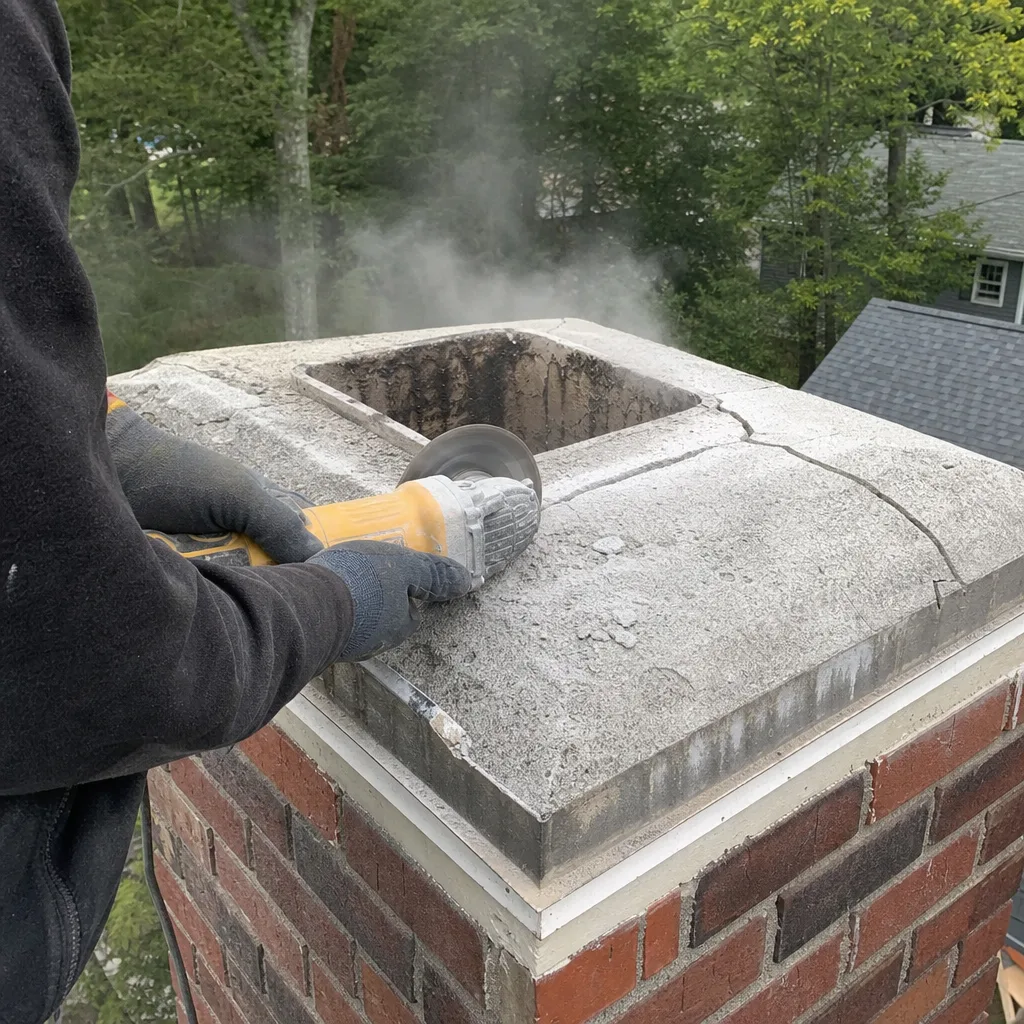
- Assuming a clean-looking flue is a safe flue. The most dangerous chimneys we’ve inspected in Wakefield were recently “cleaned” by homeowners or handymen who removed visible soot while missing a separated liner or cracked crown. Camera documentation is the only verification.
- Using a wire brush on a stainless liner. Wire brushes scratch stainless steel, creating corrosion initiation points that shorten liner life. Stainless liners require poly or specifically designed stainless brushes. Many homeowners don’t know their liner material before starting.
- Cleaning from the top down without proper containment. Soot and creosote falling through an open damper into the firebox, then into the living room, creates a contamination hazard that’s difficult to clean. Professional sweeps seal the firebox and use HEPA vacuum systems with negative air pressure.
- Ignoring the smoke chamber. The smoke chamber is where many chimney fires start, and it’s the area least accessible to consumer brush kits. Even professionals require specialized tools - chamber whips, rotary systems - to clean and inspect this area properly.
- Neglecting the crown, cap, and exterior. Water entry through a cracked crown causes more chimney damage in Wakefield than creosote buildup. A brush inside the flue does nothing for exterior conditions. Annual exterior inspection is essential in New England’s climate.
- DIY cleaning to avoid “being sold” repairs. This is understandable but counterproductive. A camera inspection shows you exactly what exists, with photo evidence you can see and verify. At Level Two Chimney Wakefield, we explain what we found, what it means, and what timeline it allows. Some conditions need immediate repair. Others can wait a season or two with monitoring. The documentation lets you make an informed decision, not a pressured one.
When to Call a Professional
Call a professional sweep when any of these apply: wood-burning appliance, unlined or unknown flue condition, any visible creosote, any insurance policy requiring documented inspection, any draft or odor problem, or any plan to sell your home within two years. For guidance on finding qualified help, see How to Hire a Chimney Cleaning Contractor in Wakefield: A Step-by-Step Guide. Also call if you’ve never had a camera inspection - most Wakefield homeowners haven’t, and the baseline matters.
Level Two Chimney Wakefield offers free estimates in Wakefield - call (978) 861-1012. Every estimate includes a written price before work starts, a camera-scan inspection with photo documentation, and the 365-Day Done Right Promise. We source materials through our Haven buying network from Olympia Chimney, Famco, Copperfield, and other manufacturers to keep customer prices honest.
Frequently Asked Questions
A standard chimney sweep with NFPA Level 1 inspection in Wakefield costs $199 to $289. A sweep with camera-scan Level 2 inspection, photo documentation, and written report runs $289 to $399. Heavy creosote removal or smoke chamber repair adds $150 to $800 depending on severity. Call (978) 861-1012 for a written estimate with your exact price before any work begins.
NFPA 211 recommends annual inspection for all chimney systems, with cleaning frequency based on use and fuel. For Seasonal Chimney Cleaning Care for Wakefield: Year-Round Homeowner’s Guide, wood-burning systems used regularly need annual sweeping. Gas systems with low use can extend to every two to three years with professional inspection. In Wakefield’s climate, where freeze-thaw cycles accelerate exterior deterioration, we recommend annual exterior assessment even for gas systems.
You shouldn’t accept a liner recommendation without photo documentation you can see for yourself. At Level Two Chimney Wakefield, we show you the camera footage, explain the defect, and provide a written scope with timeline options. Some liner conditions require immediate replacement. Others can be monitored annually. The photo record lets you verify the finding and get a second opinion - which we provide free on any competitor’s written estimate.
For gas systems with intact liners, the risk is slow deterioration and potential carbon monoxide exposure from undetected damage. For wood-burning systems, creosote accumulates, increasing chimney fire risk and potentially causing liner failure that exposes combustible framing. In Wakefield’s older housing stock, where many chimneys serve multiple appliances and have offset flues, the risk of hidden blockage or liner separation is higher than in newer construction.
A shop vac removes loose debris from the firebox and accessible smoke chamber areas but cannot clean the flue liner or inspect for defects. Standard shop vacs also lack HEPA filtration, releasing fine particulate into your home. For the limited DIY scenario - gas insert, stainless liner, low use - a shop vac with fine filter is adequate for firebox cleaning. It is not a substitute for flue inspection or professional service.
Many Massachusetts policies now include “documented professional inspection” clauses for chimney-related coverage. Check your policy declarations or contact your agent. If this clause exists, DIY cleaning does not satisfy it. We provide the dated, photo-documented records insurers require, and we’ve assisted Wakefield homeowners with claims documentation when needed.
The Bottom Line
DIY chimney cleaning has one valid application: gas fireplaces with stainless liners, low use, no visible creosote, and no insurance inspection requirement. For wood-burning systems, unlined masonry flues, any visible buildup, or any policy with documentation requirements, DIY brushing cleans what you can see and misses what can hurt you. The camera inspection, photo record, and written documentation that professional service provides aren’t upsells. They’re the actual protection you’re paying for. In Wakefield’s older housing stock, with offset flues and decades of weather exposure, that documentation isn’t optional - it’s the difference between knowing your chimney’s condition and guessing.
Written by Corrine Halstead, Owner at Level Two Chimney Wakefield, serving Wakefield since 2009.