
Last updated September 22, 2026
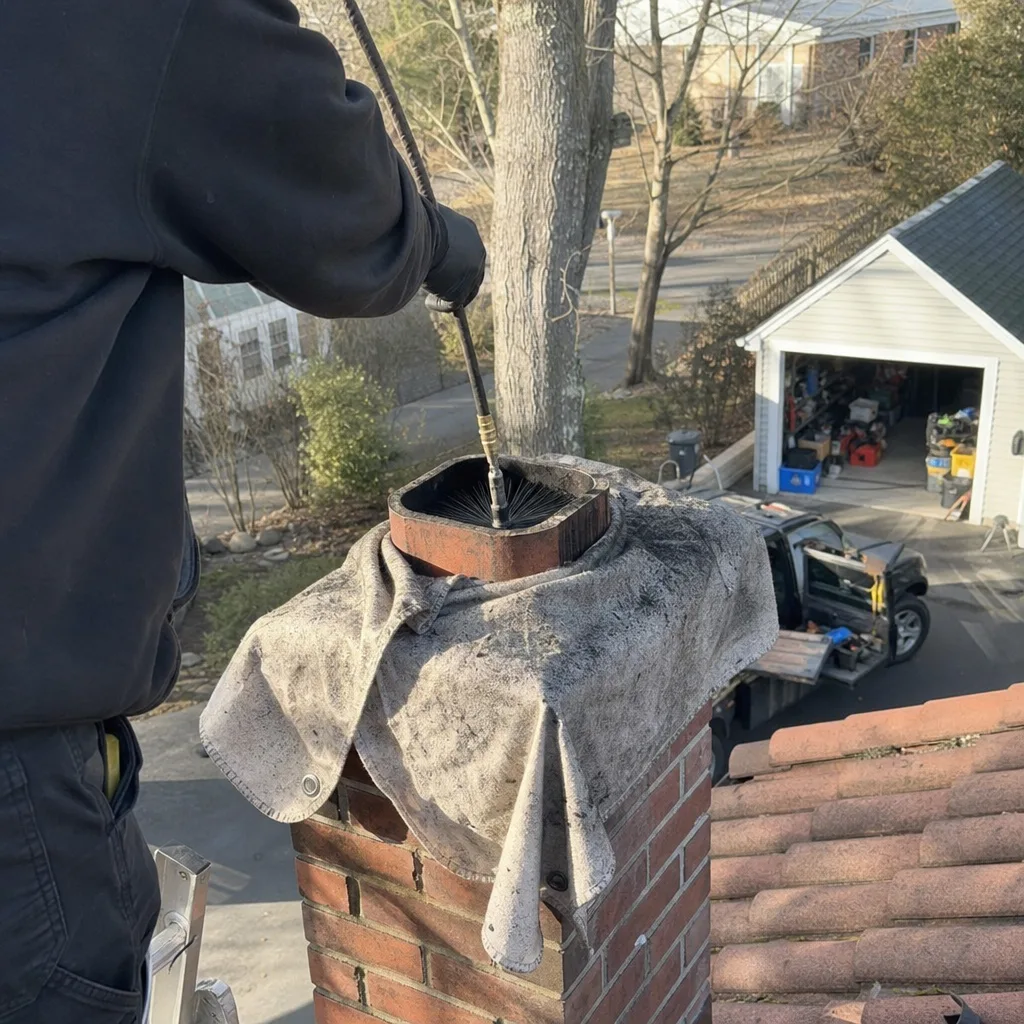
Level 1 sweep and inspection to the NFPA 211 annual standard - flue, crown, cap, and flashing checked and photographed
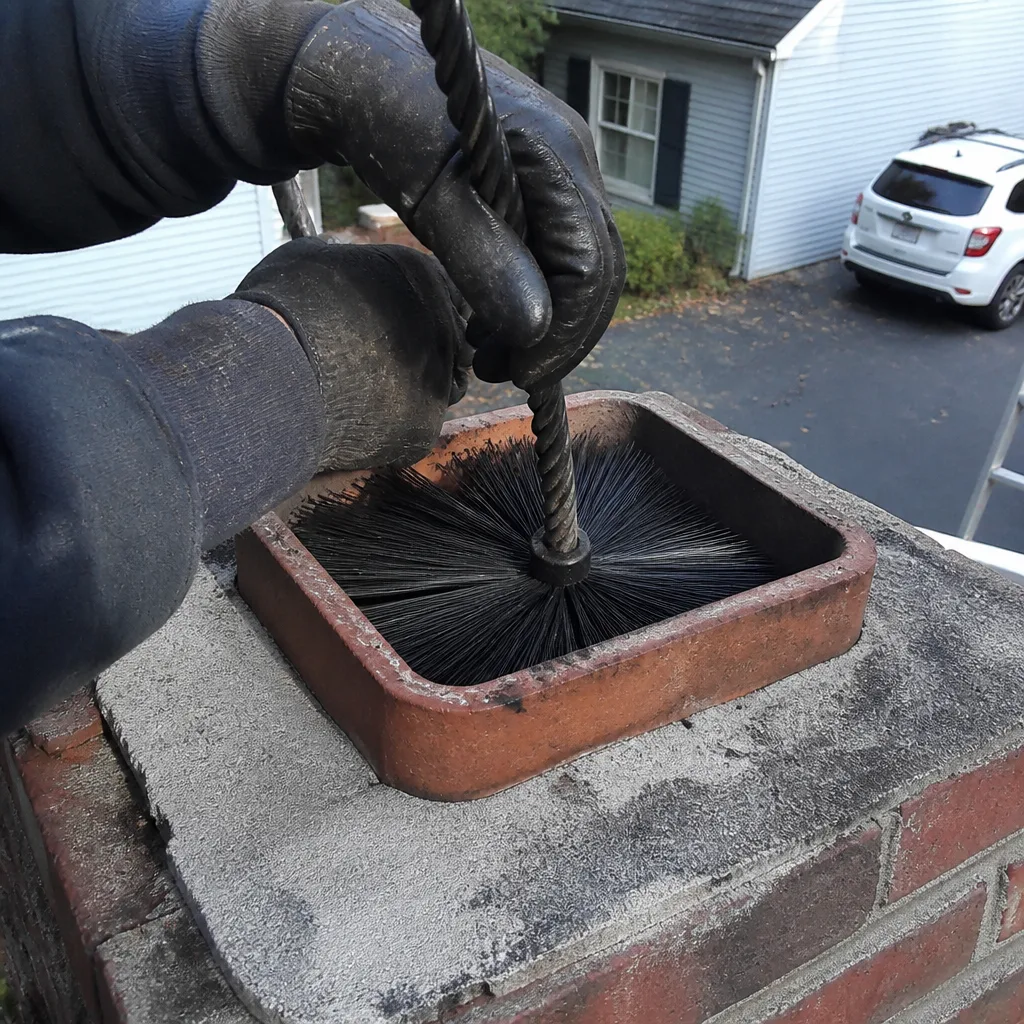
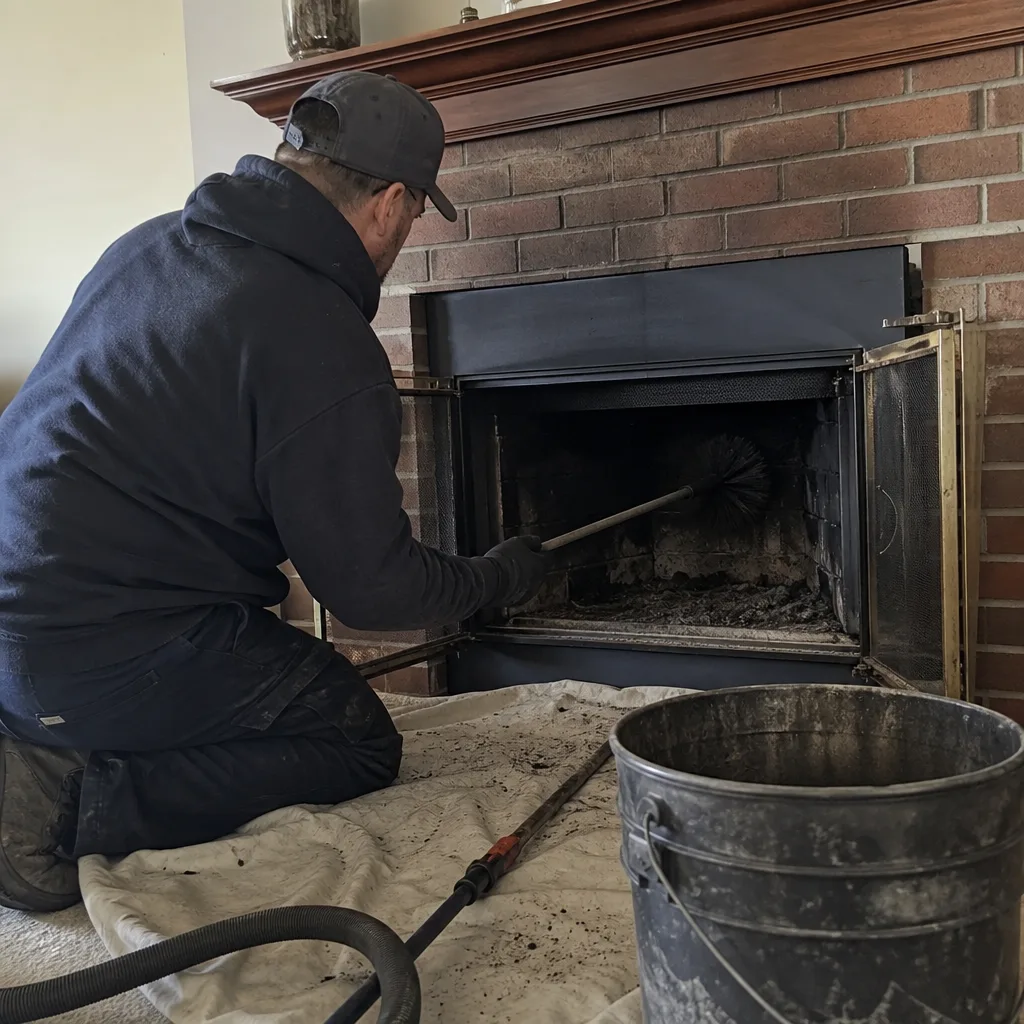
Chimney sweep logs do not sweep chimneys. They loosen some creosote - which then falls where a brush and vacuum still have to collect it.
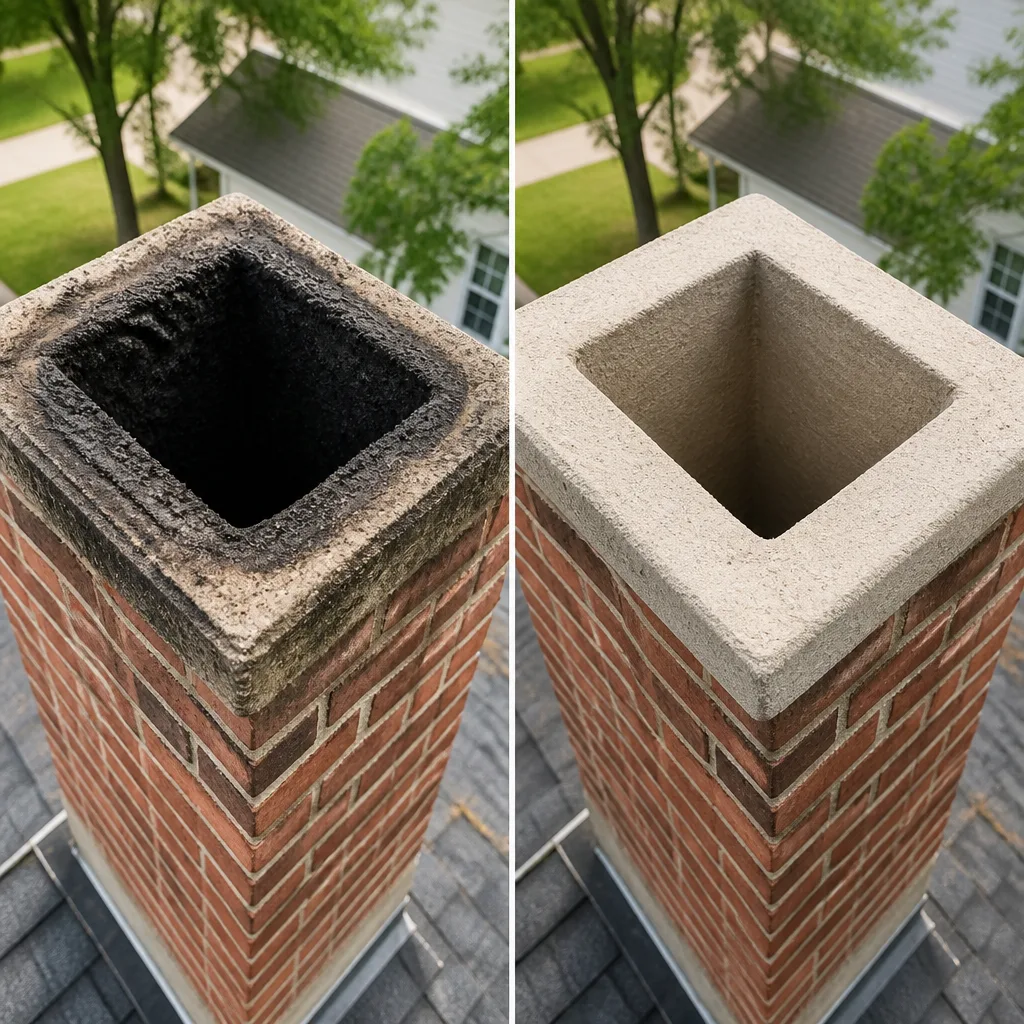
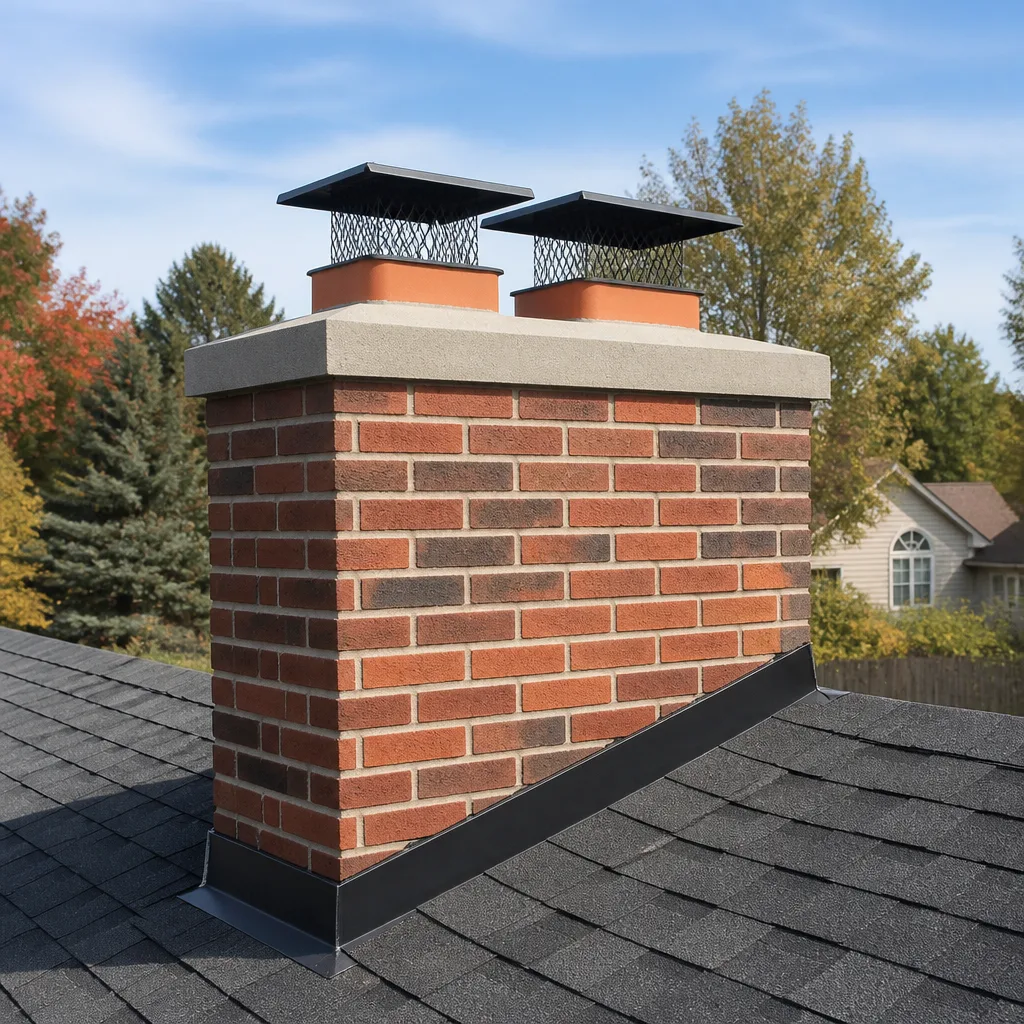
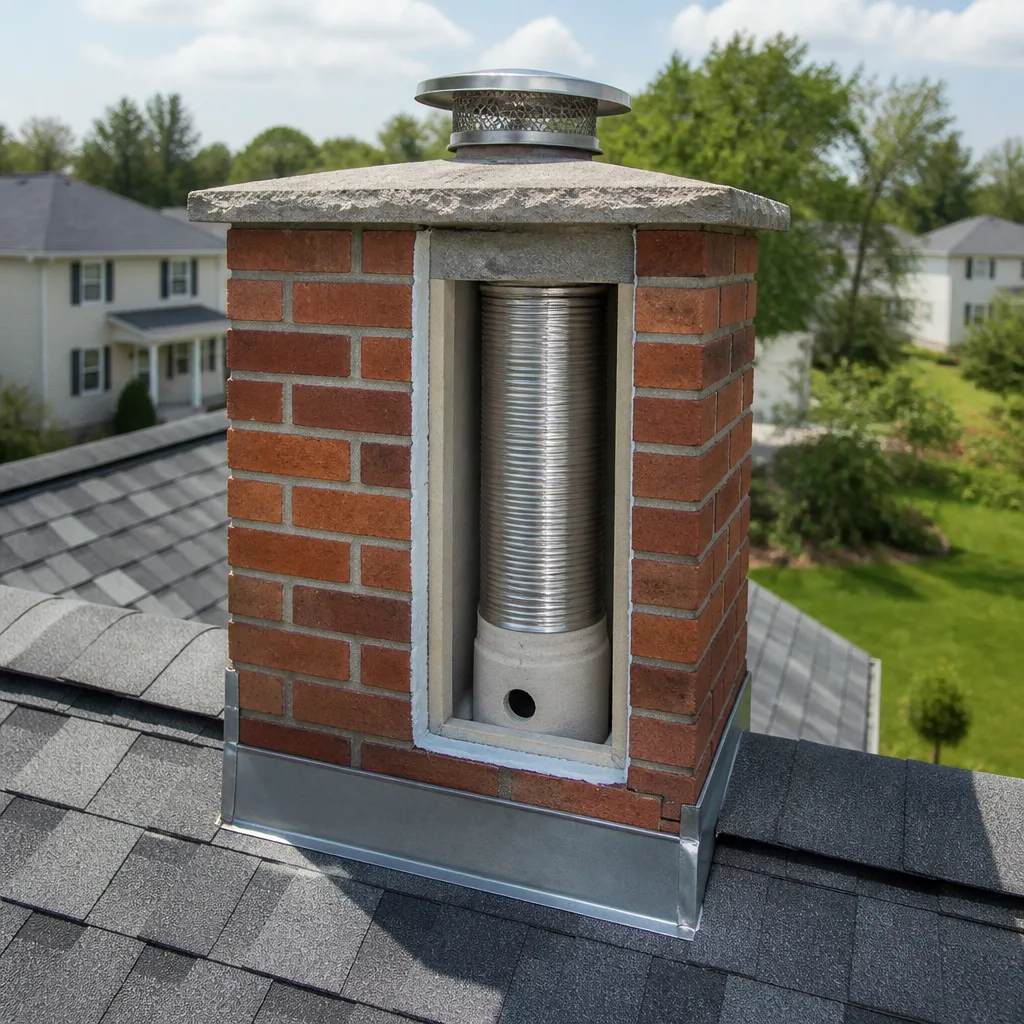
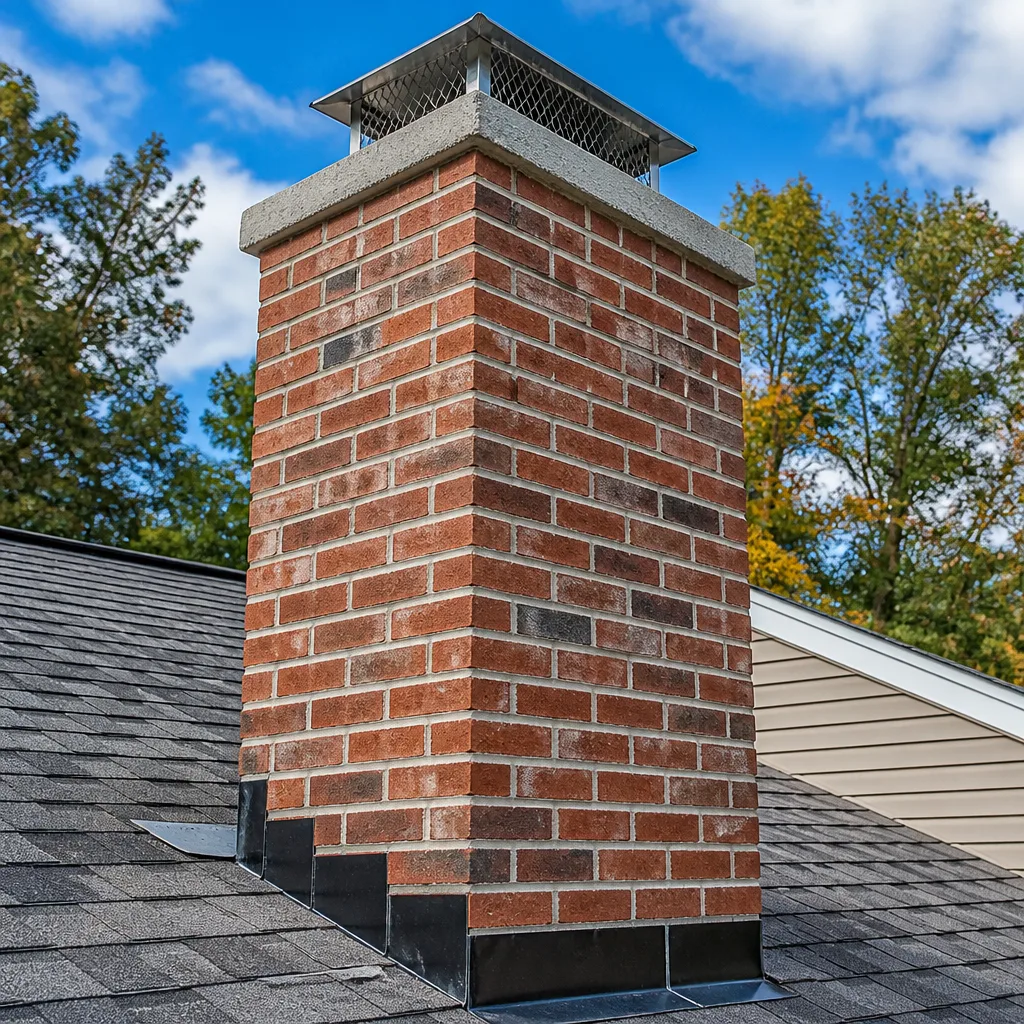
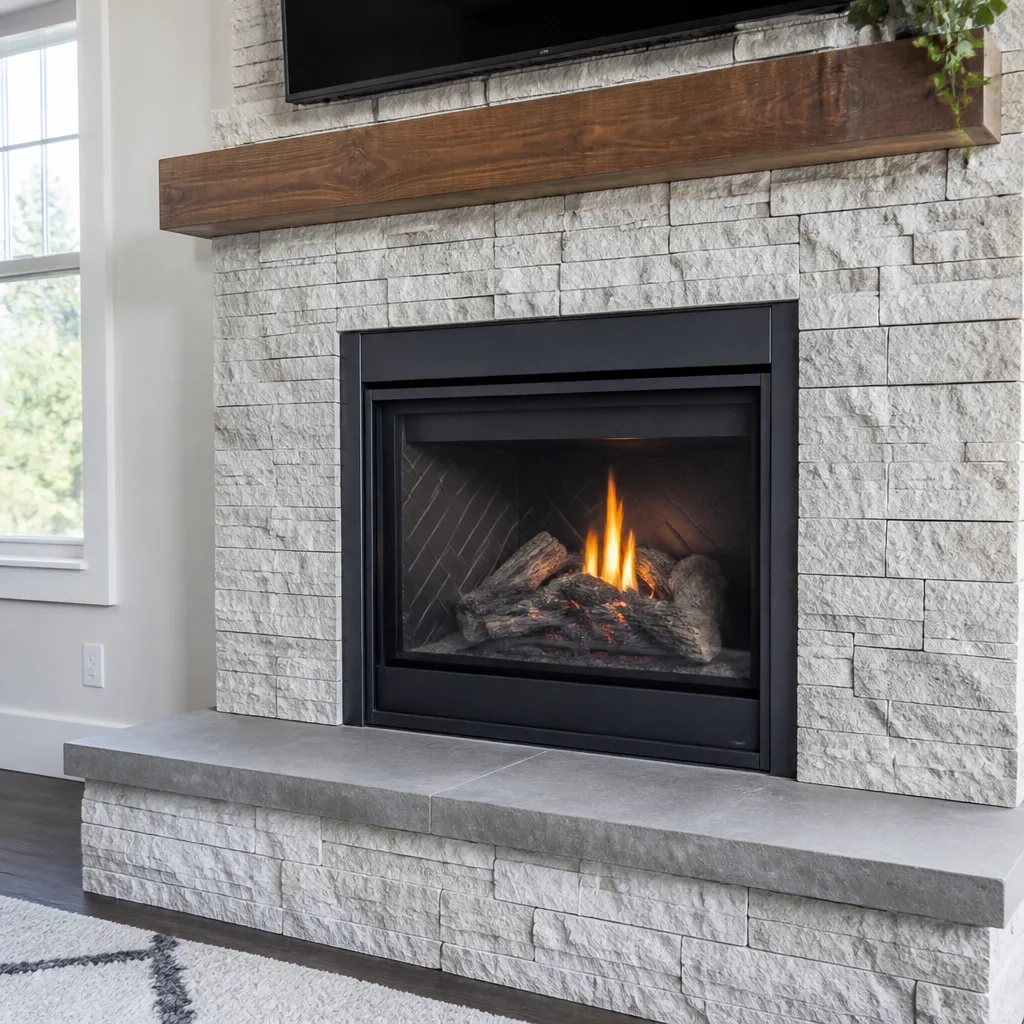
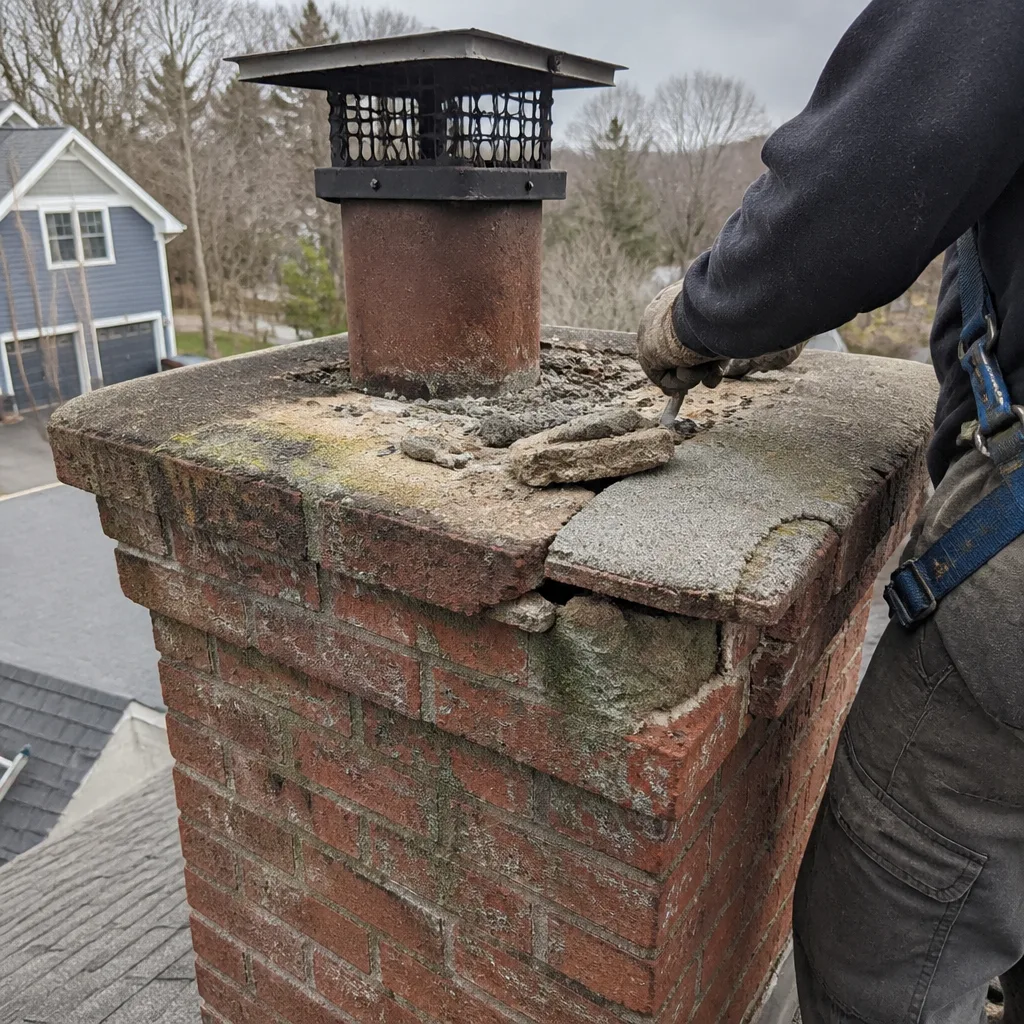 Before
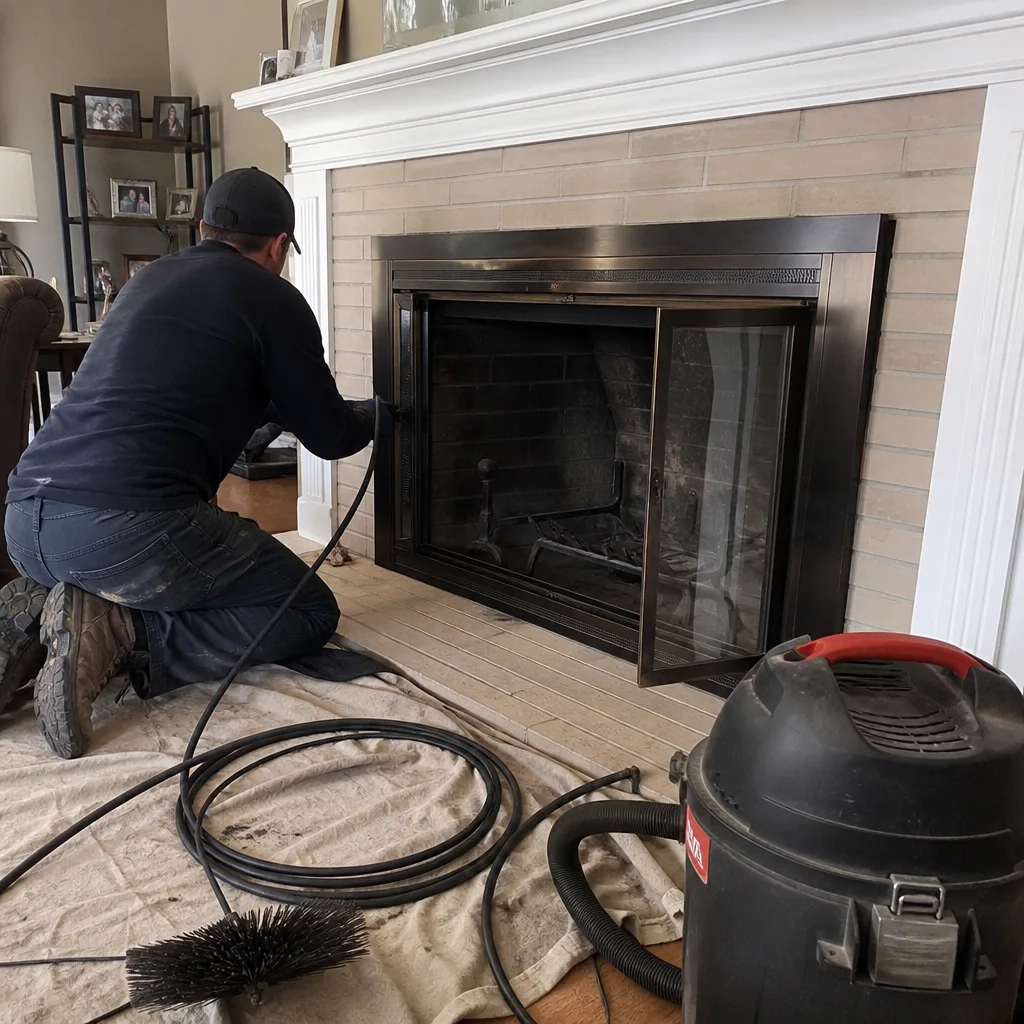 After
After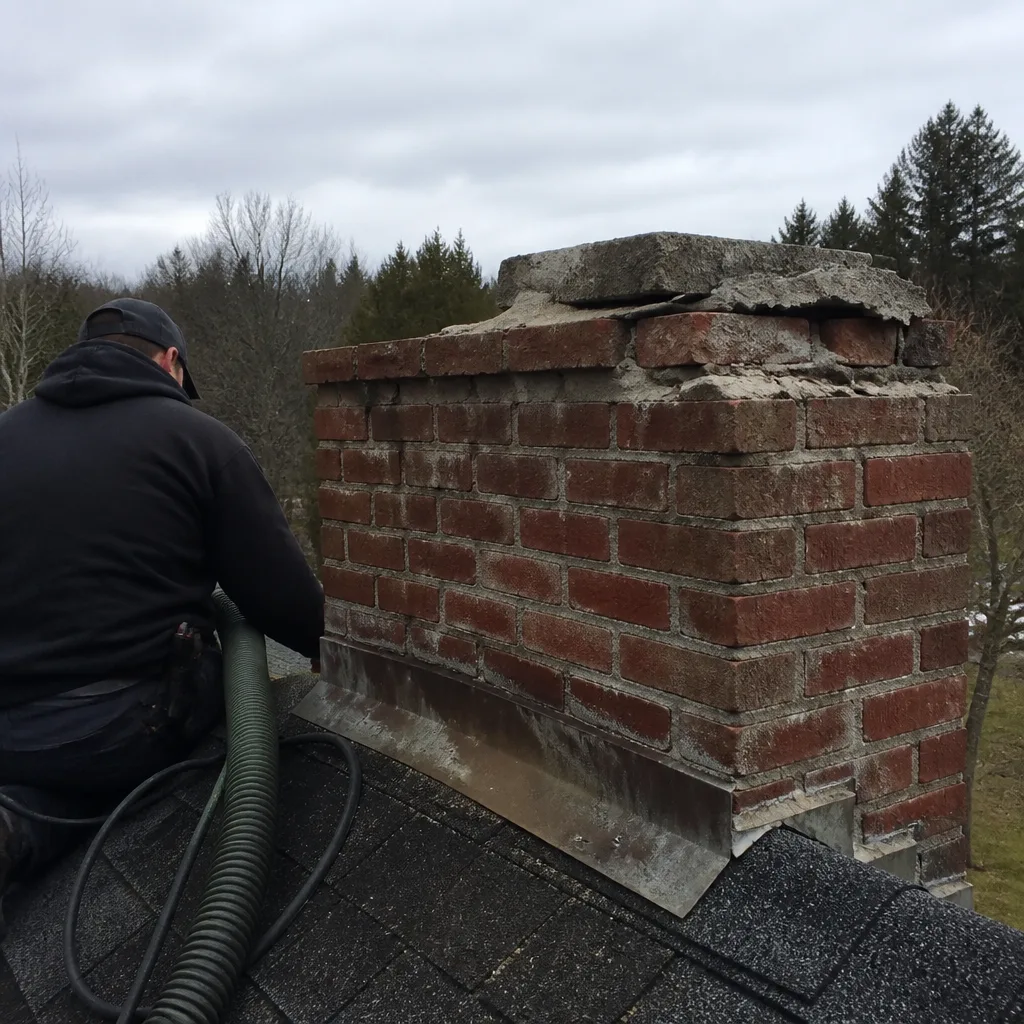 Before
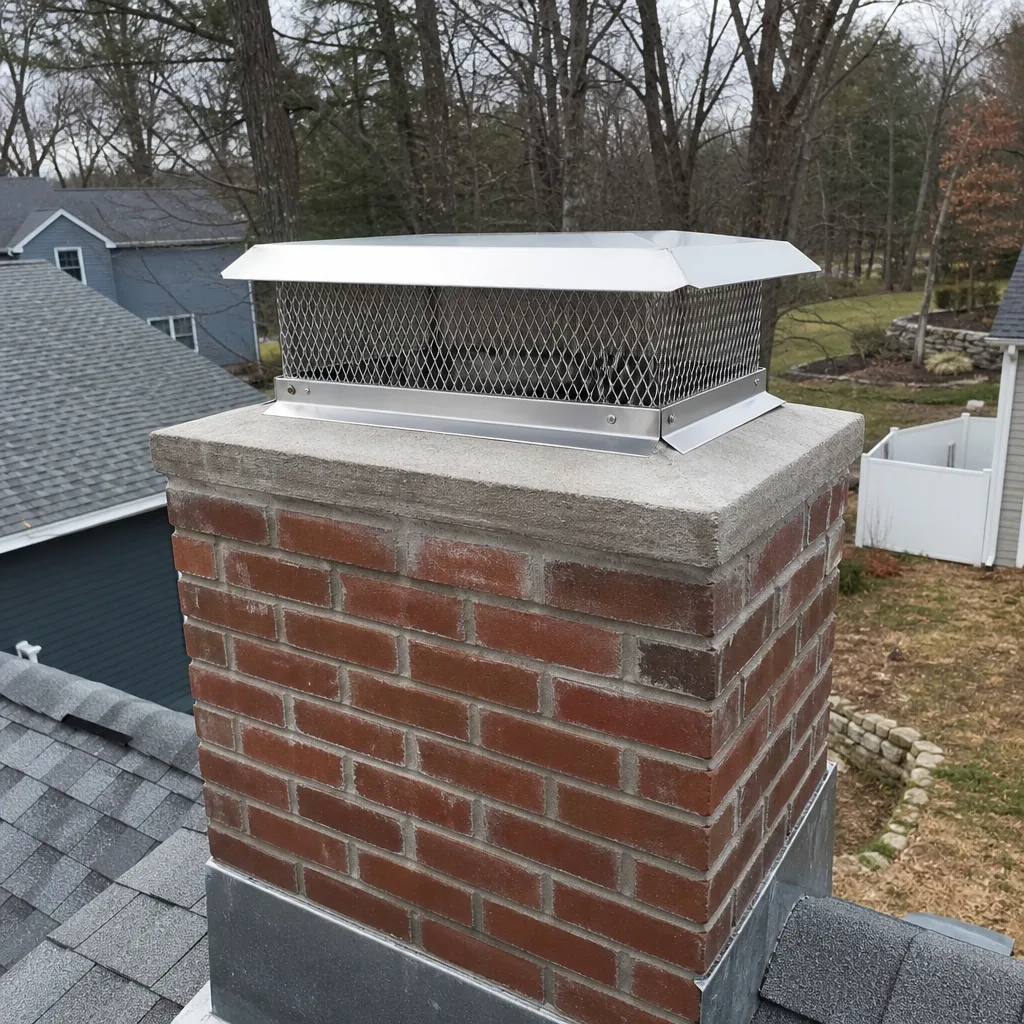 After
After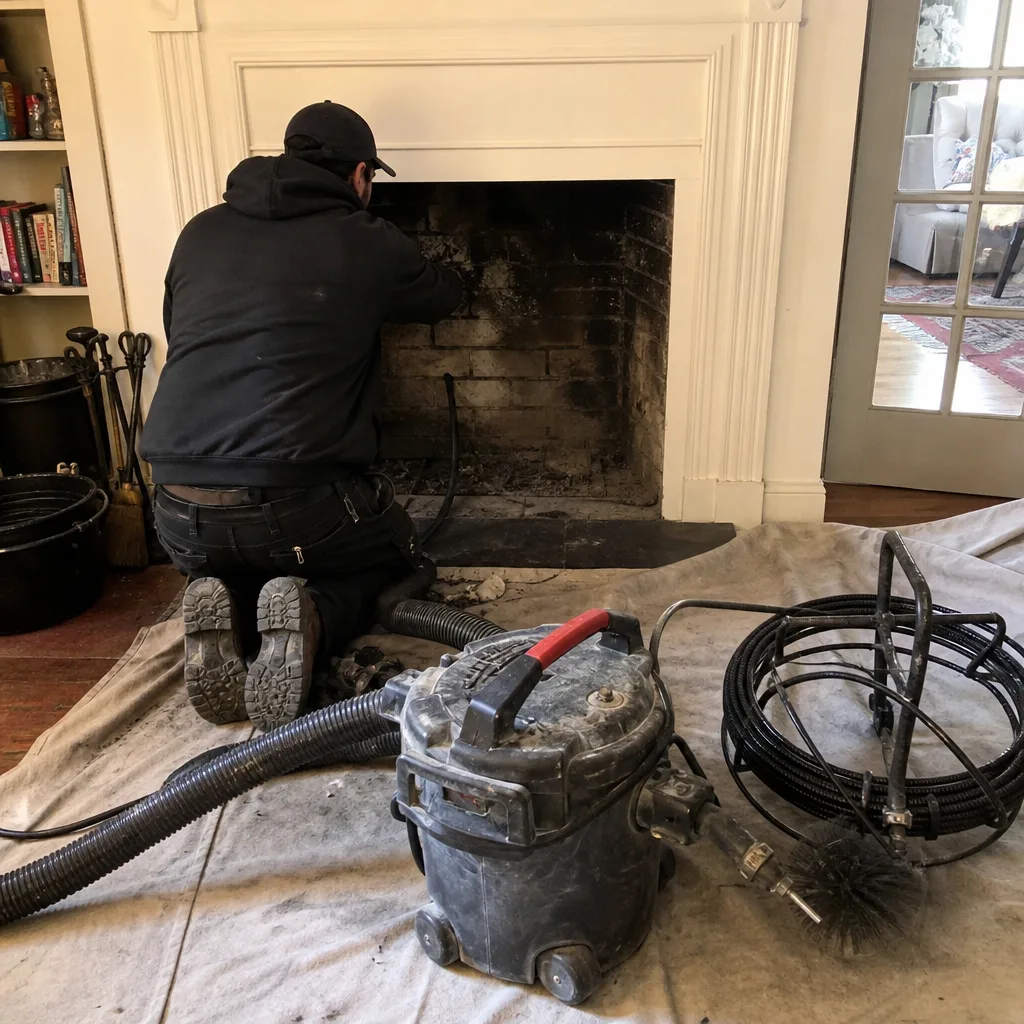 Before
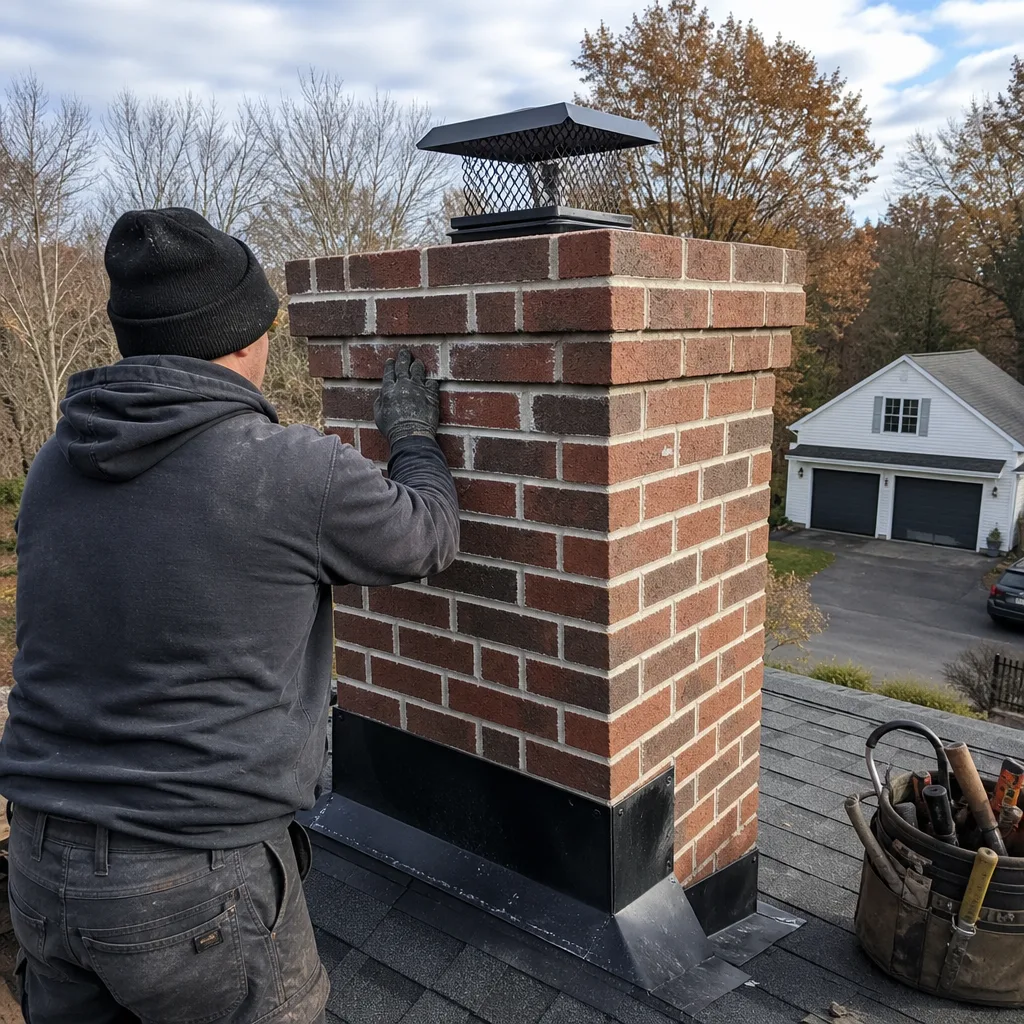 After
AfterChimney Cleaning Warning Signs: A Wakefield Homeowner’s Reference Guide
Most chimney safety guides start with smoke backing into your living room or a “strange smell” you can’t place. By then, you’re already in late-stage territory. In Wakefield, where we sweep more than 400 chimneys each year between the lakeside cottages near Lake Quannapowitt and the pre-war colonials along Main Street, we’ve learned that the real warning signs show up months earlier. They’re subtle, they’re owner-detectable without any tools, and they’re almost never the ones listed on generic safety checklists. This guide covers the five early indicators that appear before a dangerous condition develops, how to rank their urgency, and which ones demand a camera scan rather than a visual guess. For The Complete Guide to Chimney Cleaning in Wakefield, see our more comprehensive resource.
Quick Answer
The earliest chimney warning signs Wakefield homeowners can detect without tools are: a tar-like smell from an unlit fireplace in summer, white efflorescence staining on exterior brick, a damper that won’t seat fully closed, audible dripping in the firebox after rain, and a yellow gas flame indicating downdraft or blockage. These appear weeks or months before smoke intrusion or visible damage, and each signals a specific condition that worsens with continued use.
Table of Contents
- The Five Early Warning Signs Most Guides Miss
- Three Urgency Tiers: Observe, Schedule, or Stop Using Now
- Wakefield-Specific Structural Warnings in Older Homes
- The Carbon Monoxide Risk Signal Most Guides Omit
- When a Camera Scan Beats a Visual Check (And Why Guessing Costs More)
- Seasonal Timing: Why July Smells Matter for January Safety
- Common Mistakes to Avoid
- When to Call a Professional
- Frequently Asked Questions
- The Bottom Line
 Before
 After
AfterThe Five Early Warning Signs Most Guides Miss
Smoke in the room is not a warning sign. It’s an emergency. The signs that matter arrive earlier, and they’re specific enough that you can learn to read them like a gauge.
1. Creosote Off-Gassing in Summer
A tar smell on a warm July afternoon in an unlit fireplace is not a quirk of old houses. It’s stage-two creosote off-gassing, and it’s telling you the flue was never cleaned to bare tile after last winter.
Here’s what happens. Creosote builds in layers: Stage 1 is flaky soot, Stage 2 is crunchy honeycomb, Stage 3 is a tarry, glazed coating that drips when warm. Wakefield’s freeze-thaw cycles accelerate the progression from Stage 2 to Stage 3 because moisture enters the flue during spring rains, mixes with acidic combustion byproducts, and bakes into a glazed layer during the first hot days of summer. That glazed creosote is the most combustible form, and it off-gasses volatile organic compounds when temperatures rise above 75 degrees.
If you smell asphalt or tar from a fireplace that hasn’t seen flame since March, you’ve got Stage 2 or 3 creosote remaining in the flue. It’s not going to ignite in July, but it will be the first thing to catch when you light a fire in October.
2. White Staining on Exterior Brick (Efflorescence)
That chalky white residue on your chimney’s brick face is salt crystallization from water moving through the masonry. It means water is getting in, and in Wakefield’s climate, water getting in means freeze-thaw damage is already underway.
We see this most often on homes north of downtown, where the 1920s brick construction used softer mortar mixes that are now reaching 100 years of weathering. The white stain itself is cosmetic, but the process creating it is structural. Each freeze cycle expands water by 9% inside the mortar joints. Over a decade, that pressure recesses joints, loosens brick faces, and eventually compromises the chimney’s structural shell.
Efflorescence on the stack above the roofline signals a crown or cap failure. Efflorescence below the roofline, on the chimney breast inside your home, signals an internal flue liner breach allowing condensation to saturate the masonry from inside. These are different problems with different solutions, and telling them apart by sight alone is unreliable.
3. Damper That Won’t Seat Fully Closed
A throat damper that won’t close completely is often dismissed as “just old.” In our experience across Wakefield, it’s more often a sign that creosote has built up on the damper blade or the smoke shelf above it, physically preventing full closure.
The smoke shelf is the flat ledge behind the damper where downdrafts deposit debris: soot chunks, bird nesting material, and hardened creosote flakes. When this shelf fills, material falls forward and jams the damper mechanism. A damper that won’t close costs you money in conditioned air loss year-round, but more importantly, it indicates the flue hasn’t been cleaned to NFPA 211 standards, which require the smoke shelf to be cleared to bare metal. If you’re weighing whether to tackle this yourself, our DIY vs Professional Chimney Cleaning: The Wakefield Homeowner’s Decision Guide breaks down what you can safely handle and what requires certification.
We’ve found smoke shelves in Wakefield’s older homes packed with material dating back fifteen years or more. The homeowner never knew because previous sweeps never ran a camera above the damper to document the condition.
4. Audible Dripping in the Firebox After Rain
Water should never reach your firebox. If you hear dripping during or after rain, water has penetrated the crown, cap, or flue liner and is traveling the full height of the chimney to pool on the firebrick.
In Wakefield, where we average 48 inches of precipitation annually and spring storms can drop two inches in an afternoon, this is one of the most common calls we get in April and May. The sound is unmistakable: a slow, rhythmic drip onto metal or brick, sometimes not starting until hours after the rain ends because water is wicking through saturated masonry.
Here’s the critical distinction. Dripping that stops within a day usually means a crown crack or cap gap, repairable with CrownCoat or a new Gelco cap. Dripping that continues for days after rain stops suggests a liner breach allowing water to enter the chimney’s interior cavity and saturate the insulation or surrounding framing. That condition requires a camera scan to locate the breach and assess whether the liner can be relined with DuraFlex stainless or needs full replacement.
5. Yellow Gas Flame (The Hidden Carbon Monoxide Signal)
We’ll cover this in depth in its own section below, but it belongs in this list because it’s the most dangerous early sign and the one most homeowners never learn to read. A pilot light or gas insert flame that burns yellow instead of blue indicates incomplete combustion, which in a chimney context usually means downdraft, blockage, or liner deterioration is restricting proper draft.
Three Urgency Tiers: Observe, Schedule, or Stop Using Now
Not every warning sign demands immediate action, but misreading the urgency is how minor maintenance becomes major reconstruction. We’ve organized the signs above, and the structural indicators below, into three clear tiers based on what we’ve documented across 38,000+ inspections.
Tier 1: Observe and Monitor
- Light efflorescence on exterior brick below the roofline, with no interior staining and no dripping. Photograph monthly. If the white area expands or new cracks appear, move to Tier 2.
- Damper resistance that resolves with manual cleaning of visible debris. If the damper seats fully after you remove loose material from the track, schedule a sweep within 90 days to check the smoke shelf condition.
- Occasional yellow flicker in gas flame during high wind. Note the weather conditions. If yellow appears only during downdraft conditions and blue returns in calm weather, monitor for frequency increase.
Tier 2: Schedule Within 30 Days
- Persistent tar smell from unlit fireplace in warm weather. This indicates Stage 2+ creosote that will become a fire hazard with next season’s use. A standard sweep may not remove glazed creosote; mechanical rotary cleaning or chemical treatment may be required.
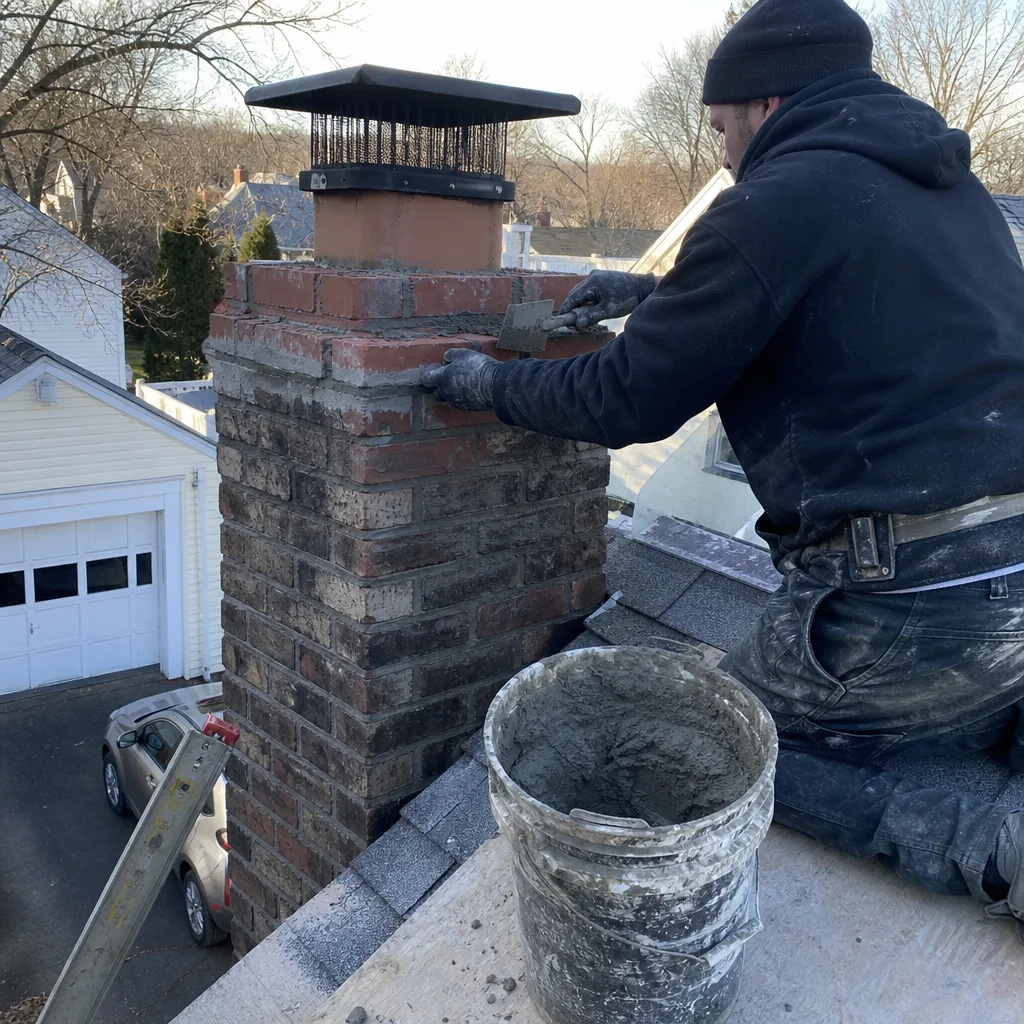
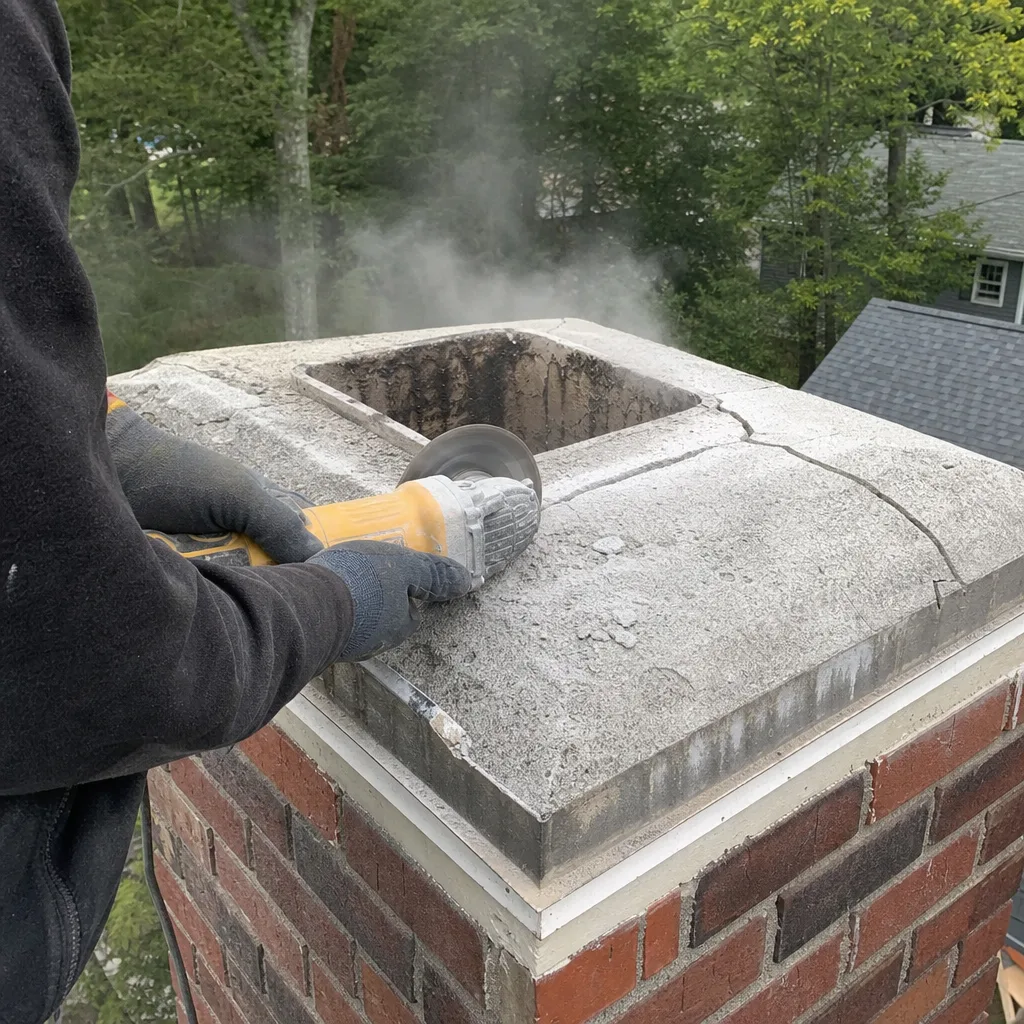
- Efflorescence above the roofline or on the chimney crown. Crown cracking is progressive. A small crack this season becomes a spalled crown next season. Crown repair with HeatShield or CrownSeal, or full crown replacement, is typically needed.
- Damper that won’t seat despite visible track cleaning. Smoke shelf obstruction is likely. Requires camera inspection above the damper to assess.
- Any dripping in firebox that resolves within 24 hours. Cap or crown leak. Repairable, but water intrusion accelerates liner deterioration and rusts damper hardware.
Tier 3: Stop Using and Call Now
- Yellow gas flame that persists in calm conditions. Indicates chronic downdraft, partial blockage, or liner failure creating carbon monoxide risk. Do not operate the appliance until inspected.
- Dripping that continues 48+ hours after rain ends. Suggests liner breach with water saturating chimney cavity. Risk of freeze-thaw damage to surrounding structure and potential mold in wall cavities.
- Visible spalling (flaking or popping) of brick faces, especially above the roofline. Structural integrity is compromised. Continued use with a compromised shell risks chimney fire spread to framing.
- Smoke intrusion into living space during operation. This is not a warning sign; it’s an active failure of draft or blockage. Extinguish fire, evacuate if carbon monoxide detector alarms, and call for emergency inspection.
Wakefield-Specific Structural Warnings in Older Homes
Wakefield’s housing stock skews older than national averages, with significant concentrations of construction from 1880 to 1940 in neighborhoods like Montrose, Greenwood, and the lakefront district. These chimneys were built for coal or early oil heating, then adapted to wood-burning fireplaces or gas inserts, often without proper liner resizing. The result is a specific set of structural warning signs that don’t appear in newer construction guides.
Mortar Joint Recessing Visible from the Roofline
Stand at the street and look at your chimney’s profile against the sky. If the horizontal mortar joints appear indented, creating a stairstep shadow pattern, the joints have recessed beyond 3/8 inch. This is the threshold where water retention accelerates and freeze-thaw damage becomes exponential rather than linear.
In Wakefield, we see this most on chimneys serving original coal boilers, where decades of acidic flue gases degraded the interior mortar, and exterior weathering finished the job. Tuckpointing can restore joint integrity if caught before brick faces begin spalling. Once spalling starts, individual brick replacement becomes necessary, and costs increase by a factor of three to four.
Spalling: Above vs. Below the Roofline
Spalling, the flaking or popping off of brick faces, means different things depending on location.
Above the roofline: Spalling here is almost always water intrusion from crown failure, cap absence, or deteriorated flashing. The brick faces pop because water freezes in the pore structure. The fix is crown/cap repair plus selective brick replacement. We source matching brick through Olympia Chimney’s regional network when possible, or from local salvage for historic Wakefield homes where color match matters for preservation compliance.
Below the roofline: Spalling on the chimney breast inside your home, or on exterior walls below the roofline, indicates an internal liner breach. Flue gases, which contain moisture and acids, are condensing on the interior masonry and migrating outward. This is more serious than above-roofline spalling because it means the chimney’s protective liner is compromised, and combustion byproducts may be entering wall cavities. Camera inspection is mandatory to locate the breach and determine if HeatShield cerfractory resurfacing, a stainless DuraFlex liner, or full rebuild is appropriate.
The “Wakefield Lean”
We coined this term for a specific pattern we see in homes near Lake Quannapowitt, where seasonal groundwater fluctuation and clay-heavy soils create differential settling. Chimneys on the gable ends of these homes sometimes develop a slight lean, often less than two degrees, that homeowners mistake for original construction quirk.
It’s not original. It’s foundation settling that has separated the chimney from the house structure at the roofline, creating a gap that admits water and vermin. A level check against the chimney face reveals it. If you can slide a pencil into the gap between chimney and siding at the roofline, the lean is active and requires structural evaluation.
The Carbon Monoxide Risk Signal Most Guides Omit
Every chimney safety guide mentions carbon monoxide. Almost none tell you how to read your gas flame as a real-time draft indicator.
Complete combustion of natural gas produces a blue flame with a small yellow tip. The blue color comes from complete oxidation of carbon to carbon dioxide. A yellow flame indicates incomplete combustion, where carbon monoxide (CO) forms instead of CO2.
In a properly drafting chimney, CO is carried up and out. But if downdraft, partial blockage, or liner deterioration restricts draft, CO can spill into the living space. Your CO detector may not alarm until levels reach 70 ppm over time, but flame color changes before that.
How to Read Your Flame
- Observe in calm weather. High winds can temporarily distort flame color. Check on a day with wind under 10 mph.
- Look at the pilot light or main burner, not just the decorative elements. Some gas inserts have ceramic logs that glow yellow by design; the burner ports underneath should still show blue.
- Yellow that covers more than 30% of visible flame area is abnormal. Flickering yellow tips during ignition are normal; persistent yellow throughout operation is not.
- Note if yellow appears only at startup or throughout burn cycle. Startup yellow that clears to blue within two minutes suggests cold flue downdraft. Persistent yellow suggests chronic blockage or liner failure.
In Wakefield’s tighter, energy-efficient homes built or renovated since 2015, this signal is especially critical. Modern air sealing creates negative pressure that competes with chimney draft. We’ve inspected homes in the new construction near North Avenue where the kitchen range hood, running on high, was enough to pull a yellow flame on the basement gas insert by creating house-level negative pressure. The chimney wasn’t blocked; the house was too tight for the chimney to function. The solution was a makeup air intake, not chimney repair, but the diagnosis required a manometer reading and draft test that a visual inspection alone couldn’t provide.
Clause 4 of the Haven Standard requires a documented photo record on every job. For gas appliance inspections, that record includes flame color documentation and draft pressure readings, so you have baseline data for comparison year to year.
When a Camera Scan Beats a Visual Check (And Why Guessing Costs More)
The NFPA 211 Level 2 inspection, which we’ve performed as our default since 2009, uses a high-resolution camera lowered through the flue to document liner condition, joint gaps, creosote buildup, and obstructions. It’s not an upsell. It’s the only way to see what needs seeing.
Here are the specific warning signs that require camera confirmation rather than visual assumption:
- Any indication of liner breach (spalling below roofline, persistent dripping, yellow gas flame). Visual inspection from the top or bottom cannot locate a breach in a mid-flue liner section.
- Creosote odor in summer. We need to classify the creosote stage and document whether glazed deposits require mechanical removal beyond standard sweeping.
- Damper malfunction. The smoke shelf and flue transition above the damper are invisible without camera access.
- Post-chimney-fire assessment. Even minor chimney fires can crack clay tile liners. Exterior visual inspection cannot detect hairline cracks that open under thermal stress during normal use.
- Real estate transaction or new home purchase in Wakefield. A Level 2 inspection with camera documentation protects both buyer and seller with dated, photographic evidence of condition at transfer.
Guessing costs more than scanning because the wrong repair addresses symptoms while the underlying condition worsens. We’ve seen homeowners in Wakefield pay for crown replacement when the real problem was a $2,800 DuraFlex liner installation, and vice versa. The camera scan takes 20 minutes. The wrong repair costs thousands and leaves the actual hazard in place.
Our Chimney Cleaning & Sweep in Wakefield includes camera documentation as standard, not an optional add-on. Clause 4 of the Haven Standard has required this since 2009.
Seasonal Timing: Why July Smells Matter for January Safety
Wakefield’s heating season runs roughly October through April, with peak sweep demand in September and October. But the warning signs that predict winter safety appear in the off-season, and acting on them then saves money and scheduling stress.
That July tar smell? It means creosote is already at Stage 2 or 3. Scheduling a sweep in August means standard rates, open scheduling, and time to address any liner issues before the first cold snap. Waiting until October puts you in the seasonal rush, with premium pricing from less reputable operators and no time for follow-up if the camera scan reveals needed repairs.
Spring dripping after April rains? Addressing it in May means crown repair before summer heat cures the sealant properly. Waiting until fall means the crown crack has endured another freeze-thaw cycle, and the repair may now require full crown reconstruction rather than crack sealing.
We maintain our 24/7 live phone support year-round specifically because chimney safety doesn’t follow the heating calendar. A homeowner who calls in July with a concern gets the same camera-scan appointment priority as one who calls in October. But the July caller has time to make informed decisions. The October caller is often reacting to an immediate need and has fewer options.
For Fireplace Services in Wakefield, off-season maintenance also extends to gas insert servicing, which manufacturers recommend annually regardless of use hours. Pilot orifice cleaning, thermocouple testing, and burner inspection prevent the yellow-flame conditions we described above.
Common Mistakes to Avoid
- Assuming a “clean” fireplace means a clean flue. The firebox is visible; the flue liner is not. We’ve found flues packed with Stage 3 creosote above spotless fireboxes because the homeowner cleaned what they could see.
- Treating all white brick staining as cosmetic. Efflorescence below the roofline is never cosmetic. It signals internal moisture migration that degrades liner and masonry simultaneously.
- Using the chimney as a de facto vent for gas appliances without inspection. Wakefield’s older homes often have water heaters or boilers venting into chimney flues never designed for modern appliance output. The chimney may “work” for years while liner deterioration progresses unseen.
- Accepting a sweep without camera documentation. Without photos, you have no evidence of what was or wasn’t found. Clause 4 of the Haven Standard exists because we saw too many homeowners pay for sweeps that never actually accessed the full flue.
- Ignoring summer odors because “we’re not using it anyway.” Summer creosote off-gassing is precisely the warning that prevents winter chimney fires. The season you smell it is the season to address it.
- Assuming spalling brick is just “old house character.” In Wakefield’s historic districts, preservation sentiment sometimes delays necessary repairs. Spalling progresses to structural failure; early tuckpointing or selective replacement preserves character at lower cost than rebuild.
- Calling for “a cleaning” when symptoms indicate inspection is needed first. If you have dripping, yellow flame, or smoke intrusion, you need a Level 2 inspection with camera scan to determine the correct service, not a standard sweep that may miss the underlying condition.
When to Call a Professional
Call when any Tier 3 sign appears: persistent yellow flame, ongoing dripping, visible spalling, or smoke intrusion. Call when a Tier 2 sign persists beyond two weeks of observation. Call before the heating season if you detected any Tier 1 sign during the off-season and it hasn’t resolved.
Level Two Chimney Wakefield offers free estimates in Wakefield. We’ll provide a written price, written scope, and written warranty before any work begins, and every inspection includes a documented photo record under Haven Standard Clause 4. Call (978) 861-1012 to schedule. Our live phone support answers 24 hours a day, 7 days a week, and you’ll receive a text when your assigned technician is en route.
For structural repairs beyond sweeping, our Chimney Repair in Wakefield covers everything from crown reconstruction to full rebuilds using materials sourced through our Haven buying network.
Frequently Asked Questions
A standard chimney sweep and Level 2 inspection with camera documentation in Wakefield typically ranges from $275 to $425, depending on flue accessibility, number of appliances served, and creosote stage. Glazed creosote requiring mechanical rotary removal adds $150 to $300. We deliver a written price before any work starts, with no exceptions. Call (978) 861-1012 for an exact quote - estimates are free.
The NFPA 211 standard recommends annual inspection for all chimneys, and cleaning when creosote buildup exceeds 1/8 inch. For Wakefield homeowners burning cordwood as primary heat, that usually means annual sweeping. Occasional fireplace users may inspect annually and clean every two to three years if camera documentation shows minimal buildup. Gas appliance venting systems require annual inspection regardless of use hours. Call (978) 861-1012 to discuss your specific usage pattern.
You need a new liner only if the existing liner is cracked, deteriorated, or improperly sized for the appliance it serves. We don’t guess. Our camera scan documents liner condition with dated photos you can see for yourself. If the liner is intact and properly sized, cleaning is sufficient. If we find cracks, gaps, or improper sizing, we’ll show you the footage and explain whether HeatShield resurfacing, a DuraFlex stainless liner, or full replacement is appropriate. Our Free Second Opinion on any written estimate means you can bring us a competitor’s quote for comparison.
Skipped maintenance allows creosote to progress to Stage 3 glazed deposits, which ignite at lower temperatures and burn hotter than earlier stages. It allows minor crown cracks to become major water intrusion paths, leading to spalling, liner deterioration, and potential structural compromise. It allows gas venting systems to develop blockages or draft failures that increase carbon monoxide risk. The cost of deferred maintenance is typically three to five times the cost of annual service when the condition finally forces action. Call (978) 861-1012 to schedule before small problems become large ones.
That smell is creosote off-gassing from deposits that were never fully removed. Wakefield’s warm, humid summer air activates volatile compounds in Stage 2 and 3 creosote, producing the tar or asphalt odor you detect. It’s not harmless “old fireplace” smell; it’s a chemical indicator that hazardous deposits remain in your flue. A proper sweep to bare tile, confirmed with camera documentation, eliminates the odor and the hazard. Call (978) 861-1012 to schedule.
A Level 1 inspection is a visual examination of readily accessible portions of the chimney exterior, interior, and connecting appliances. A Level 2 inspection includes everything in Level 1 plus camera examination of internal surfaces, accessible portions of the attic and basement, and inspection by a trained technician with specialized tools. Level Two Chimney Co. has performed Level 2 inspections as our default since 2009, because visual-only examination misses the conditions that cause chimney fires and carbon monoxide incidents. Every inspection under Haven Standard Clause 4 includes documented photo records. Learn more about our process at our Level Two Chimney Wakefield home page.
The Bottom Line
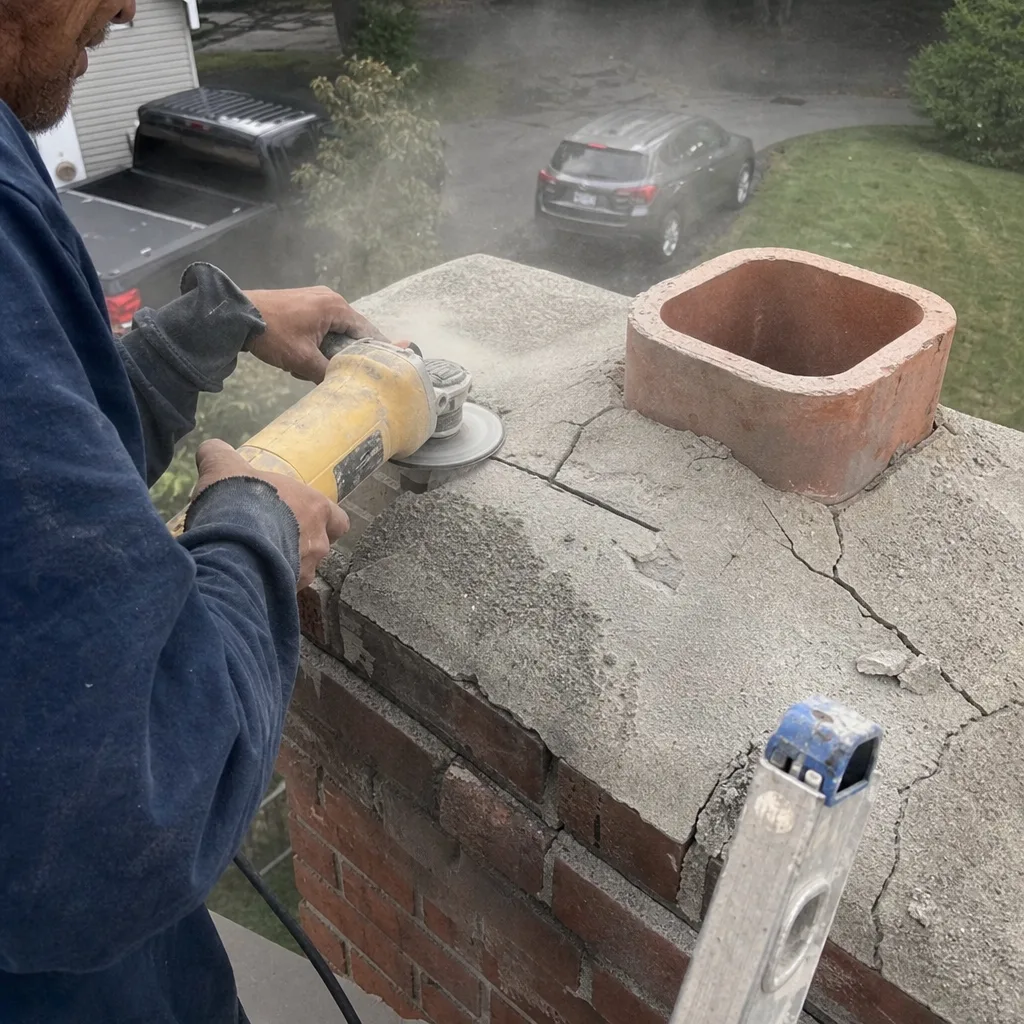
The chimney warning signs that matter arrive early, they’re specific, and they’re owner-detectable without tools. A tar smell in July, white staining on brick, a damper that won’t close, dripping after rain, and a yellow gas flame each tell a precise story about what’s happening inside your flue. Learn to read them, rank their urgency correctly, and know when a camera scan is the only way to avoid guessing wrong. In Wakefield’s older housing stock, where chimneys have served multiple fuel types across a century of use, the cost of informed early action is always lower than the cost of deferred maintenance. We’ve documented this across 38,000 inspections since 2009, and the pattern holds: the homeowners who call in July about a smell save thousands compared to those who call in November about smoke.
Written by Corrine Halstead, Owner at Level Two Chimney Wakefield, serving Wakefield since 2009.